
City of worms that can live 200 years discovered on seafloor off Alaska, NOAA says
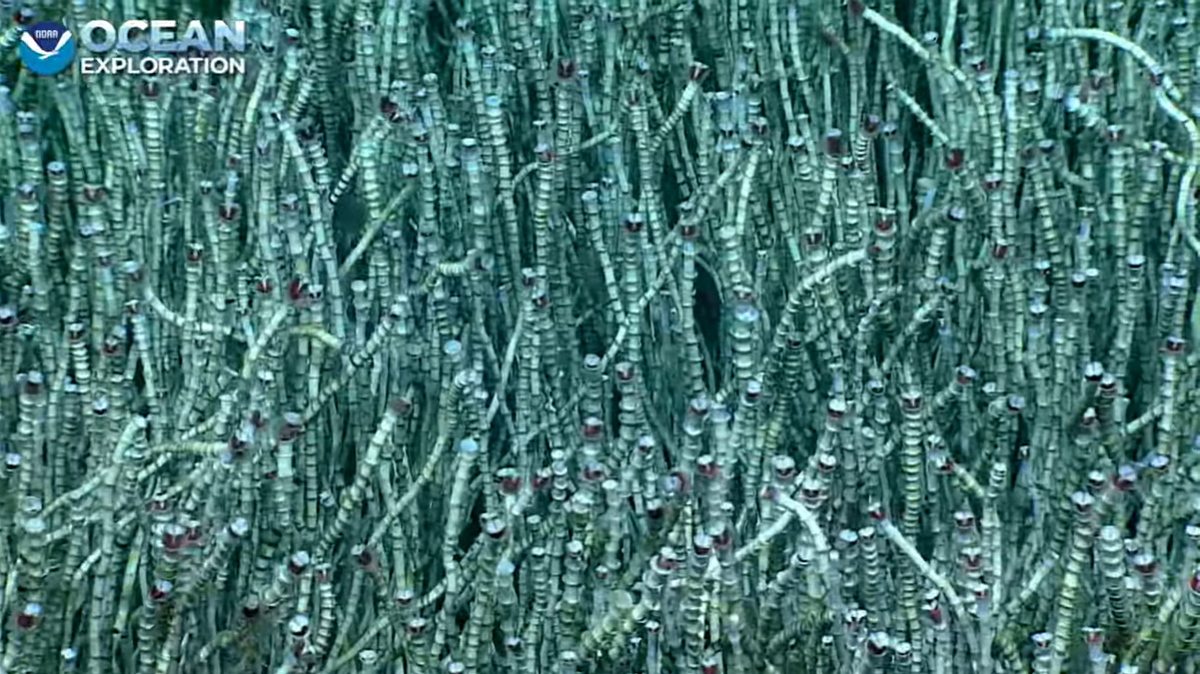
A vast city of tubeworms has been discovered thriving in near freezing temperatures off the coast of Alaska, and some could be a few centuries old.
NOAA Ocean Exploration made the find July 18 using a remotely controlled camera to survey the seafloor 43 miles off Sanak Island. The island is about 650 miles southwest of Anchorage.
Numbering in the thousands, the horde of worms stretched the length of two football fields and was thick enough to cover the seafloor like shag carpet in spots.
Tubeworms pose no threat to humans, but are alien in every respect. They can reach 10 feet in length, have no mouth, gut or anus, and studies show they can live more than 200 years.
They also thrive in otherworldly conditions. NOAA encountered the worms at 1.25 miles deep in a spot where temperatures are 35 degrees and it’s 2,800 pounds of pressure per square inch.
Scientists were in the area looking for a cold seep — fissures in the seafloor where gases like methane and hydrogen sulfide bubble out.
“This was an amazing discovery and based on previous records in the region completely unexpected,” according to expedition member Rhian Waller, a senior lecturer/associate professor of marine science at the University of Gothenburg in Sweden.
“The other (cold) seeps in this region are described as (having) ‘small mixed species communities’ and this was anything but — just massive, endless fields of tubeworms.”
Tubeworms thrive in the extreme conditions around cold seeps. This is due to their symbiotic relationship with a bacteria that converts the bubbling hydrocarbons into worm food, NOAA reports.
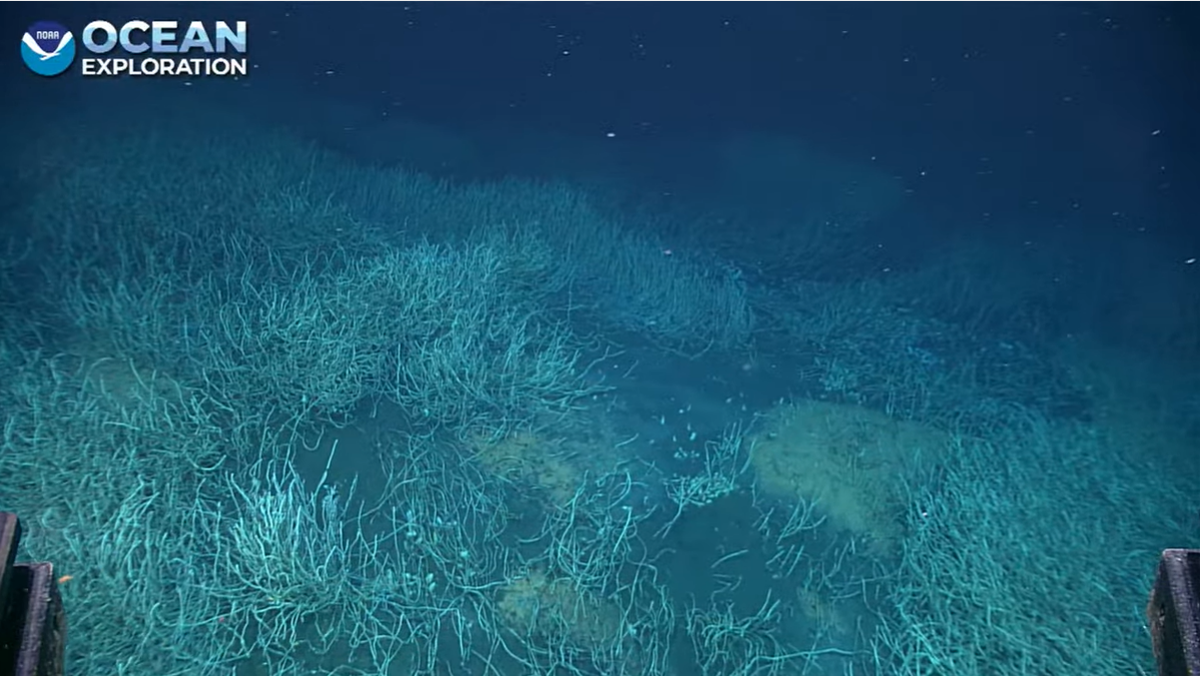
The team found a line of cold seeps estimated to be 1,950 feet long, NOAA says.
“From the surveys done prior to the dive, we knew there were gas bubbles coming from the seafloor,” according to Carolyn Ruppel, a research geophysicist at the U.S. Geological Survey.
“But we had no way of predicting that we would find dense and almost continuous colonies of tubeworms during the investigation of the first 200 meters of that seep line.”
It’s unknown how long those seeps have been active, she said. But rocks seen in the area suggest the bubbles have been seeping “since at least a few thousand years ago.”
“That doesn’t mean the seepage has been continuous since then,” Ruppel said. “The fact that the tubeworms can live for more than 100 years ... implies that the supply of sulfide (what the tubeworms rely on) and likely the associated methane has been enough to sustain these communities for at least a few hundred years.”
This story was originally published July 20, 2023 at 8:07 AM with the headline "City of worms that can live 200 years discovered on seafloor off Alaska, NOAA says."