‘Entire lake’ migrates 2 miles north when strong winds hit Death Valley, officials say
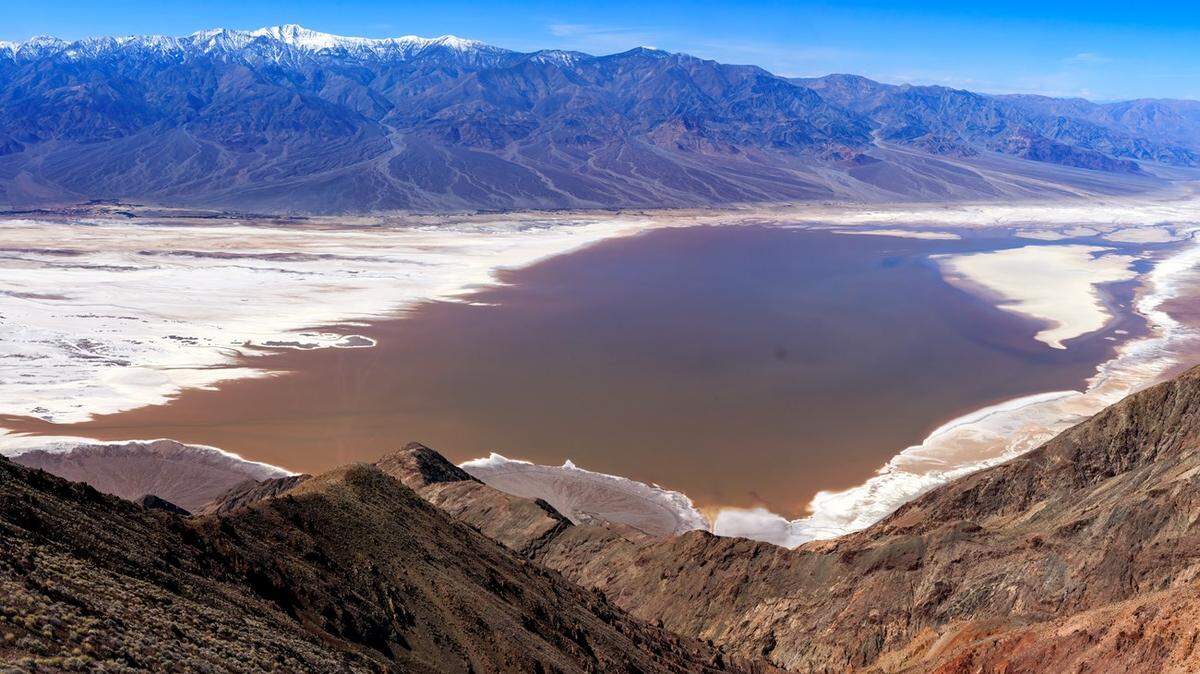
Extreme weather has created yet another geological anomaly in a California national park: “a traveling lake,” officials said.
It might sound far-fetched, but that’s exactly what happened when intense 40-mph winds swept through Death Valley National Park on Feb. 29, kicking up clouds of dust and sand — and blowing the entire ephemeral lake about two miles north, National Park Service officials said in a March 4 news release.
The winds also sped up the lake’s evaporation and kicked dusty sand and clay into what was left of it, muddying the waters and ultimately shrinking the size of Lake Manly, the temporary lake that formed in Badwater Basin after more than a year’s worth of rain fell in one day, McClatchy News previously reported.
The lake was so deep, it was possible to kayak on, McClatchy News previously reported.
But its migration left behind a fragile salty mudflat that’s easily scarred by footprints and other human activity — meaning kayaking is no longer allowed.
“It was amazing to see an entire lake migrate!” park superintendent Mike Reynolds said in the release. “But now the water is drying up, leaving wide mudflats. People were walking a long way, sometimes dragging their boats. This leaves footprints and drag marks that will likely be visible for years. This left us with no choice but to curtail boating on historic Lake Manly at this time.”
The lake was open for kayaking business for about a month. Dramatic photos shared on social media show how the lake’s waters morphed from clear enough to reflect the sky and the surrounding mountains into an orange-brown, muddy sludge.
One photo also shows how the absence of water revived the salt flat typical of Badwater Basin, the lowest point in North America at 282 feet below sea level.
Some of the mud seemed to settle back down to the lakebed once the winds subsided, reviving the clearer water, photos show.
“In normal years,” the salt flats are visible for miles, officials said. And in some parts, “the salt is fractured and uplifted into photogenic polygon shapes.”
But this was not a normal year. While Lake Manly does form every few years when there’s enough rain to cover the salt flat, it’s usually only a couple inches deep.
The lake first burst back to life in August after the remnants of Hurricane Hilary dumped 2.2 inches of rain in the park, officials said. It dwindled slowly — until an atmospheric river drenched the park in another 1.5 inches of rain in early February.
The lake stuck around for the next month or so and stayed put at about six miles long, three miles wide and one foot deep — perfect for kayaking, officials said.
When the winds came and blew the lake north, it spread out to cover more area at a much shallower depth, officials said. That along with the winds sped up evaporation dramatically.
“A place that people had launched boats 10 feet from the road turned into a salty mud flat,” officials said.
Once the winds stopped, the water sloshed the two miles back down to its original lakebed — much shallower and muddier than before, and too far away from the boat launch, officials said.
Kayakers would have to walk through the mud to access the lake, which would leave footprints in the mud flat.
“These footprints or boat drag marks will likely stay as scars on the landscape until the next time Lake Manly returns,” which could be years from now, officials said.
“Visitors for the next few years would prefer to see the natural polygon designs in the salt, rather than hard-crusted footprints and deep boat drag marks,” Reynolds said.
Visitors can still walk out into the lake or onto the salt flat from the Badwater Basin parking lot, where the surface is already compacted, officials said.
This story was originally published March 8, 2024 at 6:13 PM with the headline "‘Entire lake’ migrates 2 miles north when strong winds hit Death Valley, officials say."