
Rare ‘devil bird’ native to South America spotted in flooded Maine meadow, photo shows
A remarkably rare bird was spotted in Maine, far from its home in Central and South America — possibly for the very first time, wildlife officials said.
A lucky wildlife enthusiast captured a photo of it, becoming the first person to document the Southern waterbird known as the anhinga — or “devil bird” — in Maine, the audubon society told several news outlets.
The bird is native to Southern U.S. states, Mexico, and parts of South America. It gets its name from the Tupi Indians in Brazil, meaning “devil bird” or “evil spirit of the woods,” according to the Cornell Lab of Ornithology.
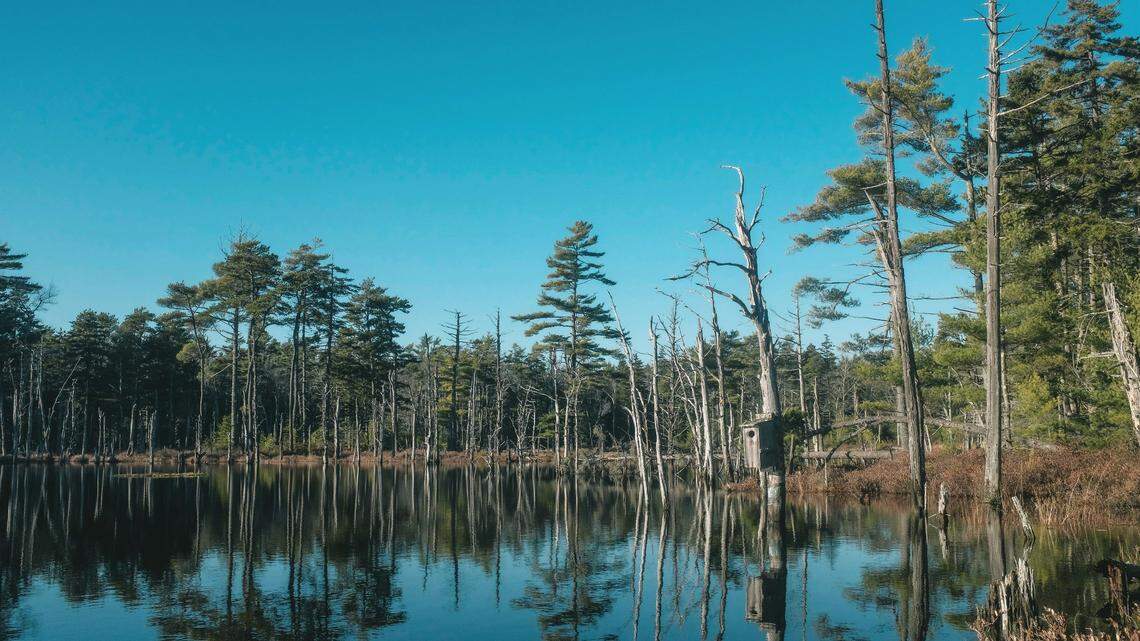
“I wanted to share this interesting bird that has been spending time in a nearby beaver pond,” Tabatha Holt said in a July 23 post in the MAINE Wildlife Facebook group.
Holt’s photo shows a large black bird with a long curved neck perching on a log as it suns its feathers. Holt also shared screenshots of the Cornell lab’s information page on the anhinga.
“I believe I’ve discovered it to be a visitor a little out of her usual range,” Holt said.
Doug Hitchcox, a naturalist at Maine Audubon, saw the post and started coordinating with members in the group to organize a safe way for birders to see the anhinga without crowding it, he told the Portland Press Herald.
“Often, bird sightings are on private property, but this time, the anhinga showed up in a flooded meadow” near a narrow dirt road in the town of Somerville, the outlet reported.
Hitchcox also commented on Holt’s post, along with several other admirers.
“That’s a remarkable bird for Maine!” someone said. “I’m sure many birders would love to catch up with an Anhinga out that way.”
“This (may be) the first image of an Anhinga in Maine…Your image captures enough markers for a good ID,” another person said.
They then shared a version of the photo they’d edited to point out the identifying markers, such as the bird’s “long, pointed bill,” “long, snakelike neck,” its long tail, “(protruding) alula feathers when sunning” and its “clear line of demarcation between chest and belly,” which the person said indicates it’s a young female.
Hitchcox confirmed those details to the Portland Press Herald.
In fact, because of their long serpentine necks that stick out of the water as the birds hunt, anhingas are also known as “snakebirds,” Hitchcox told Bangor Daily News.
The bird was last spotted at the pond on Friday, July 26, but people had been seeing it nearby for about a month prior to that, Hitchcox told the outlet.
About 70 people logged the anhinga on eBird, a website managed by the Cornell Lab of Ornithology where birders record their sightings, the Portland Press Herald reported.
Hitchcox gave local news outlets a few different explanations for why the bird ended up so far north, including looking for food with less competition, a warming climate pushing birds further north, or possibly an “overshoot” — a bird that migrated too far.
“Who knows when we might ever see another anhinga up here? But we’ve got one,” he told Bangor Daily News.
Holt updated the fellow wildlife enthusiasts after they hadn’t spotted the bird again in a few days.
“Well, it’s definitely looking like our visitor has moved on,” Holt said. “Hope some of you had a chance to see it. Really enjoyed watching her on the morning strolls. Keep on being gleefully curious!”
This story was originally published August 1, 2024 at 7:05 PM with the headline "Rare ‘devil bird’ native to South America spotted in flooded Maine meadow, photo shows."
