Wild African cat that makes a poor pet is seized from Texas garage after tip, cops say
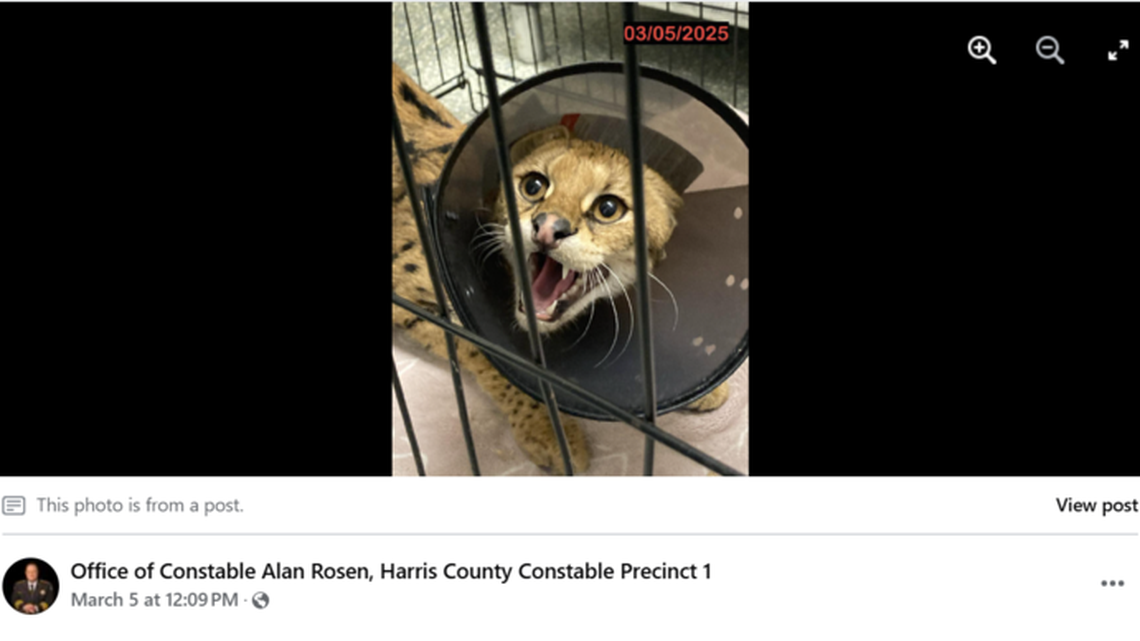
Texas police and wildlife agencies are investigating how a serval, a wild cat species native to Africa, ended up in a Houston garage with a cone around its neck.
An anonymous tip led authorities from the Harris County Precinct 1 Constable’s Office to the garage on March 5, according to a Facebook post. Inside, they found a kennel containing the striped-and-spotted feline, along with another crate with two dogs.
The people who had the serval told police they rescued it from a neglectful situation, according to the post. Texas Parks & Wildlife and U.S. Fish & Wildlife are investigating the matter as an illegal animal trafficking case.
Servals aren’t illegal in Texas, one of about half of U.S. states where ownership is allowed. However, they’re considered “dangerous wild animals” under state law.
State and county laws require owners to register the animals with a municipal or county office and outline specific space, quality and fencing requirements for the sake of safety and the animals’ welfare.
“A court hearing has been scheduled to determine if the purported owners will retain ownership,” the post said.
Meanwhile, the Houston Society for the Prevention of Cruelty to Animals has taken the serval into its care. According to the post, the veterinary staff evaluating and treating the serval has concerns about its health.
With the largest ears of any cat and a body length between 23 and 36 inches, their wild look and relatively small size might make them appealing, but animal experts agree that servals make terrible pets.
“Almost no one ever keeps their ‘pet’ serval after it reaches 1.5 to 5 years of age because they pee constantly, on everything, to mark their territory,” conservation group Big Cat Rescue said. “This is not about house breaking; it’s thousands of years of instinct to mark everything as your own.”
The group also notes that servals are proficient hunters, with a success rate of about 90%. They’re also excellent at escaping their enclosures, making them a potential threat to pets and people nearby.
“They are difficult to contain in a home or enclosure setting, and pose a risk to their keepers and the public, and even native wildlife if they escape,” the British Columbia SCPA said. “Their own safety is also in jeopardy in captivity. Escaped servals have died by being hit by cars or of starvation, since they never had the opportunity to learn how to hunt.”
Carolina Tiger Rescue reported that servals make up the plurality of the animals in its care, a direct result of people attempting to domesticate or breed them for profit.
“Their wild instincts, specialized dietary needs, and enclosure requirements make them unsuitable for domestic life,” the rescue stated. “Carolina Tiger Rescue’s dedicated work in caring for 18 servals is a testament to the small cat crisis in the United States.”
This story was originally published March 7, 2025 at 3:54 PM with the headline "Wild African cat that makes a poor pet is seized from Texas garage after tip, cops say."