
RFK’s vaccine panel declined to recommend COVID shots. What do Americans think?
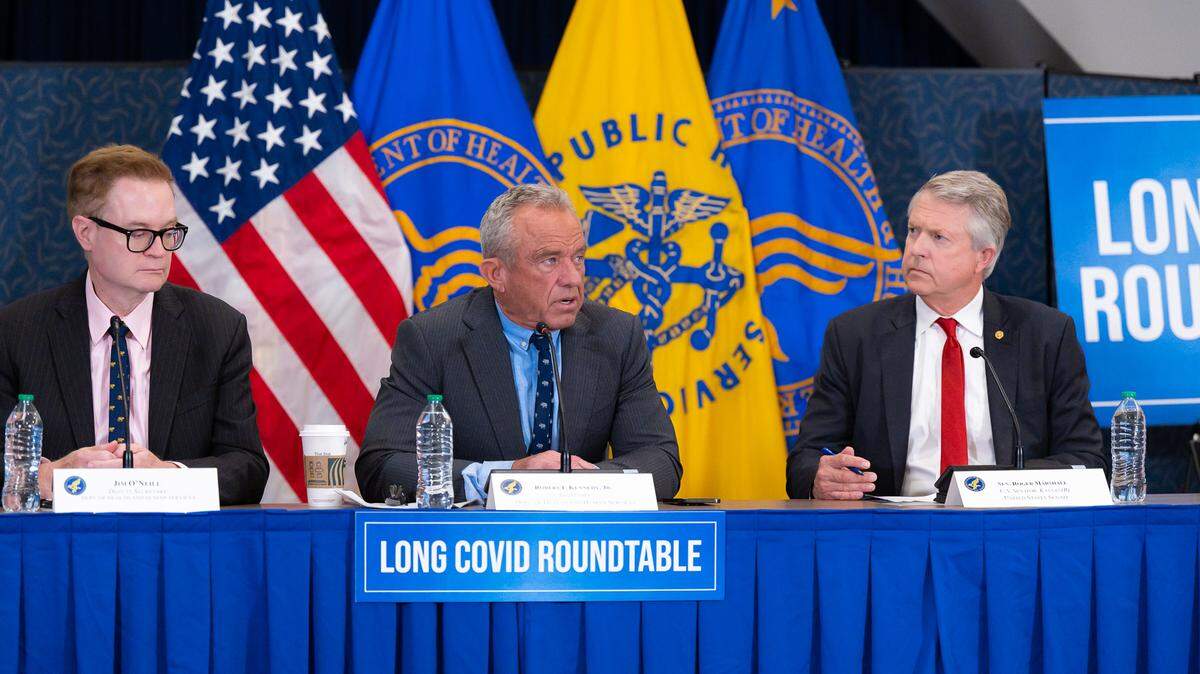
Few Americans believe the benefits associated with COVID-19 and measles vaccines are outweighed by the risks, according to a new YouGov poll. And more Americans than not disapprove of Health and Human Services (HHS) Secretary Robert F. Kennedy Jr.’s handling of vaccine policy, the poll said.
The survey, conducted on Sept. 22, comes after an advisory committee chosen by Kennedy — a longtime vaccine skeptic and appointee of President Donald Trump — updated its guidance on immunizations for both diseases.
On Sept. 19, the panel declined to recommend COVID-19 shots for anyone 6 months and older, including high-risk populations. Instead, it said that individuals should reach their own decisions.
The previous day, the panel recommended that children under 4 should not be given the MMRV vaccine, which protects against measles, mumps, rubella (MMR) and varicella, commonly known as chickenpox. It said that varicella shots should be administered separately from MMR shots.
To take effect, the committee’s updated guidance must be approved by the Centers for Disease Control and Prevention (CDC).
Some public health experts and lawmakers have condemned the moves, arguing they will increase vaccine skepticism among Americans, leading to the spread of disease, according to Politico.
“Children will die because of this decision,” Rep. Rosa DeLauro, a Connecticut Democrat, wrote on X. “These diseases have been nearly eradicated thanks to vaccines. RFK Jr. is a threat to American health and must be fired.”
“This is a lie meant to send Americans into a panic,” the official HHS X account wrote in response to DeLauro. It added that the CDC’s Immunization Safety Office “showed that healthy toddlers (12–23 months) have increased risk of febrile seizure 7–10 days after MMRV vaccination compared to those given separate immunization for varicella.”
Views on COVID-19 vaccines
The survey — which sampled 9,257 U.S. adults — asked respondents if they believe the benefits of the COVID-19 vaccine outweigh the risks for most adults.
The poll showed that 41% of respondents see the benefits as greater than the risks, 15% consider them roughly equal, while 24% think the risks outweigh the benefits. An additional 20% said they are unsure.
The question sparked a sizable partisan divide. The vast majority of Democrats, 68%, said the vaccine’s benefits eclipse the risks, while 41% of Republicans said the downsides are greater than the upsides.
Views on measles, mumps and rubella vaccines
A decisive majority of respondents, 61%, said that, for most children, the benefits afforded by the MMR vaccine exceed the risks, while 13% said they are about equivalent. Meanwhile, 12% said the advantages are outweighed by the disadvantages and 15% said they were not sure.
Here, there was a consensus across the political spectrum. Most Democrats (75%), independents (58%) and Republicans (51%) said the benefits of the measles, mumps and rubella shot are greater than the risks.
An even larger majority, 68%, said that parents should be required to vaccinate their children against the illnesses, while just 16% said they should not and 16% were not sure. Most Democrats (85%), independents (63%) and Republicans (57%) were on board with mandating the vaccine for children.
Views on RFK Jr.
The survey — which has a margin of error of 2.1 percentage points — found widespread disappointment with Kennedy’s stance on vaccines.
Forty-seven percent of respondents said they strongly disapprove (39%) or somewhat disapprove (8%) of the secretary’s handling of vaccine policy. In contrast, 31% said they either strongly approve (16%) or somewhat approve (15%), and 22% said they were not sure.
The overwhelming majority of Democrats, 77%, said they disapproved, while a 48% plurality of independents said the same. Meanwhile, 58% of Republicans said they support Kennedy’s decisions.
This story was originally published September 22, 2025 at 12:14 PM with the headline "RFK’s vaccine panel declined to recommend COVID shots. What do Americans think?."