
9-ton prehistoric creature — with duck-bill face — found as new species in NM
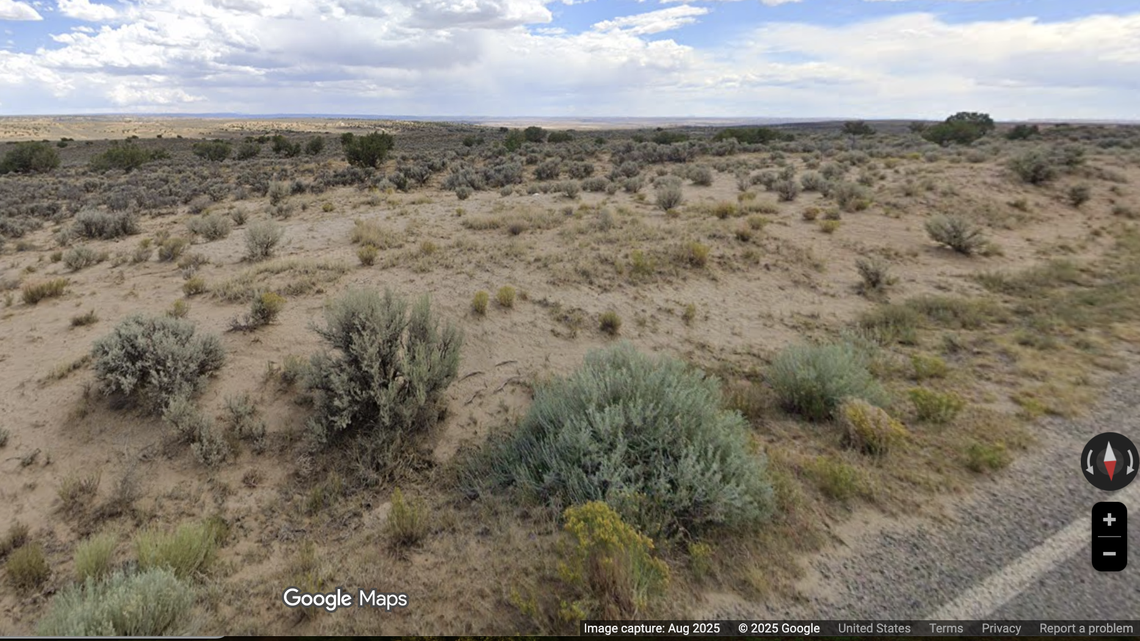
More than a century ago, famed fossil collector John B. Reeside Jr. traveled into the barren landscape of northern New Mexico.
It was 1916 in San Juan County, and Reeside pulled bones belonging to a hadrosaur, a duck-billed dinosaur from the rock and stone.
Two decades later, the fossils were identified as the species Kritosaurus navajovius, according to a Sept. 29 news release from the New Mexico Department of Cultural Affairs.
Now, however, a study has found that this identification was wrong, and the fossils actually belong to a species new to science.
“Hadrosauridae, a family of large herbivorous dinosaurs, were among the most abundant dinosaurs of Late Cretaceous terrestrial ecosystems of the Western Interior Basin of North America for about 20 million years,” researchers said in a study published in the New Mexico Museum of Natural History and Science Bulletin 101 and uploaded to ResearchGate on Sept. 30.
“Some of these large-bodied herbivorous dinosaurs had distinctively ornamented skulls topped by elongated crests that resembled tube-like structures; whereas others possessed a range of cranial ornamentation, from solid and short crests, to diminutive crests located on their nasal bones, and some others possessed ornamentation composed only of soft tissue,” according to the study.
The fossils were uncovered in the Ah-shi-sle-pah Wilderness, meaning “salt, it is gray” in Navajo, researchers said.
An incomplete skull and part of the cervical vertebrae were originally uncovered, enough to tell that the morphology, or physical characteristics, differed from known hadrosaurs, according to the study.
The new species was named Ahshislesaurus wimani, honoring the place it was found and the first paleontologist to work on the fossils, Carl Wiman, according to the study.
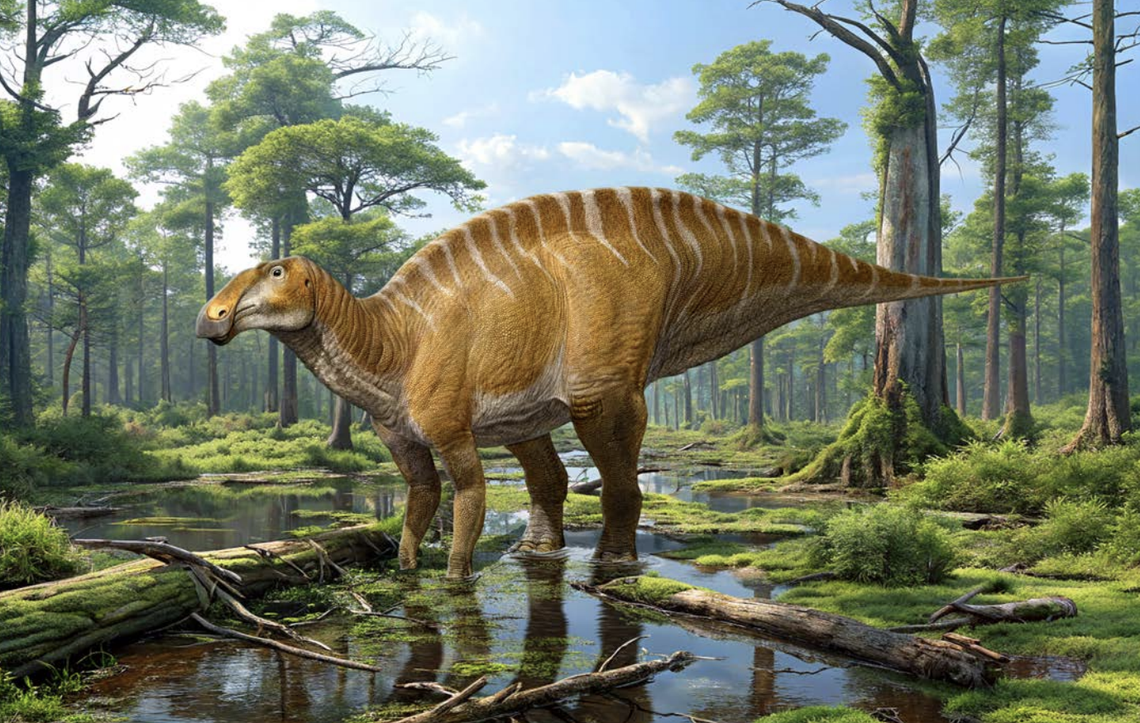
The fossils show that the hadrosaur likely grew to be more than 35 feet long and weighed as much as 9 tons, according to the release. The “enormous” animal’s head would have been flat with a “duckbill-shaped mouth.”
It lived about 75 million years ago in what was the late Cretaceous period, researchers said.
“It seems like paleontologists are discovering new dinosaurs in New Mexico every few months,” study author Spencer Lucas said in the release. “This new hadrosaur just adds to my conviction that there are many, many new dinosaurs still out there waiting to be unearthed!”
The hadrosaur would have lived in the same ecosystem as armored ankylosaurids, horned dinosaurs like the Navajoceratops, as well as the “Bisti Beast,” a well-known horned dinosaur of New Mexico, researchers said.
“Discoveries like this remind us that science truly is a community,” study author Anthony Fiorillo said in the release. “Our team of researchers spanning five institutions and two countries were able to build upon research that started nearly a century ago and now advances our understanding of what our state looked like during the Late Cretaceous Period.”
The Ah-shi-sle-pah Wilderness is just east of the Navajo Nation, or about a 150-mile drive northwest from Albuquerque.
The research team includes Lucas, Fiorillo, Sebastian G. Dalman, Steven E. Jasinski, D. Edward Malinzak and Martin Kundrát.
This story was originally published October 9, 2025 at 11:38 AM with the headline "9-ton prehistoric creature — with duck-bill face — found as new species in NM."
