
David Allan Coe, singer who personified outlaw country, dies at 86
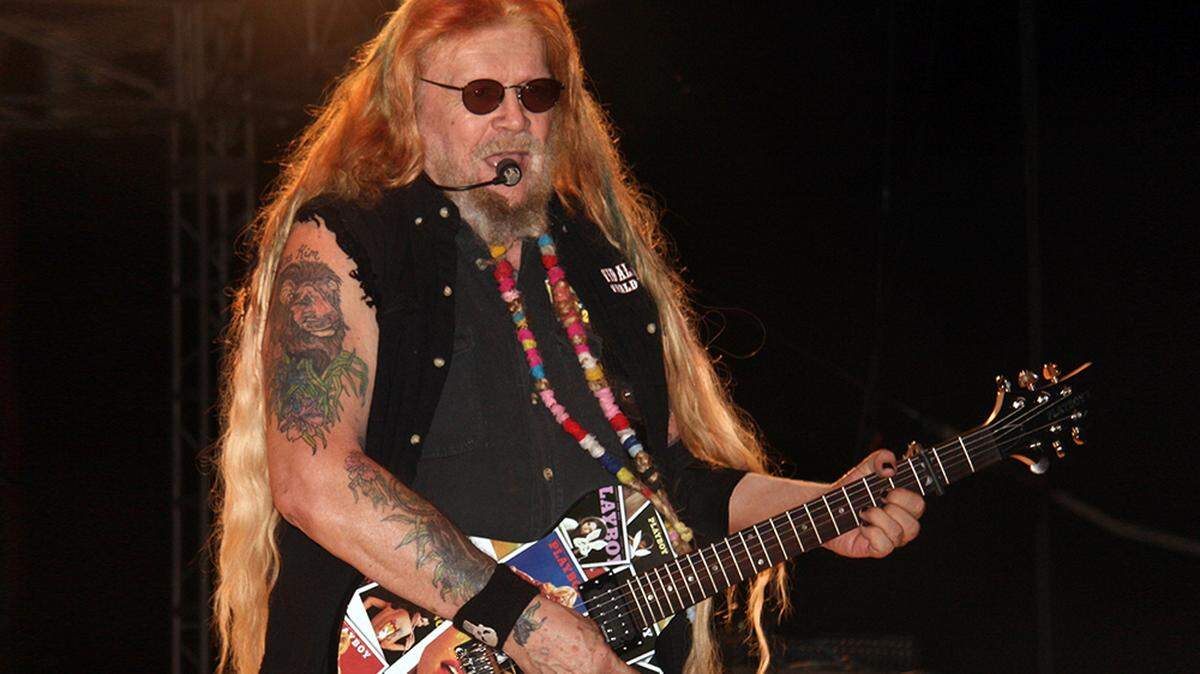
David Allan Coe, the country singer whose outlandish exploits, prison tales and obscenity-laden performances earned him notoriety as perhaps the most transgressive exponent of the outlaw country movement of the 1970s and ‘80s, died April 29. He was 86.
David Wade, his booking agent, said he died in a hospital but gave no other details.
Two mid-1970s singles announced Coe’s arrival as a Nashville outsider in the mold of Willie Nelson and Waylon Jennings -- an original with an offbeat sense of humor, a deep baritone and a fierce resolve to be different.
The first of those recordings, “You Never Even Called Me by My Name,” a droll send-up of honky-tonk cliches written by folk singers Steve Goodman and John Prine, reached the country Top 10 in 1975.
“I was drunk the day my mom got out of prison / And I went to pick her up in the rain,” Coe sang on the record’s final chorus, backed by a weeping dobro and a nimble country rhythm section. “But before I could get to the station in my pickup truck / She got runned over by a damned old train.”
Coe’s other breakthrough hit, “Longhaired Redneck” (1976), found him doing spot-on impersonations of country forebears like Ernest Tubb and Merle Haggard while painting a surreal clash of cultures among cowboys, hippies and bikers at a dive bar.
Coe wrote or helped write most of his material but had his greatest success with songs he wrote for others, notably Tanya Tucker’s “Would You Lay With Me (In a Field of Stone)“ (1973) and Johnny Paycheck’s “Take This Job and Shove It” (1977). Both records were No. 1 country singles, and “Take This Job and Shove It” inspired a 1981 movie in which Coe had a minor role. He also wrote for the punk rock band Dead Kennedys and Johnny Cash.
“I can write at the drop of a hat,” Coe said in a 2003 interview with Review magazine. “If someone tells me they will give me $10,000 to write six songs about peanut butter, they would have them in 15 minutes.”
Unlike Cash, who only sang about prisons and performed in them, Coe was the genuine article. Incarcerated for crimes that included auto theft and the possession of tools to commit burglary, he spent three years in the 1960s in the Ohio State Penitentiary, where he claimed to have killed another inmate who tried to rape him.
That story, later debunked, was typical of the outlaw aura that surrounded Coe -- and that often obscured his gifts as a singer, songwriter and performer. He boasted of having more than 300 tattoos and claimed to be a practicing polygamist. He was also a member of the Outlaws Motorcycle Club, a biker gang designated as a criminal organization by numerous law enforcement and intelligence agencies around the world.
In the late 1970s and early 1980s, Coe released two albums -- “Nothing Sacred” and “Underground Album” -- that were later reissued as a compilation called “18 X-Rated Hits.” In 2000, music writer Neil Strauss of The New York Times described the material as “among the most racist, misogynist, homophobic and obscene songs recorded by a popular songwriter.”
For years, Coe distanced himself from those songs. “Anyone that would look at me and say I was a racist would have to be out of their mind,” he insisted in a 2004 interview with the site Swampland.
David Allan Coe was born Sept. 6, 1939, in Akron, Ohio, to Donald Mahan Coe and Dorothy Ruth (Wilson) Coe. His parents soon divorced, after which his father married a woman who, as Coe told Review magazine, didn’t want him.
Deemed incorrigible by the authorities, young David was sent to a reform school at age 9. He spent the next two decades in and out of juvenile and adult correctional facilities, including his years at the Ohio Penitentiary in Columbus. He claimed to have met and received songwriting tips while there from R&B shouter Screamin’ Jay Hawkins (of “I Put a Spell on You” fame).
After his release from prison in 1967, Coe moved to Nashville to pursue a career in music. “I was into rock ‘n’ roll and rhythm & blues,” he later recalled of that period. “I was listening to Little Richard, Fats Domino, Jimmy Reed, Muddy Waters and Hank Ballard and the Midnighters.”
For a time, he lived in a hearse parked outside Ryman Auditorium, the home of the Grand Ole Opry, and busked on the sidewalks nearby. He soon attracted the attention of record mogul Shelby Singleton, for whom he released two blues-inspired albums in 1970.
A tour with the rock band Grand Funk Railroad followed, along with a Nashville publishing deal and, in 1974, a recording contract with Columbia Records. “You Never Even Called Me by My Name” and the outlaw-themed “Willie, Waylon and Me,” a Top 40 country hit in 1976, were among his early hits for the label.
Coe titled his first album for Columbia “The Mysterious Rhinestone Cowboy.” Inspired by his custom of performing in rhinestone suits and a Lone Ranger mask, the designation anticipated Glen Campbell’s 1975 crossover smash, “Rhinestone Cowboy.”
Coe hit his peak commercially in the early ‘80s with a pair of Top 10 country hits, “The Ride” (1983), an homage to Hank Williams, and “Mona Lisa Lost Her Smile” (1984). By the end of the decade, though, perhaps at least in part because of his penchant for provocation and outrageous behavior, he was no longer a factor on the charts, despite continuing to be a popular touring act in the United States and Europe.
Coe also published a number of books, including a pornographic novel and an autobiography.
In the 2000s, he cast his net beyond country music, writing a song called “Single Father” for Kid Rock’s self-titled 2003 album and recording another project, “Rebel Meets Rebel,” with members of the heavy metal band Pantera. Coe had minor roles in several movies, among them “Beer for My Horses” (2008).
Problems with the IRS over unpaid taxes dogged Coe at points in his career, resulting in the rights to many of his best-known songs being sold in bankruptcy court.
His survivors include his wife, Kimberly Hastings Coe; two sons, Tyler and Carson; and four daughters, Shelli, Carla, Tanya and Shyanne.
Despite being considered a dyed-in-the-wool honky-tonker, Coe did not originally embrace country music, even on his debut album for the Nashville division of Columbia Records.
“I didn’t really care for some of the country music until people like Kris Kristofferson and some of those people started writing songs,” he told Review magazine. “They had a little more to say than just, ‘Oh, baby, I miss you.’”
This article originally appeared in The New York Times.
Copyright 2026 The New York Times Company