
‘Upsetting’ discovery made in belly of whale on Nova Scotia beach, researchers say
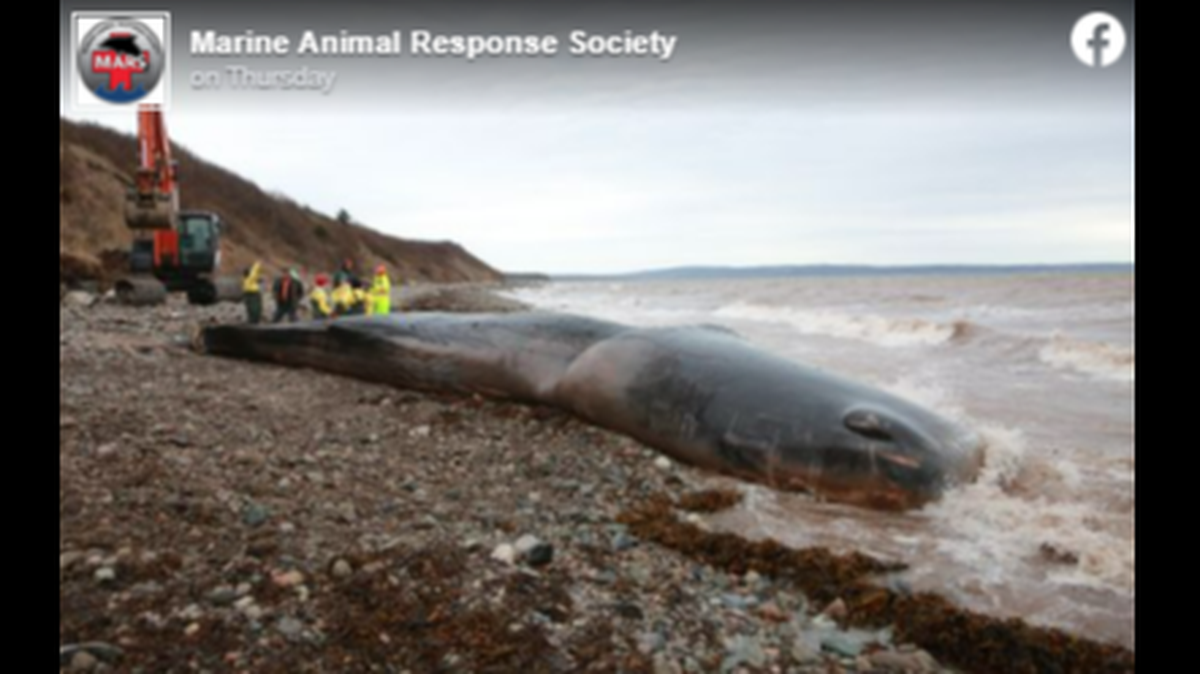
A sperm whale washed ashore on a Nova Scotia beach, and closer inspection shows it died a slow, painful death caused by eating “garbage.”
“The findings were very upsetting — the death of this 45(-foot) male was attributed to a massive ingestion of fishing gear which led to emaciation and subsequent stranding,” the Marine Animal Response Society reported Nov. 17.
“Shockingly, there was 330 (pounds) of gear compacted into the animal’s stomach!”
The whale was discovered Nov. 4 stranded off Canada’s western Cape Breton Island, and researchers say it “came ashore alive and subsequently died the previous week.”
A photo of the fishing gear was posted on social media, revealing it was a knee-high mound of nets, ropes and lines. The knot created giant blockage in the whale’s digestive system, experts say.
“At this point, we do not know the type or origin of the gear, nor where or when the animal would have ingested it,” the society wrote.
“What we do know without a doubt, is that it caused the animal to slowly starve to death. This is a stark reminder of the serious issue with garbage and other plastics in our oceans, including lost, derelict, and discarded fishing gear.”
Tonya Wimmer, the society’s executive director, says it is easy for sperm whales to ingest trash because “they use their mouths like a vacuum” while feeding, CTV News Atlantic reported.
“This would have been an incredibly horrific way, and a traumatic way for this animal to slowly die,” she told the network.
Sperm whales live up to 60 years and are endangered and protected, according to NOAA Fisheries. Males can reach 45 tons and 52 feet, NOAA Fisheries says.
Among the greatest threats they face are fishing gear entanglement and vessel strikes, NOAA says.
This story was originally published November 21, 2022 at 7:12 AM with the headline "‘Upsetting’ discovery made in belly of whale on Nova Scotia beach, researchers say."