‘Monumental’ settlement — over 6,000 years old — uncovered in France, study says
Scattered across Europe stand megalithic stone structures. The sites boast massive, millennia-old structures but no traces of residential life. Unlike the dramatic creations they left behind, the builders of these mysterious structures have proved elusive.
Who were these ancient builders? And where did they live?
Archaeologists have struggled to answer these questions for over a century. A team of researchers have had a “breakthrough,” identifying a site in France as home to Europe’s “first megalith builders,” according to a study published Feb. 20 in Antiquity journal.
The researchers studied Le Peu, a site over 6,000 years old and located only a few miles away from the megalithic cemetery of Tusson. Tusson cemetery has five long burial mounds and is “among the most imposing known in Europe,” the authors said.
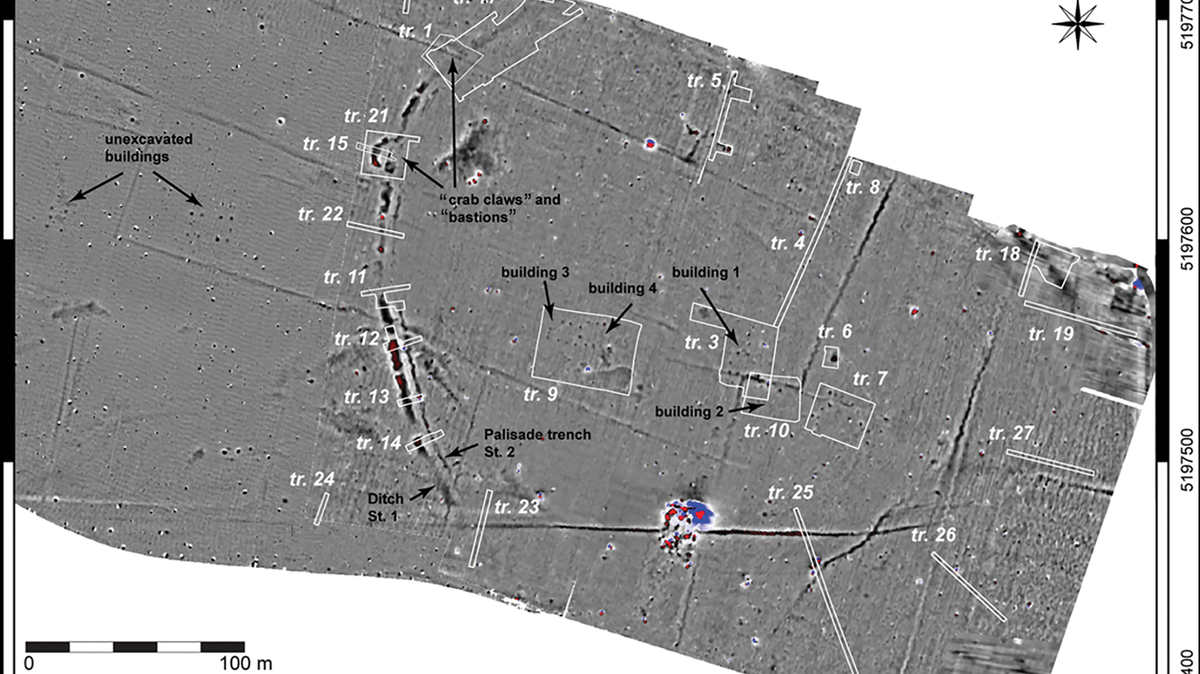
To study Le Peu, researchers conducted an aerial survey of the area, identifying the site’s overall arrangement. Next, the team did a geomagnetic survey to reveal details of the site.
On these surveys, the researchers noticed a ditch running along the one edge, four rectangular buildings and two “crab claw” entrances extending outward, the study said.
The unusual entrances and the rectangular buildings were “unique” and otherwise “completely unknown” structures for this region of France during the fifth millennium B.C., the researchers wrote.
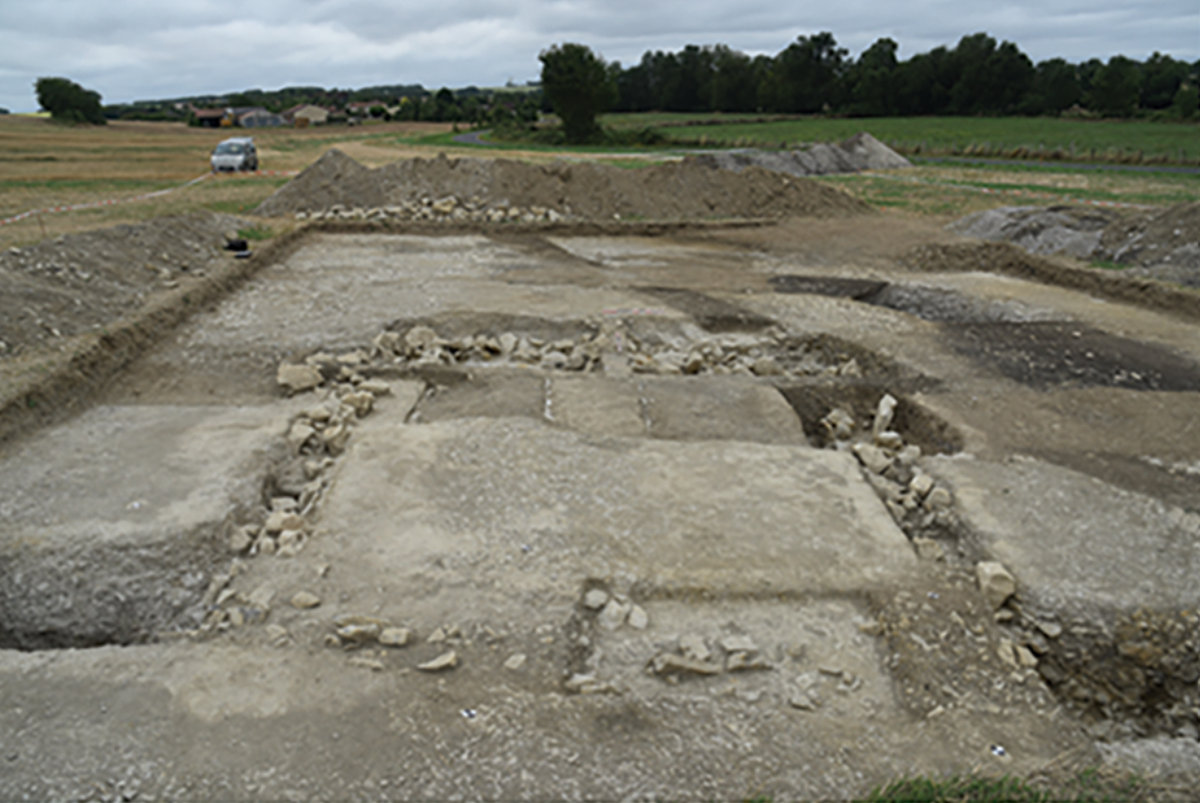
To investigate further, the team excavated portions of the site, unearthing bones, ceramics, pits and hearths. The details of Le Peu’s “monumental” and “fortified” settlement began to take shape.
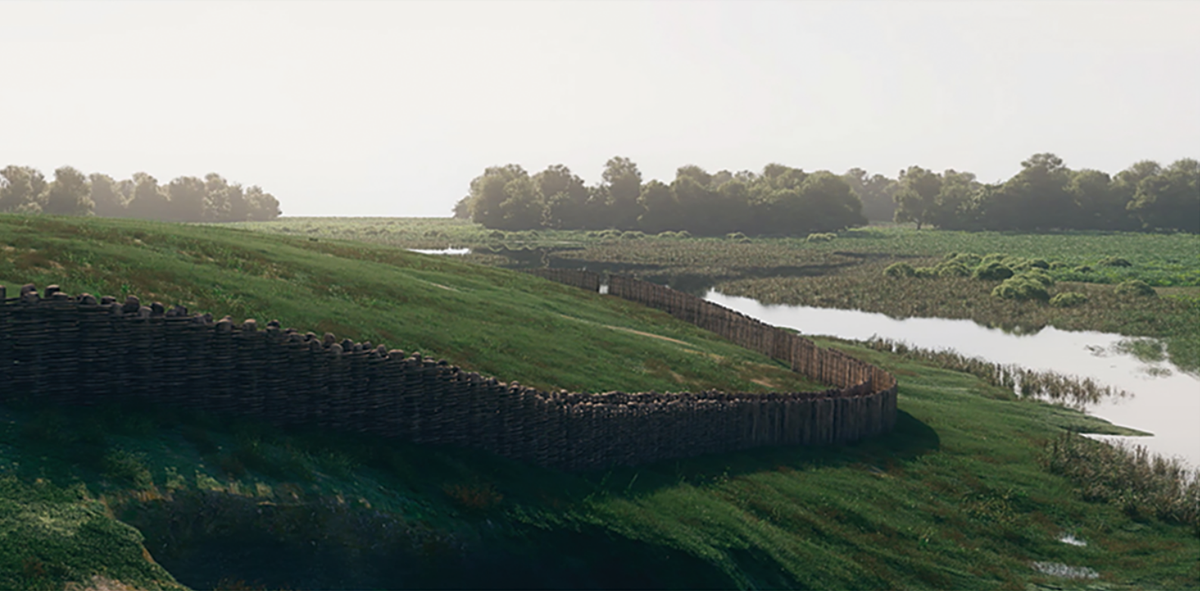
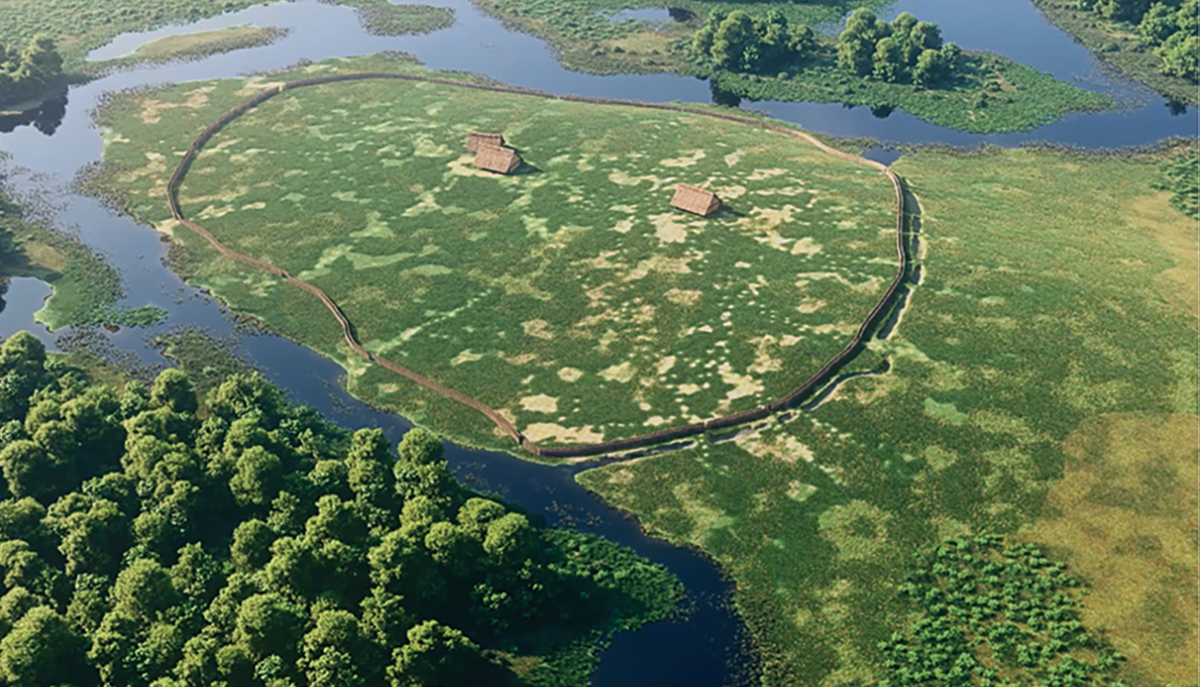
Le Peu was constructed in the middle of a horseshoe-shaped marsh, the study said. A double-layered, wooden wall ran around the entire site. On two sides, the enclosure wall had “crab claw”-shaped entrances positioned at strategic protection points.
The entrances “accentuate the monumentality of the enclosure,” the authors wrote. The depth of the entrance remains indicates the structures were probably tall. ”Massive” stones were packed around these dramatic structures.
Inside the enclosure, archaeologists uncovered the remains of four similar-sized rectangular buildings. One building had traces of smaller posts inside, suggesting a raised platform that could have served as a cooking or sleeping area, the study said.
Another building had an “unusual” square shape, the authors said. These buildings are the “oldest rectangular building known in west-central France.”
The Le Peu settlement was destroyed by fire around 4400 B.C., the study said.
The settlement’s ruins date to the same period as the nearby Tusson cemetery site, indicating the megalithic cemetery’s builders could have lived at Le Peu, the study said. This, however, is “impossible” to know for certain.
The Le Peu settlement reveals the development of two forms of monumental architecture in the mid-fifth millennium B.C.: wooden “enclosure for the living and megalithic tombs for the dead,” the authors wrote.
Le Peu is in the commune of Charmé and about 250 miles southwest of Paris.
This story was originally published March 7, 2023 at 11:10 AM with the headline "‘Monumental’ settlement — over 6,000 years old — uncovered in France, study says."