‘Once-in-a-lifetime’ shark washed up on British shores — then someone stole its head
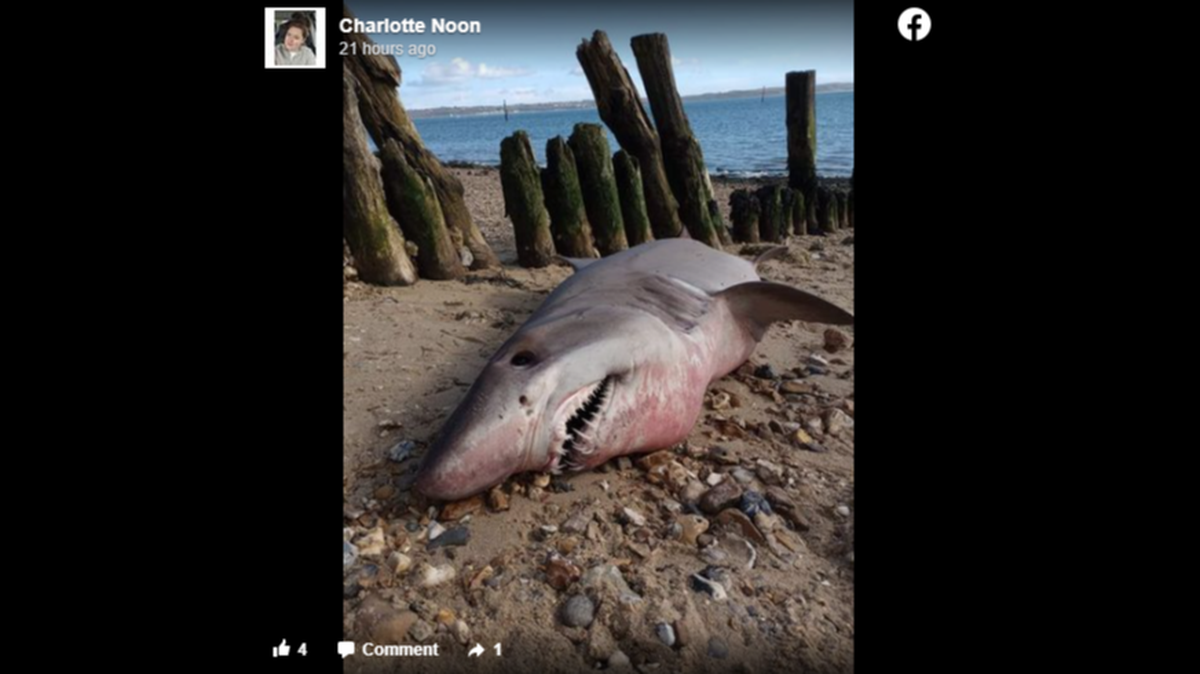
What began as a scientific discovery has turned into a mystery on the coast of England.
A rare shark was discovered washed up on Lepe Beach in Hampshire, England. But, under the cover of night, parts of its body were stolen.
Now scientists are asking for them back.
Dan Snow, a TV presenter, historian and a resident of Hampshire, first tweeted a picture of the shark March 18, washed up on shore and in one piece.
Snow asked the internet what it thought the shark was at nearly 6 feet long, slightly pink and with scraggly teeth.
Fellow TV personality and biologist Ben Garrod identified it as an “exceptionally rare visitor” to British shores and asked Snow to “secure” the shark carcass until an animal stranding team could reach the beach, Snow said in a tweet.
When Snow went back for the shark, its head, tail and fin had been cut off.
“We went to secure the shark for science last night. But we were too late!” Snow said in a tweet. “Please please – [if] you have the head get in touch. The scientists want to have a look at it and then it’s yours to keep.”
The shark was first spotted by Lepe Beach locals while it was still alive and swimming in the shallow waters. One woman even tried to redirect the shark back into deeper water and shared videos of the shark on Facebook.
(Warning: Video contains strong language)
The Shark Trust, an international shark conservation group, identified the shark as a smalltooth sand tiger shark, a shark the group considers to be “naturally rare,” according to a news release.
“The head in particular holds the key to unlocking intricate details of the shark’s life, even from before birth, so we’d welcome news of its whereabouts,” the Shark Trust said.
Smalltooth sand tiger sharks are “seldom encountered” north of France and typically spend their days swimming in warmer waters, according to the Shark Trust. The species is classified as vulnerable globally and has seen declining numbers.
Snow told the BBC the shark was a “once-in-a-lifetime” find of an “incredibly valuable” shark.
“Scientists say that no shark of this species, of this scale – it’s well over two metres long – has ever washed up on UK shores before,” he told the BBC.
“The oceans cover 71 or 72% of our planet, however it’s still incredibly mysterious,” Garrod told the BBC. “Every time we see a whale breaching or a shark washing up, this is like finding a Roman hoard or Viking daggers.”
In a follow-up video on Twitter, Snow said it’s not illegal to take bits of a shark home, but he pleaded for the person to please let scientists look at the head.
On March 20, Snow tweeted another plea for the shark-head bandit to come forward, referring to the situation as “Raiders of the Lost Shark.”
What remains of the shark carcass is now in the possession of the Zoological Society of London, according to a tweet from Snow, but the search is ongoing for the rest of the predator.
This story was originally published March 21, 2023 at 7:06 PM with the headline "‘Once-in-a-lifetime’ shark washed up on British shores — then someone stole its head."