Warrior graves — with swords primed for the afterlife — discovered in Poland. See them
Cultures throughout time have prepared their dead for whatever comes next.
Ancient Egyptians were buried with everyday objects they might need in the afterlife like combs, bowls, jewelry and figurines.
Emperor Qinshihuang of China was buried with an entire clay army to protect and fight for him in the next life.
In Poland, two warriors from the end of the third or fourth century were also readied for their next cosmic step — and buried with broken swords.
At a cemetery in Świętokrzyskie, archaeologists discovered two pit graves with burned human remains, according to a Sep. 2 news release from the Ministry of Science and Higher Education.
The remains were dated to the late Roman period in Poland, and were accompanied by other grave goods, the Voivodeship Office for the Protection of Monuments in Kielce said in an Aug. 29 Facebook post.
Based on the time the graves were dug, archaeologists said the two bodies belonged to the Vandal tribe, a Germanic tribe that lived in the region during the first centuries.
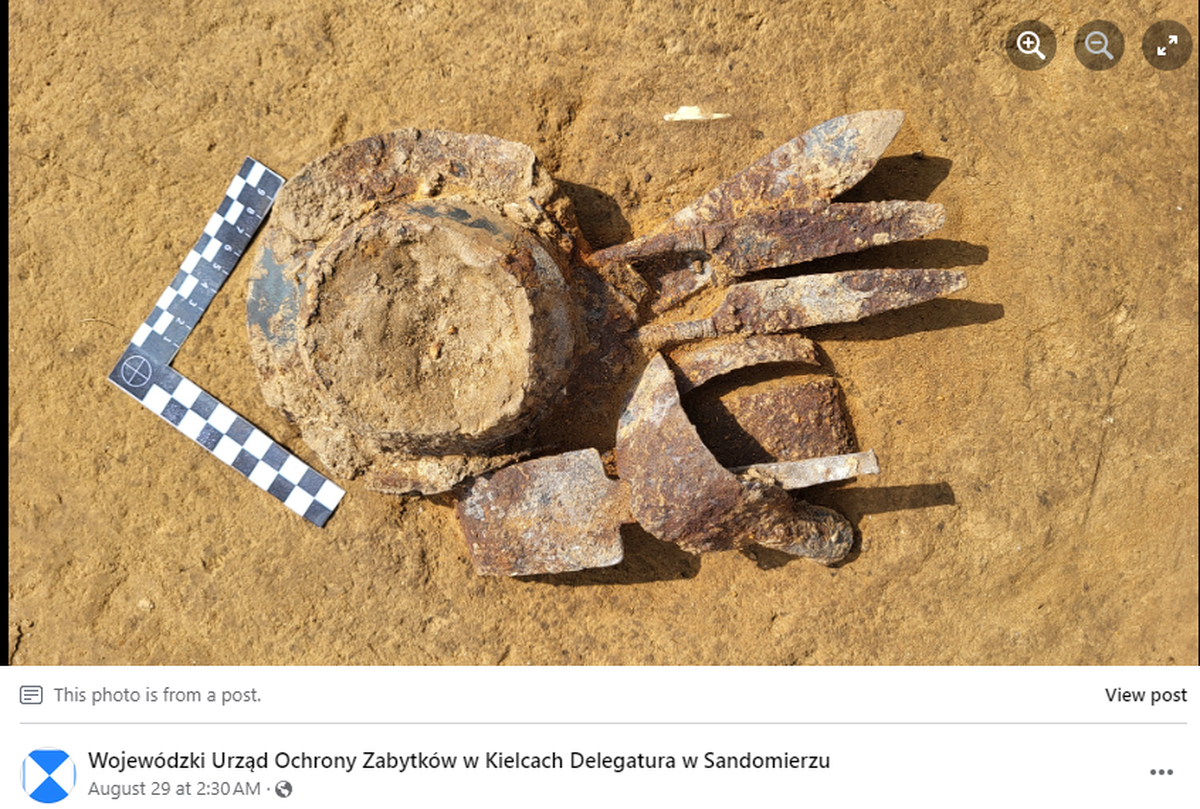
The dead were burned on a funeral pyre with their effects, archaeologists said, and then the remains of the pyre alone with the flame-kissed items were buried together with the bodies.
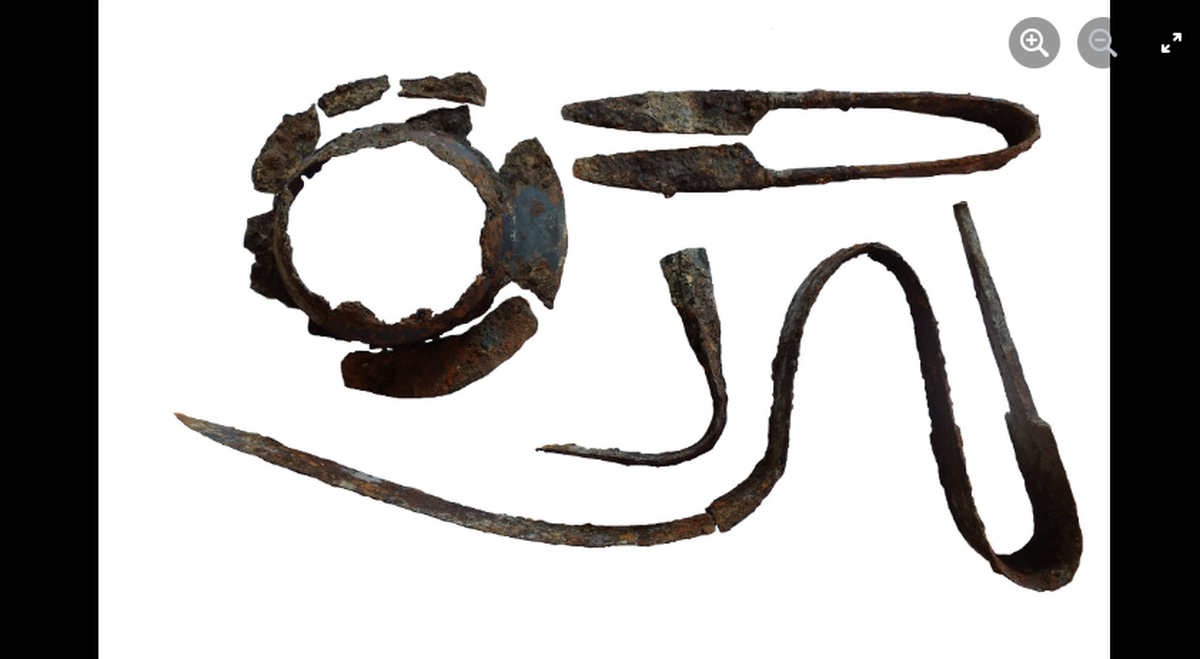
Archaeologists uncovered swords, shield elements like an “umba” or the metal reinforcement piece at the center of a shield, iron spearheads, iron scissors and clay vessels, officials said.
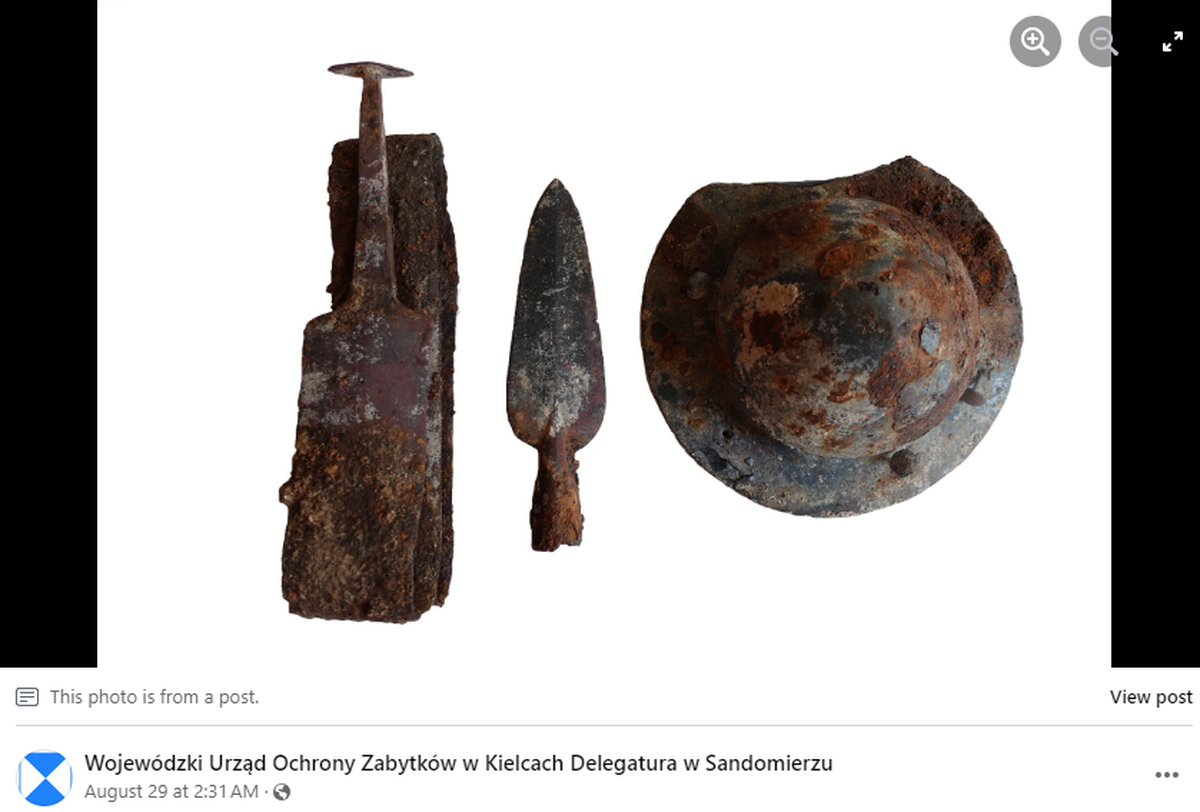
But the swords weren’t just in poor condition because of degradation over time, they were also intentionally bent before being placed in the flames, archaeologists said.
Officials explained that this was a ritualistic custom by the warriors in order for the swords to be taken with them to the afterlife. By bending them, the Vandal tribe was “killing” the sword, allowing it to move on with the warrior.
The bending also prevented other members of their tribe or other tribes from digging the swords up to steal them, as the bent swords were relatively useless, archaeologists said.
Archaeologists said these burials are usually grouped together, and there may be many other graves from the same time period in the area that have yet to be discovered.
Other sites from the same Roman period can have as many as a several hundred graves, including a cemetery in Chmielów where 150 burials were discovered, officials said.
Excavations will continue into the fall and spring as archaeologists search for more fallen warriors, and items found during the search will be researched and restored, officials said, before their transfer to the Castle Museum in Sandomierz.
The graves were found in Świętokrzyskie Voivodeship, a province in south-central Poland.
Google Translate was used to translate the news release from the Ministry of Science and Higher Education. Facebook Translate was used to translate the post from the Voivodeship Office for the Protection of Monuments in Kielce.
This story was originally published September 4, 2024 at 2:23 PM with the headline "Warrior graves — with swords primed for the afterlife — discovered in Poland. See them."