
‘Giant’ monolith discovered towering on Pacific floor, NOAA says. ‘Super weird’
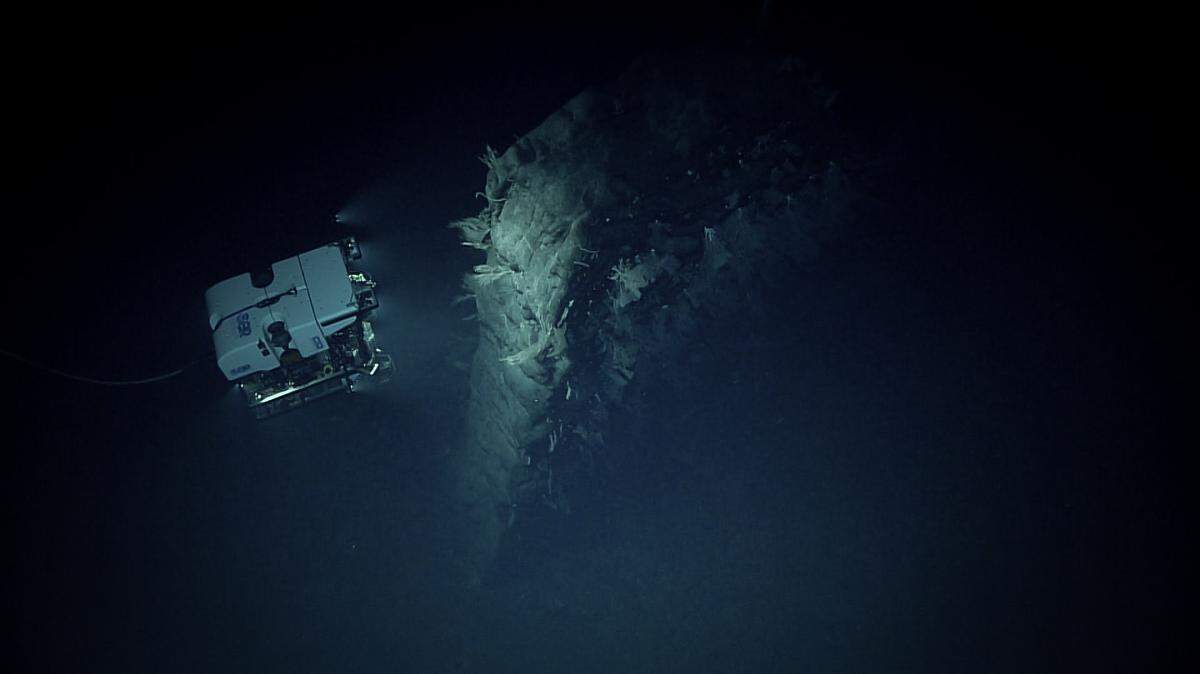
A massive stone monolith has been found protruding from the Pacific Ocean seafloor like a giant finger, according to NOAA Ocean Exploration.
The pillar is 49 feet high, 36 feet long and 13 feet wide, and sits at a depth of about 6,700 feet, the National Oceanic and Atmospheric Administration said on its website.
It was encountered Tuesday, April 22, when the NOAA Ship Okeanos Explorer sent a remotely operated vehicle to explore a submerged ridge 1,160 nautical miles northwest from Honolulu.
Scientists were initially unsure what was confronting them in the dark.
“That’s like a huge rock, or is that a wall or what is that?” one researcher was heard asking during a live broadcast of the discovery.
“That’s wild,” another said. “Looks like a chimney.”
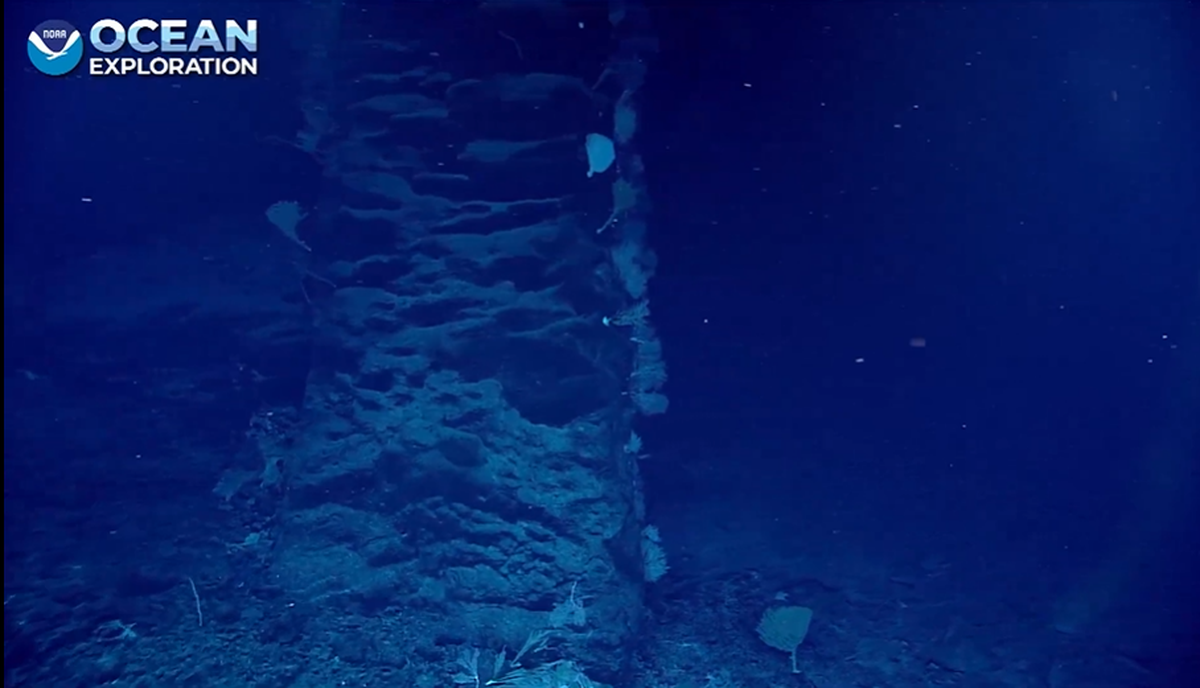
Closer inspection revealed the black crust was shiny and the rock had “a forest” of sea life clinging to some sides, but not the others.
The researchers quickly began tossing out possible explanations, leading them to the only logical conclusion: They found an unusual volcanic dike.
“It’s an intrusive lava feature that will kind of shove itself between previously formed lava rock. Often times they’re of a different composition of the rock that they’re in, so they tend to be slightly more resistant to weathering,” one researcher explained.
“There was once rock around this and now it has weathered away and that’s super weird. It’s not common to see them this exposed.”
Similar formations are found on land, including the Great Dikes of Colorado’s Spanish Peaks, but this one is different, according to Val Finlayson, a University of Maryland geologist who was part of the NOAA expedition.
“What’s unusual about this dike is that the (camera) came across it in an otherwise relatively flat area, just sticking straight up out of the ground,” Finlayson told McClatchy News in an email.
“It’s interesting to see a standalone dike like this in a setting where the seamount may not have ever been above sea level, where typical erosion processes could have removed the host rock the dike intruded into. Some other sort of erosion or wasting process must have taken place.”
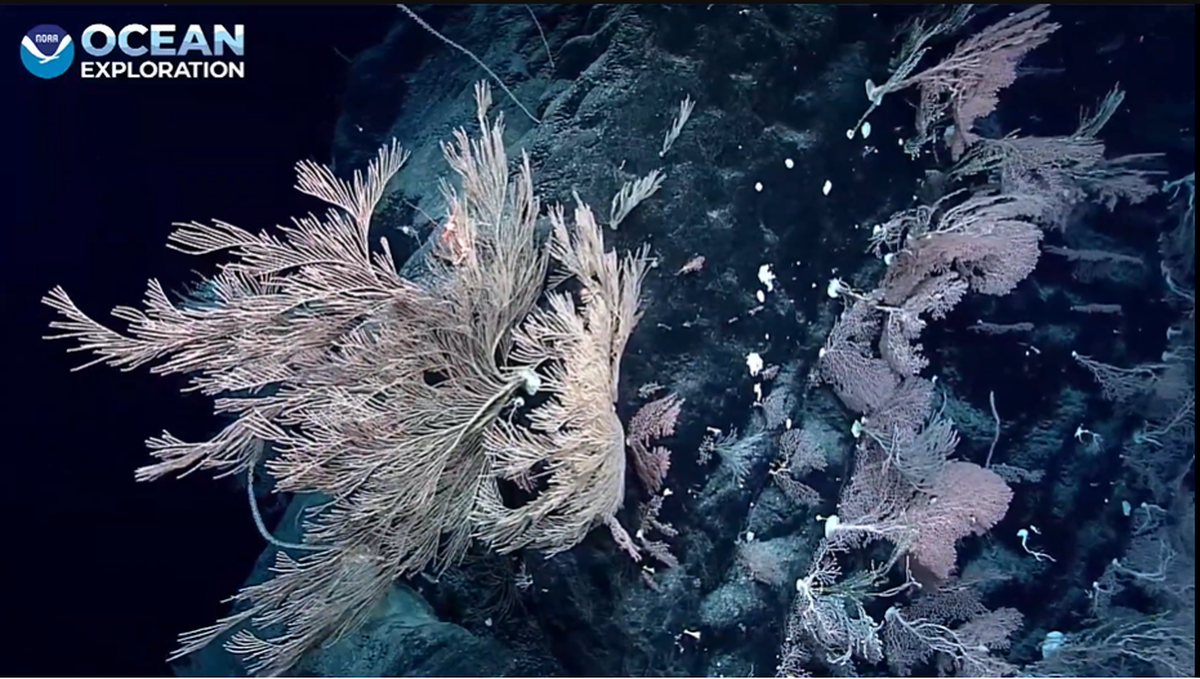
An age for the formation has not been determined. But it’s believed to be part of “the volcanic plumbing system” of a nearby seamount, which began life as an underwater volcano.
As for the “shine,” that’s due to the rock being polished by fast moving currents, the team concluded.
The formation was discovered as part of a 28-day expedition to explore and map deep waters in and around Papahānaumokuākea, northwest of the Hawaiian Islands. The expedition began April 8 and continues through May 5.
“Waters in the Pacific Islands region ... span some of the last relatively pristine marine ecosystems on the planet and harbor numerous protected species, wondrous geological formations, and undiscovered shipwrecks,” NOAA reports.
This story was originally published April 28, 2025 at 8:03 AM with the headline "‘Giant’ monolith discovered towering on Pacific floor, NOAA says. ‘Super weird’."