
North Carolina legislature pays $141,000 bill over retiring aide’s pension costs
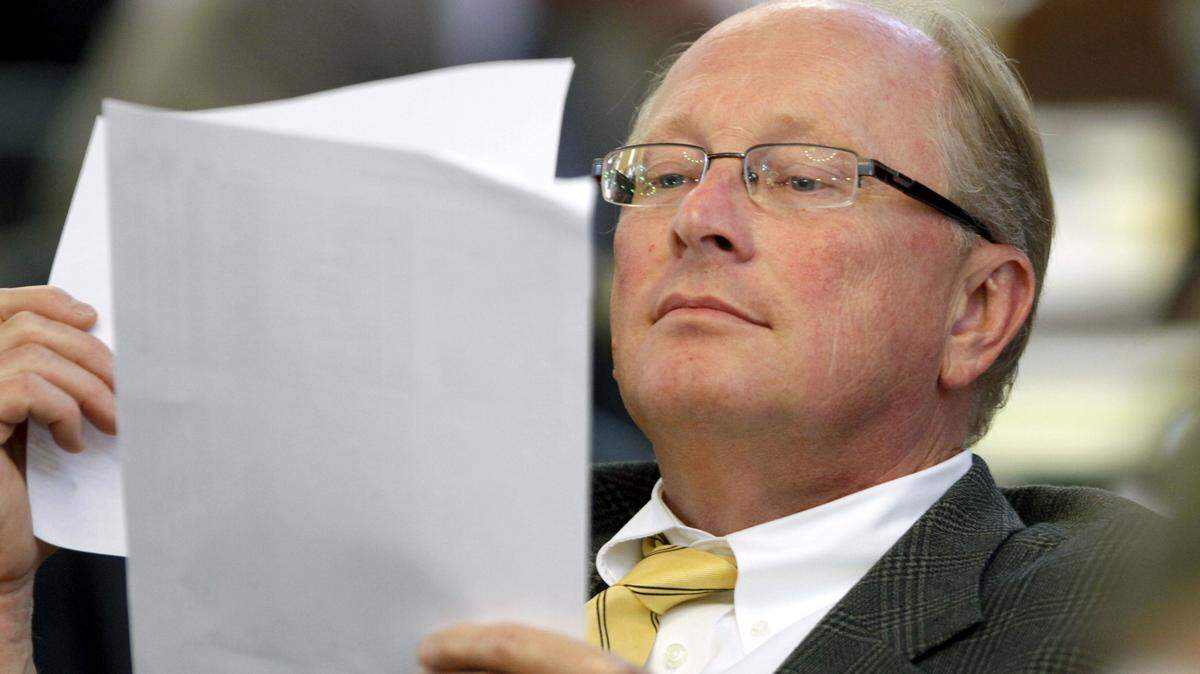
Taxpayers have paid $141,000 toward the retirement of Mitch Gillespie, a former aide to North Carolina House Speaker Tim Moore, after his pension triggered a state law intended to curb pension spiking.
The 2014 law is meant to keep the retirement system from being on the hook for inflated benefits caused by big raises late in an employee’s career. Gillespie retired Sept. 1, 16 months after he left his job.
The bill from the State Treasurer’s Office makes no mention of any unusual increases in Gillespie’s pay. It said the state formula that sets Gillespie’s pension showed he would be eligible for an annual benefit that’s $11,874 higher than what was invested into the retirement system during his employment plus investment gains. Over his lifetime, as projected by the state, that adds up to $141,000.
Legislative Services Director Paul Coble’s office released a copy of the bill Friday, after a public records request by the News & Observer.
The law requires state agencies to cover the expected pension costs for retirees who made $100,000 or more annually as employees that exceed the contributions from the retiree and his employer over the years along with the pension fund’s return on investments. The billing marks the first time under the nearly five-year-old law that a legislative retiree has exceeded the cap.
The state calculates pensions based on the average of a retiree’s highest consecutive four years of pay, which are typically at the end of their careers. That formula has led to cases in which employees who earned far less in their earlier years received pensions that are worth more than what was invested on their behalf.
In some of those cases, boards overseeing highly-paid administrators for community colleges boosted their pay as they neared retirement by converting benefits such as travel allowances and annuities into salary. That helped prompt the anti-pension spiking law.
Gillespie’s pension
Gillespie made far more in his final four years working on the staffs of the governor and speaker, averaging $117,081 a year, than in his 14 years as a state lawmaker making $13,951 in salary plus $104 per day for food, lodging and other living expenses when the legislature was in session.
The state treasurer’s bill to the legislature says that based on a formula that includes the contributions Gillespie made into the system, his maximum pension without triggering the anti-spiking law would reflect an average annual compensation of $83,481 in his final four years.
Gillespie’s retirement took an unusual path when, in his final eight months on the job, he used several months of sick leave worth roughly $70,000 before he planned to retire on Jan. 1, 2019. His salary was $107,656. Records released to the News & Observer revealed Gillespie’s use of sick leave last February, and Gillespie said at the time it was based on a misunderstanding.
The bill from the treasurer does not mention Gillespie’s sick leave.
BEHIND THE STORY
MOREHow we did this story
Legislative Services Director Paul Coble’s policy on public records requests is that they are handled in the order they are received. The state’s public records law contains no such requirement, and requires records be turned over as “promptly as possible.”
Brooks Fuller, the director of the North Carolina Open Government Coalition and Sunshine Center at Elon University, said his office and the UNC School of Government recommend that simple requests be responded to in a “practicable and reasonable amount of time, which is usually a few weeks.”
“A first-come, first-serve policy isn’t always the best reasonable policy to put into place,” Fuller said. “It is absolutely a neutral policy, but maybe not always the best policy.”
Garrett Dimond, Coble’s staff attorney, said in a letter to the N&O explaining the release of the state treasurer’s billing, that Coble waived his policy in this case. “(M)y office has become aware of your recent actions and conversations with employees of the General Assembly and I have advised Mr. Coble, the Legislative Services Officer, to make a limited exception to our normal public records fulfillment process for the sake of public transparency and as an extension of your previous public records request earlier in the year,” Dimond said.
Tacking on the unused sick leave would have qualified Gillespie for early retirement with a reduced pension benefit on Jan. 1. He would then have 20 years of service between his roles as a state lawmaker, assistant environmental secretary to then-Gov. Pat McCrory and aide to Moore. But the state treasurer’s office, which manages the pension system, didn’t count the sick leave as creditable service under state law.
Typically, state and local employees are eligible for full pensions only after working at least 30 years or reaching age 65 with a minimum of five years employment.
Gillespie, a McDowell County Republican, postponed his retirement and did not return to work.
Gillespie had turned 60 by the time he retired on Sept. 1, thereby qualifying under another rule allowing those at that age and over with five years of service to retire early and collect a reduced benefit. State treasurer’s records show Gillespie is collecting a $2,785 monthly pension, which amounts to $33,427 a year.
Legislature paid the bill
Frank Lester, a spokesman for the treasurer’s office, said the legislature has since paid the $141,155 bill, but he declined to identify the retiree involved and the specific circumstances requiring the payment. He cited a state law that limits how much information the treasurer can release on retirees. However, the bill provided by Coble’s office names Gillespie.
Gillespie did not respond to phone messages.
Joseph Kyzer, a spokesman for Moore, declined to explain the reason for the bill, referring all questions to Coble and the legislature’s human resources director, Carolyn Hunt. Neither could be reached.
Coble, a former Raleigh mayor and a Republican, also did not respond to requests for an interview earlier this year when the N&O looked into the sick leave payments to Gillespie. Coble did not provide records between the treasurer and his office regarding the issue then.
Pat Ryan, a spokesman for Senate leader Phil Berger’s office, said his office was unaware of the $141,000 billing. Berger and Moore appoint the legislative services director and oversee his duties.
“It does not involve any president pro tem staff,” Ryan said. “If it did it might be a situation where someone in our office might be aware of it.”
He, too, referred the matter to Coble.
Sick leave
As an aide to Moore, Gillespie involved himself in a cleanup issue Moore had with state regulators at a former chicken processing plant he co-owned. Moore said he was unaware of Gillespie’s help, which has drawn an ethics complaint from a government watchdog. The state ethics commission has yet to issue a ruling on the complaint.
Gillespie had also done minor home improvement work on Moore’s condo. Moore said he didn’t ask Gillespie to do the work, and Moore reimbursed him after the N&O inquired about it.
House Minority Leader Darren Jackson, a Wake County Democrat, said lawmakers should scrutinize Gillespie’s use of sick leave.
“To the extent that he was treated any differently than any other regular state employee would have been treated that’s something that should be looked at,” Jackson said.
Gillespie earlier this year said he took the sick leave based on bad advice, and produced a letter from Hunt in which she said there was a “miscommunication by my staff regarding the appropriate use of sick leave.” He declined to tell The News & Observer early this year whether he would have to pay the sick leave back.