
Judge wants to know: After Greg Lindberg’s conviction, did his consultant harass a juror?
Billionaire businessman Greg Lindberg was convicted this month of trying to bribe a North Carolina official whose agency oversaw part of the Durham businessman’s insurance empire.
Now, the federal judge who presided over Lindberg’s public corruption trial in Charlotte has ordered an investigation of whether one of the businessman’s consultants harassed a juror after the verdict came down.
U.S. District Judge Max Cogburn also sent a bold-face, all-caps warning to Lindberg and John Gray, a Lindberg business associate also convicted March 6 of bribery and corruption.
“The Court will not tolerate attempts to taint the jury’s verdict by applying undue pressure on jury members,” Cogburn wrote in his Wednesday order.
“Defendants Lindberg and Gray, as well as their attorneys and agents ... SHALL NOT contact the jurors during the ongoing investigation that is being conducted by the U.S. Attorney’s Office.”
Cogburn’s ban also included Matt McCusker, identified in court documents as senior consultant and president of Convince LLC, a Fort Mill firm hired by Lindberg to interview jurors after the trial.
In a statement to Cogburn that was attached to the judge’s order, McCusker acknowledged “reaching out to jurors to see if they would be willing to discuss the case,” but added:
“There was no harassment, intimidation, or bullying” because, McCusker wrote, “that type of behavior would be unethical.”
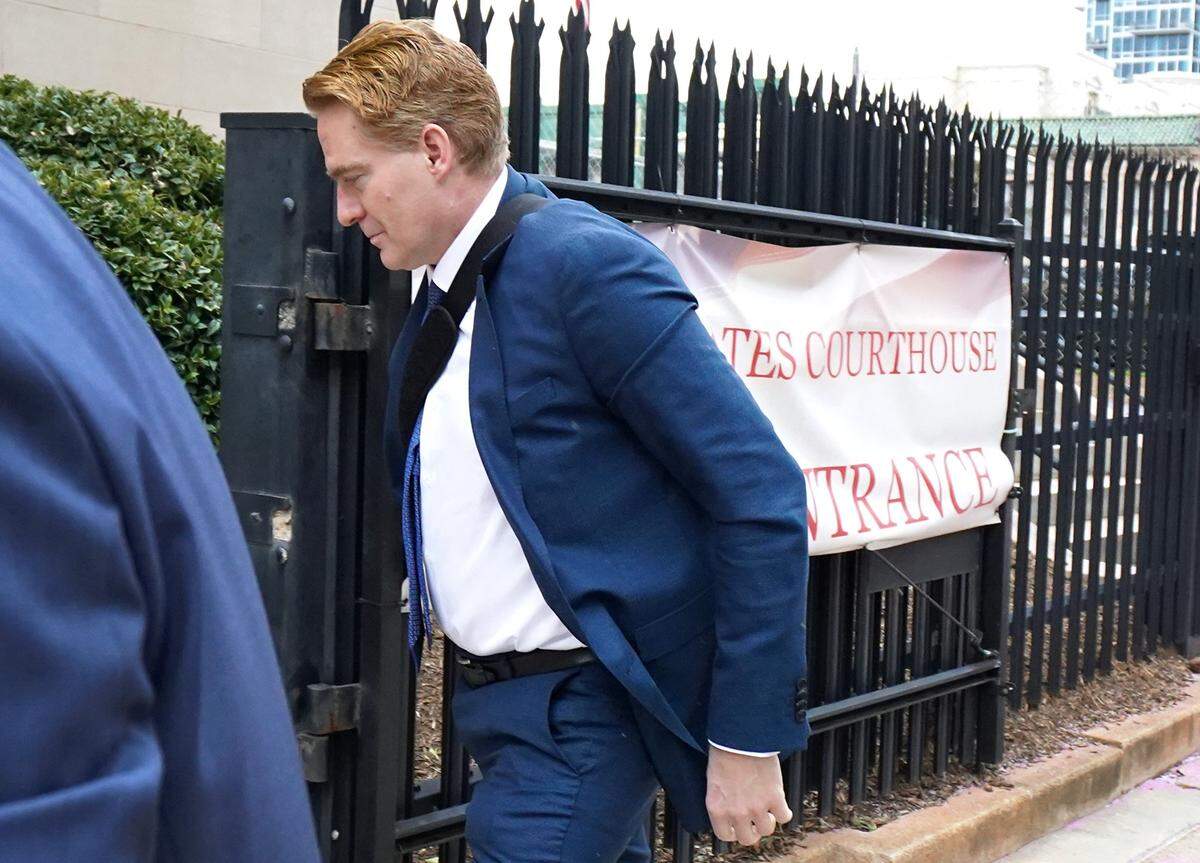
Based on his order, Cogburn remains unconvinced. He said he had learned shortly after the trial that a juror had been approached by “an individual affiliated with Defendants.”
“When the juror declined to speak with that individual, they were allegedly told, ‘Don’t you know these men could get life?’” Cogburn wrote.
In fact, Lindberg and Gray both face a maximum of 30 years for their convictions on the two corruption counts. Cogburn will sentence the two men at a later date.
Lindberg’s attorneys have said they will likely appeal.
Lindberg sues Causey
During a trial, jurors are banned from reading or watching media coverage of the case or going online to do independent research beyond the evidence that’s presented to them in court.
According to McCusker’s Convince, LLC’s website, the firm attempts to uncover juror misconduct to strengthen a client’s case for overturning a verdict.
“Find out if a juror Googled during deliberations,” the website says. “Arm yourself for an appeal. Prepare for the next iteration of this trial.”
A spokeswoman for U.S. Attorney Andrew Murray said Thursday that the office cannot comment on an ongoing investigation.
The eight-day trial explored one of the largest political bribery scandals in N.C. history involving one of the state’s largest political donors.
In the end, Lindberg and Gray’s jury deliberated over three days before finding the pair guilty of trying to bribe state Insurance Commissioner Mike Causey. A third defendant, Lindberg associate John Palermo, was found not guilty.
Causey, who cooperated with the FBI investigation and wore a hidden camera during some of his meetings with Lindberg, provided pivotal evidence during the trial.
If Causey removed a senior regulator overseeing one of Lindberg’s companies, Causey testified, Lindberg promised to funnel $2 million in campaign contributions into Causey’s account.
Part of the money flowed through the state Republican Party. Former state GOP Chairman, former Congressman Robin Hayes of Concord, has already pleaded guilty to lying to federal investigators and awaits sentencing. He could face up to six months in prison.
And audio and video recordings capturing the quid pro quo bolstered the government’s case.
In response, attorneys for Lindberg argued that the Durham businessman and his co-defendants were innocent victims of a politician who used his power to “try to entrap and ensnare them.”
Lindberg mounted an expensive defense. He and Gray were flanked in court by multiple attorneys, and he took the unusual step of hiring a “ghost jury” to observe the trial and give their reactions to the defense.
Lindberg’s legal fees appear to be growing.
On Tuesday, he and several of his companies filed suit against Causey, accusing the insurance commissioner of abuse of power and breach of the public trust.
Ames Alexander contributed.
This story was originally published March 19, 2020 at 1:27 PM with the headline "Judge wants to know: After Greg Lindberg’s conviction, did his consultant harass a juror?."