
‘I hope more members will wear masks.’ NC legislature back for a session like no other
The coronavirus pandemic has changed life in North Carolina for millions of people. The state has been under a state of emergency since March 10 and a stay-at-home order since March 30.
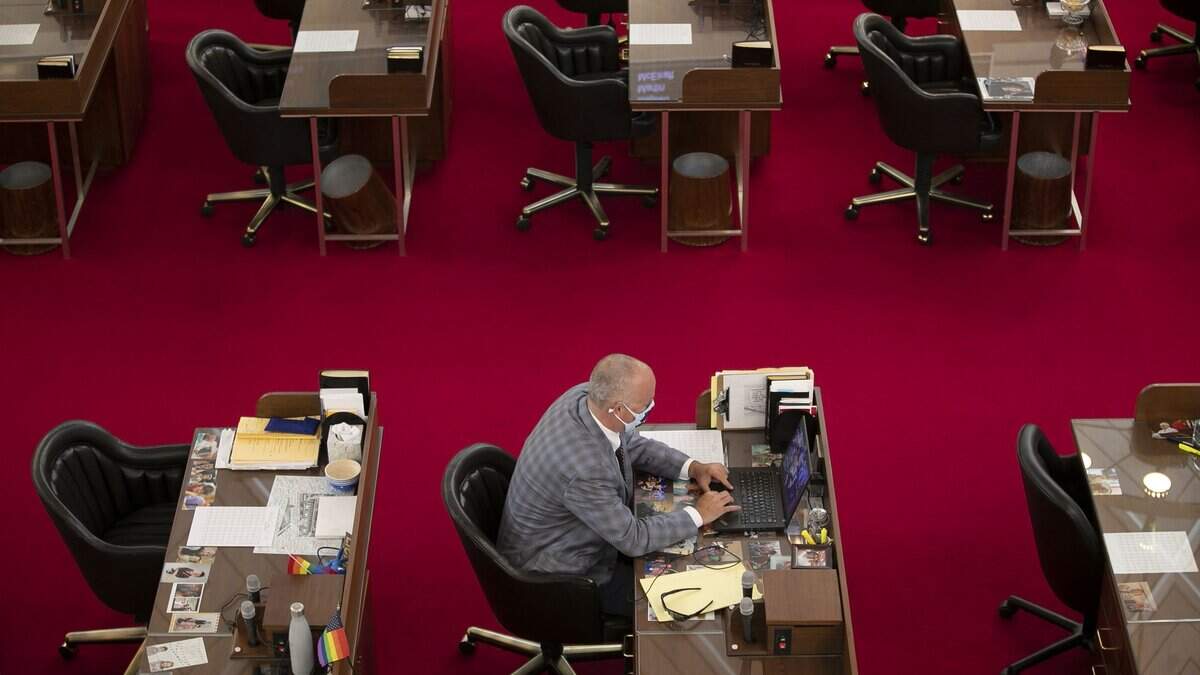
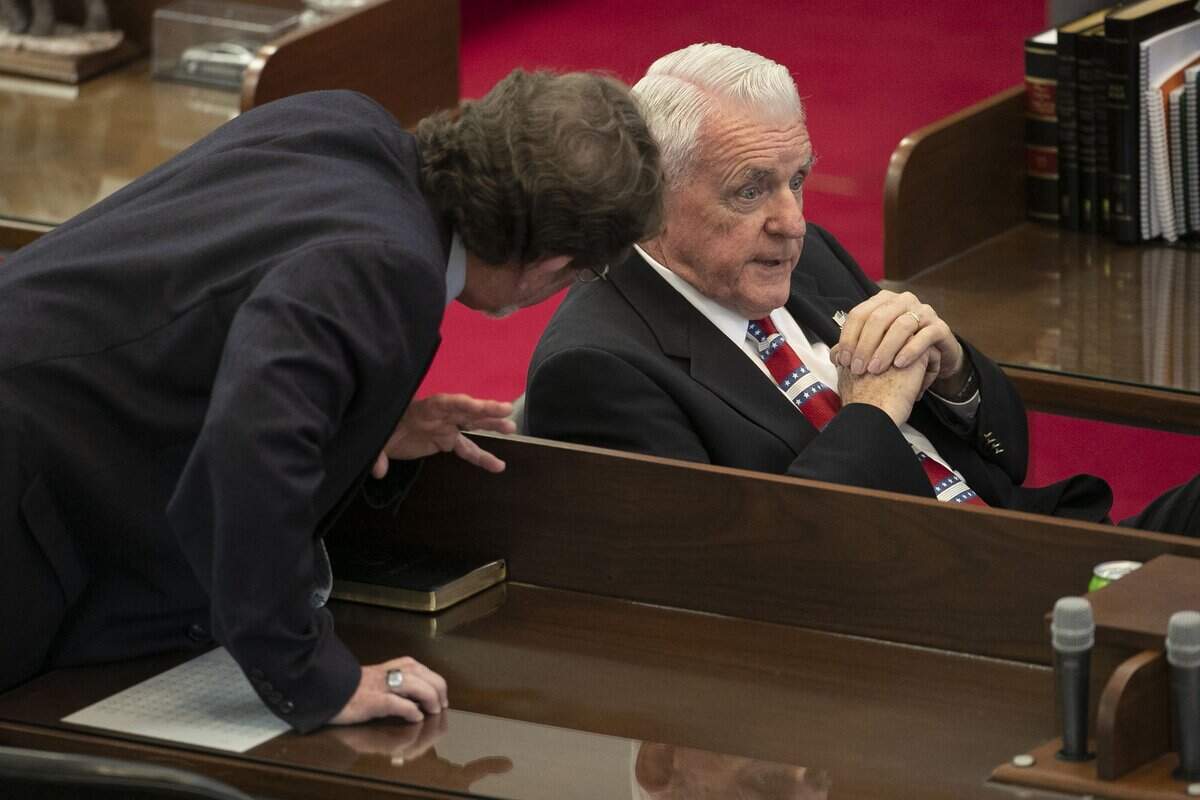
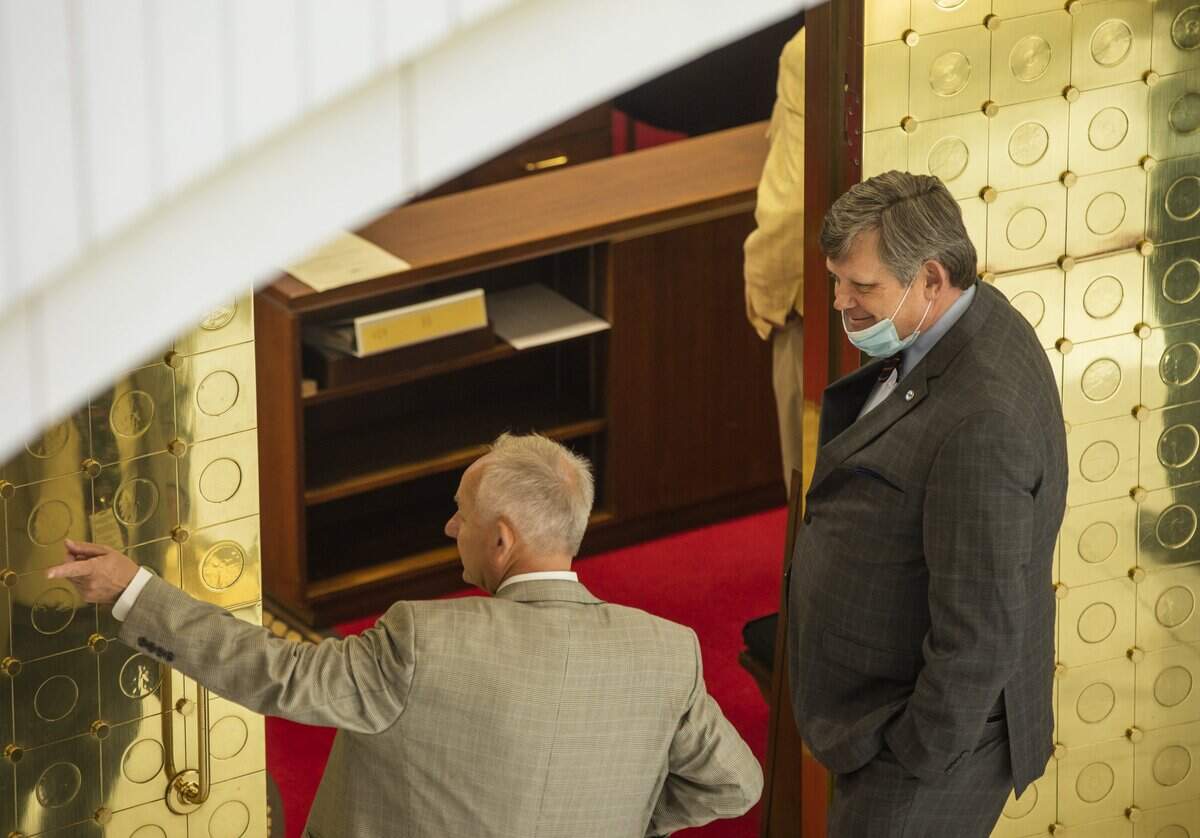
The state legislature returned Tuesday, for the first time since the pandemic spread to North Carolina, to start a historic session like no other. Many lawmakers wore masks and sat apart from each other in a Legislative Building that was much more empty, and quiet, than usual. And their primary task is to pass COVID-19 relief.
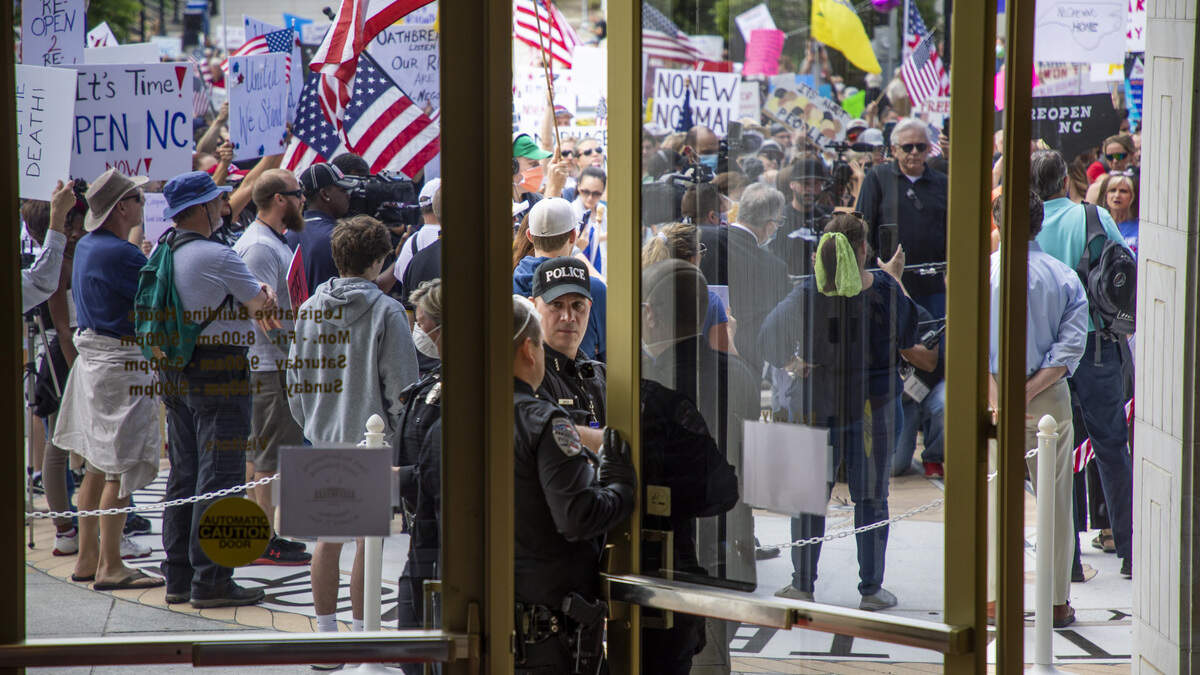
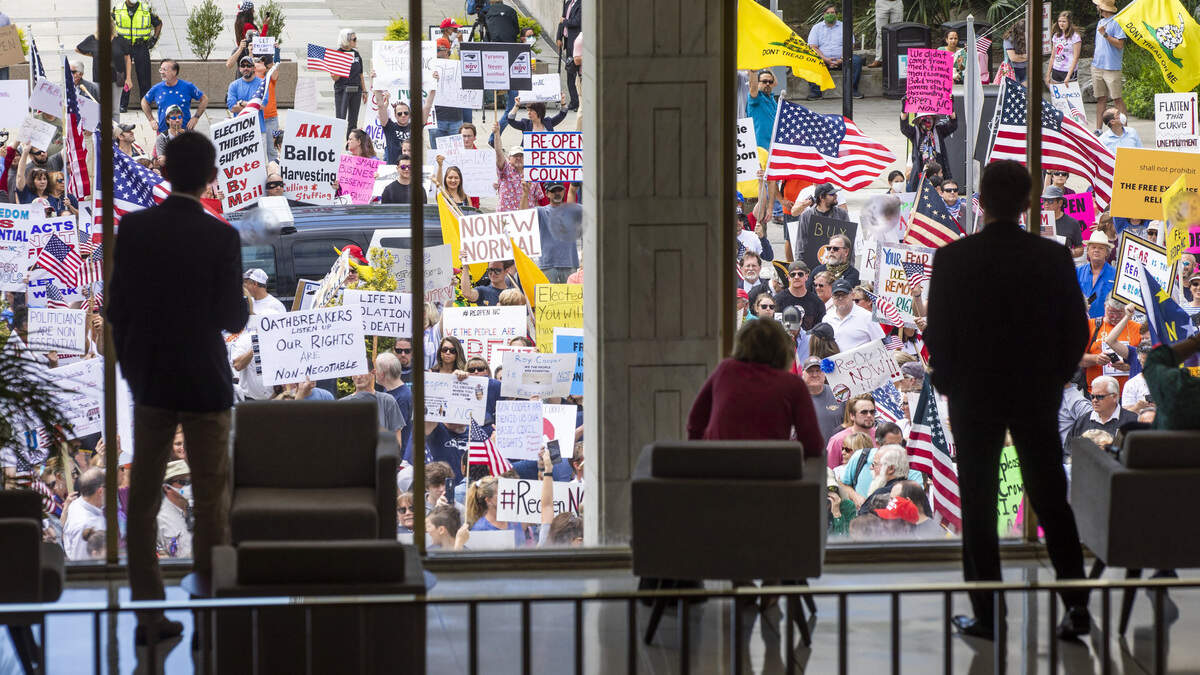
Outside at right around the time the session was beginning at noon, police were shutting down the roads surrounding the building to allow protesters to march through the street, waving flags and signs and demanding the state’s economy reopen.
Some health care workers came for a counter-protest, waving signs telling the ReOpen NC protesters that they should have stayed home.
The session will likely be only days or weeks long and focused on the coronavirus, then adjourn until July or August once lawmakers have a better picture of the fiscal situation. Economists have advised state lawmakers of a coming recession.
Session begins
Inside the legislature, the building was nearly empty compared to a regular day. The doors were locked and members of the public weren’t allowed inside. Only legislators, staffers and credentialed members of the news media could come inside.
Another change, though, allowed for more public access than ever. The House now live-streams its sessions online.
At the door, instead of sending people through a metal detector, a security guard took everyone’s temperature before deciding if they could come in.
Most members of the House and Senate were absent as they officially opened the session at noon, and the few who did show up mostly left for the relative isolation of their offices after the opening. Republican Speaker of the House Tim Moore stuck around for another hour to take questions from the media, as did the top Democrat in the N.C. House, Rep. Darren Jackson. And in the other chamber, Republican Senate leader Phil Berger held a news conference later in the afternoon.
Each chamber spaced out lawmakers, with some sitting the mandated social distance of 6 feet apart and others right next to each other.
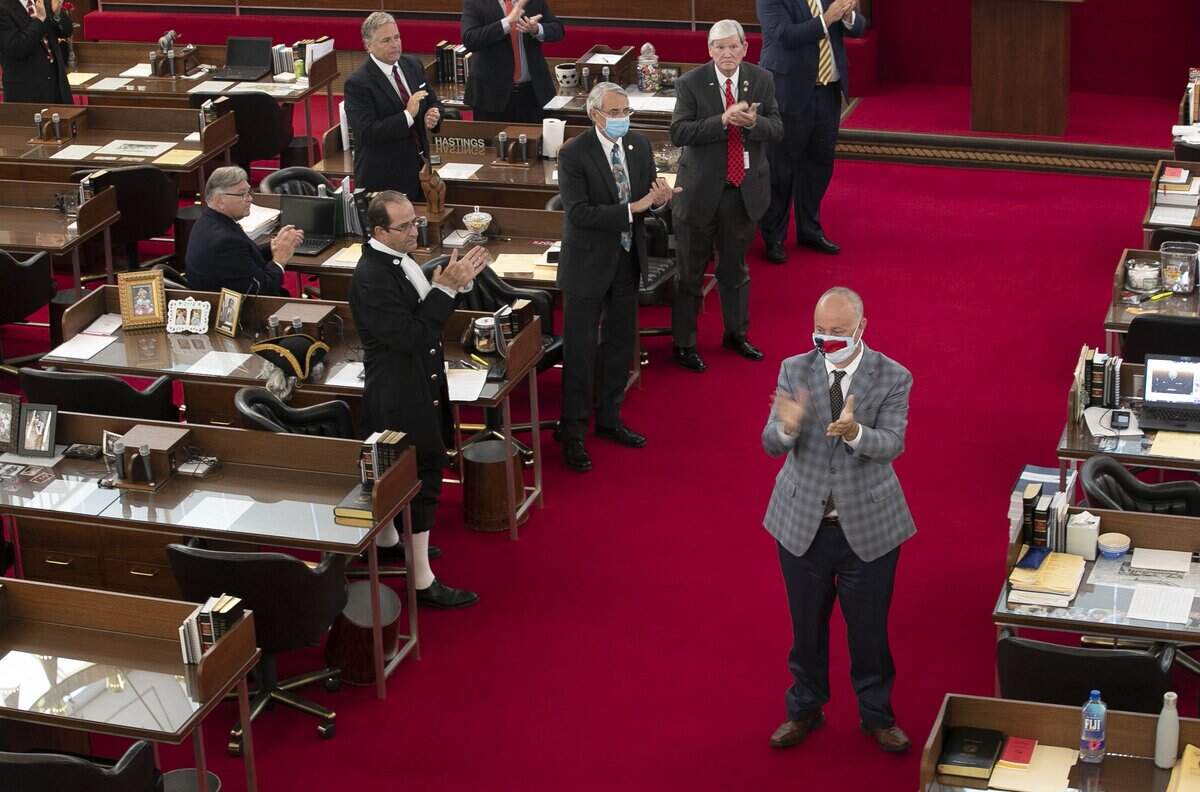
Democrats in the House wore masks; some, but not all, Republican lawmakers wore them as well. House Rules Chair Rep. David Lewis emailed guidelines to all House members recommending they wear masks in the building. Lewis wore one, only removing it while he was speaking during the session that lasted about 30 minutes. Moore said every member of the House is given a mask daily.
Jackson wore a mask depicting the North Carolina flag, made by a family friend.
“I hope more members will wear masks this week,” Jackson said.
Lawmakers urge consensus
The House has been holding regular, public committee meetings in recent weeks to hone its plans for a relief package and other bills, but the Senate has not. And Moore said at around 1 p.m. that he still had not heard from Berger or other senators about how much they plan to propose spending on the state response.
But he said the proposals from the Republican-led House and Democratic Gov. Roy Cooper are already fairly similar, and he expects the same from the Senate once those details do become public.
“I can’t imagine that, when they get their proposal together, that it will be too different from ours,” Moore said.
“People need help, and they expect us all to work together,” Jackson said. “There’s a lot of need out there. Hopefully we can come to consensus and do what we have to do and need to do.”
On Tuesday afternoon, senators filed Senate Bill 704, the COVID-19 Recovery Act, co-sponsored by most of the Senate.
Berger told reporters Tuesday that he and Senate Democratic Minority Leader Dan Blue worked together to create a system for members of both parties to submit their ideas for consideration.
After that bipartisan process, almost all of the state’s 50 senators signed on to be sponsors of the bill.
“We could’ve come up with a bill that would get every single Republican vote and not a single Democratic vote,” Berger said. “But I don’t think it would be what the people of the state expect us to do, given the circumstances.”
The Senate will hold its committee meetings — and possibly a voting session — on Wednesday, while the House is anticipating committee meetings Wednesday and a vote on Thursday.
Special sessions in emergencies
One of the first bills filed in the new session would amend the state constitution to call the General Assembly back for a special session within 15 days of a state of emergency declared by the governor, if it has already been adjourned for at least 15 days. House Bill 1033 is sponsored by Rep. Keith Kidwell, a Chocowinity Republican.
House Bill 1040, called Healthcare for Working North Carolinians, is a Medicaid expansion bill for essential workers who fall in the “coverage gap” — making too much income for Medicaid but not enough for government-subsidized private insurance. It is sponsored by Rep. Sydney Batch, a Wake County Democrat.
Members of a House COVID-19 committee have been meeting for a month in four separate groups and have produced several sets of recommendations, which they filed as bills Tuesday:
▪ House Bill 1035 is a catch-all education bill that waives several legal requirements for school districts given that school facilities are closed for the remain of the school year. End-of-grade standardized testing and other assessments are among the waivers in the draft bill, which would also loosen the calendar law to allow students to return as early as Aug. 17, The News & Observer previously reported. The sponsor is Rep. Craig Horn, a Weddington Republican.
▪ HB 1039 includes tax relief and better unemployment benefits access. The tax relief would waive interest fees accumulated because of tax filing and payment deadlines being extended from April 15 to July 15 for federal and state taxes, the N&O previously reported. House and Senate leaders and Cooper have already said they support the interest waiver on income taxes.
▪ HB 1036, focused on policy, includes increasing access to medical supplies, planning a state stockpile of personal protective equipment, expanding antibody testing and allowing dentists to administer diagnostic and antibody coronavirus tests.
▪ HB 1037, making funding recommendations, includes $25 million to the Department of Health and Human Services for COVID-19 response for the state lab and local and rural health. Another $25 million would go to behavioral health, and there is also funding for temporary Medicaid expansion for COVID-19 patients, the N&O previously reported.
▪ HB 1034 would provide $75 million for emergency small business loans through Golden LEAF (Long-term Economic Advancement Foundation) for up to $50,000 per qualifying business. The sponsor is Rep. Stephen Ross, an Alamance County Republican.
Other House bills filed Tuesday included allowing emergency video notarizations, appointments to public offices and changes to the legislative retirement death benefit. HB 1036 would provide $1 million to the town of Locust for a water and sewer line extension. The sponsor is Rep. Wayne Sasser, an Albermarle Republican. Locust is a small rural city in Stanly County, in Sasser’s district.
News & Observer and NC Insider reporters Dawn Baumgartner Vaughan, Will Doran, Danielle Battaglia, Colin Campbell and Lucille Sherman contributed to this report.
This story was originally published April 28, 2020 at 11:21 AM.
.jpg)