
NC legislature is back. Is it doing enough to keep coronavirus out of its buildings?
As the legislature took a big step Monday toward resuming business as usual, some Democrats are worried that more precautions should be taken to avoid spreading coronavirus.
Lawmakers are in the short session that is held in even-numbered years. After a one-week coronavirus relief session and a two-week break, the session resumed Monday to address a wide variety of issues.
Lobbyists and the general public were allowed back inside the legislative complex for the first time since access was shut down as a precaution in April — although the buildings will be restricted to 50% of their typical occupancy limits. Security guards are using forehead thermometers at the doors to keep out anyone with a fever.
Not many people showed up Monday. The hallways of the Legislative Building were largely empty, and fewer than a half-dozen people were in the House and Senate galleries during brief, no-vote sessions Monday afternoon. Most them were journalists, although four were protesters bringing signs supporting reopening businesses.
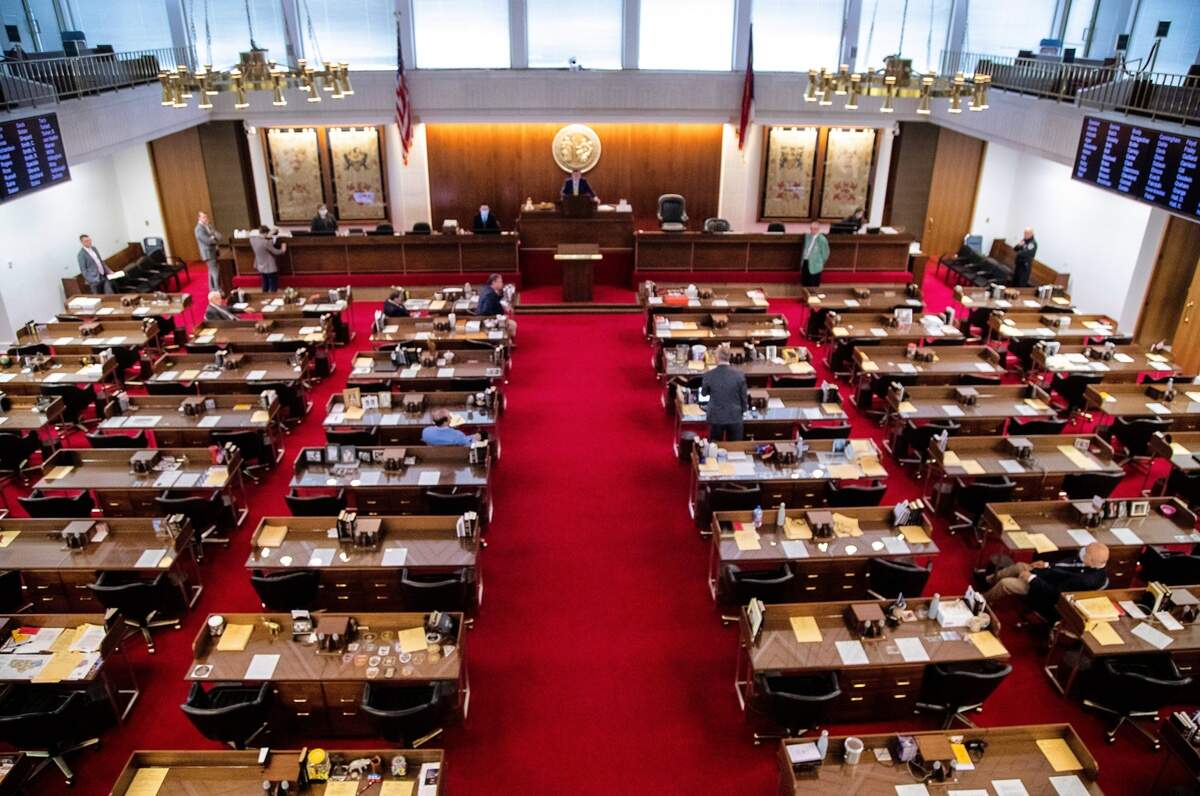
House Speaker Tim Moore and Senate leader Phil Berger announced the changes last week, at the same time they were pushing Gov. Roy Cooper to reopen shuttered businesses more quickly.
“The legislature is the people’s branch, and public access to the people’s building should not be closed but for time-limited and extraordinary circumstances,” they said in a news release.
But the House and Senate are taking different approaches this week: House committees will still meet remotely through video conferencing, and floor votes will allow for proxy voting through party leaders. Moore said that will change next week, although House members will have more time to vote if they don’t want to all be in the room at once.
The Senate started holding normal committee meetings Monday, which has some Democrats uneasy.
“There are definite concerns among our members about how to return to Raleigh for the short session and do it safely,” said Leslie Rudd, a spokeswoman for Senate Minority Leader Dan Blue, D-Wake. “Some members are in support of proxy votes like they have in the House, requiring masks, and virtual committee meetings.”
Blue’s office is working with Berger “to try to develop further health safety measures,” she said. A Monday afternoon Senate committee hearing on unemployment concerns featured spaced-out chairs and limited capacity, although even then the chairs weren’t all full.
The House is keeping the same format as it used for the session held to pass coronavirus bills, after House Democratic Leader Darren Jackson asked Moore to do so “as long as the state remains in Phase One” of Cooper’s reopening plan, Jackson said. He said he’s unsure if that approach will extend beyond this week.
Berger spokesman Pat Ryan defended the Senate’s decision to resume meetings this week.
“In general, this virus is going to be in the population so long as no vaccine exists, perhaps forever,” he said in an email. “The work of the government must go on. The Legislative Building will operate much like the governor’s retail establishment orders. The building’s maximum capacity is reduced, and masks are recommended but not required.”
Masks will likely be a point of partisan contention: During the previous session, legislators and staffers from both parties wore them, but Democrats wore them in greater numbers than Republicans. “I am worried that some of my colleagues will not follow the social distancing and mask-wearing guidelines,” Jackson said. “It’s already happening. You see it in the building. You see it in this protests they attend and speak at.”
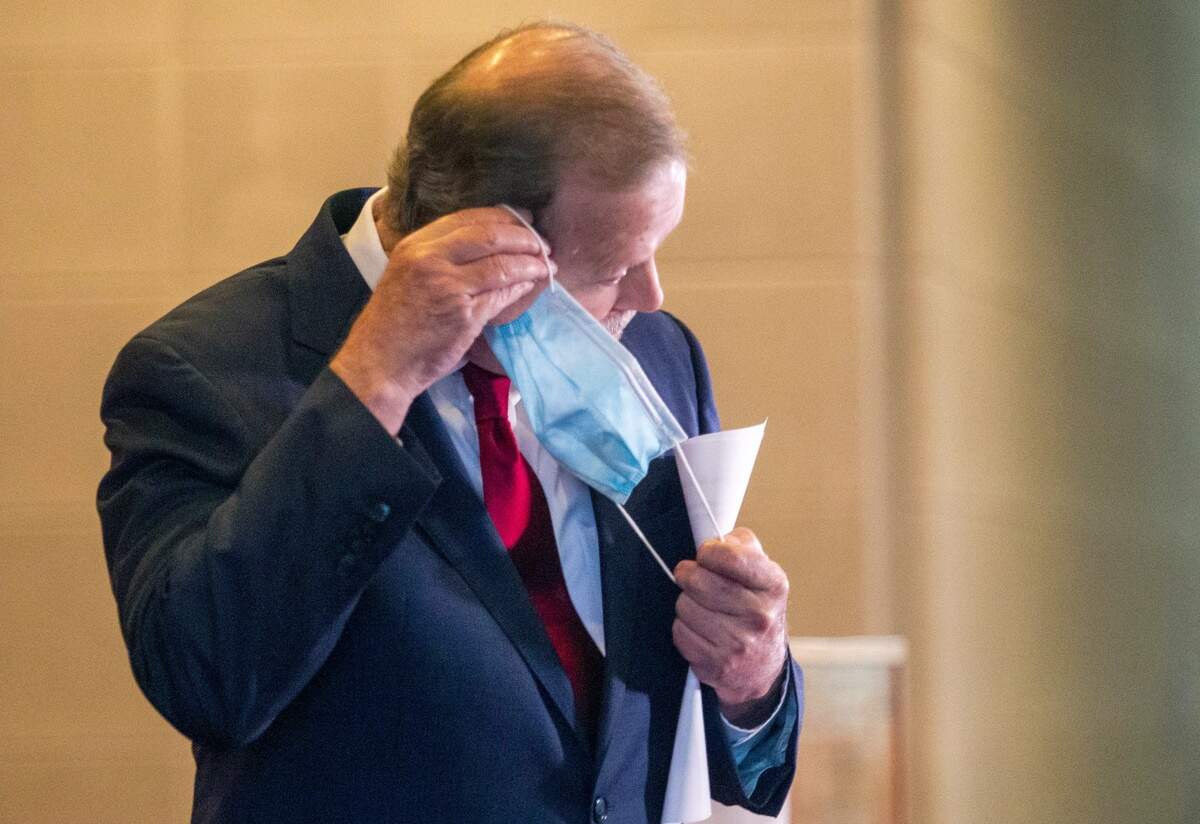
Berger wore a mask to his Monday press conference, but masks appeared along party lines at the Senate Commerce Committee, where Democrats wore masks, but none of their Republican colleagues did.
Committee rooms could pose social distancing challenges, with dozens of people expected to attend meetings.
Berger and Moore said in their release that committees “will meet in the largest rooms available.” The largest, Legislative Office Building Rooms 544 and 643, will reopen this week after months of renovations.
But two Senate committees, transportation and state/local government, are scheduled to meet this week in Legislative Building Room 1124/1224, where legislators and members of the public have historically been seated far less than six feet apart.
Ryan says that’s necessary because Room 643 can’t host every meeting. Senate Transportation, he said, “is a smaller committee, and social distancing will be maintained.”
Some lawmakers question why the legislature needed a two-week break from business, and they want to get back to work.
“There is so much work that we left undone by not even getting to a consensus budget in the long session,” said Sen. Erica Smith, D-Northampton. “We don’t need to be taking these breaks, working in silos, we need to come together and get the work done, and then we can take a break. Every day we’re in session, whether we’re having skeletal sessions or working sessions, costs the taxpayers of North Carolina about $46,000 a day.”
For more North Carolina government and politics news, listen to the Domecast politics podcast from The News & Observer and the NC Insider. You can find it on Megaphone, Apple Podcasts, iHeartRadio, Stitcher or wherever you get your podcasts.