
As report shows suicides rising in NC jails, lawmakers propose canceling safety rules
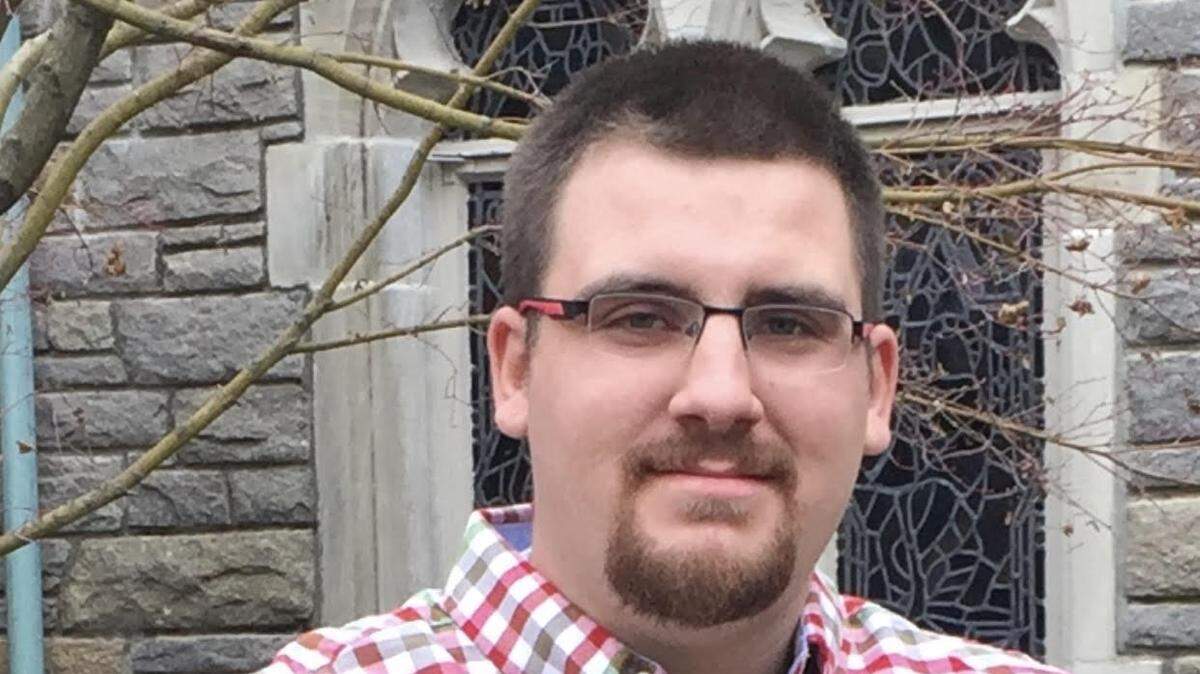
When investigators checked Mason Quinn’s jail cell after he hanged himself using the elastic from his boxer shorts, they found two nooses made from torn bed sheets.
That fact in a medical examiner’s report made his mother wonder why no one at the jail had an idea of what her 27-year-old son who struggled with mental illness was going to do the early morning of Aug. 20.
A subsequent state investigation produced a possible answer: There were big gaps in the checks detention officers were supposed to make while he was locked alone in a Lenoir County jail cell. And when the officers documented checks, they wrote down “generic times” instead of when they actually looked in on him.
“It’s sad,” said Karen Quinn, 51, of La Grange. “I can’t bring back my kid, but maybe we can make a difference for somebody else’s kid.”
The News & Observer has been chronicling jail deaths like these for nearly three years. Their numbers are growing, but instead of doing much about it, lawmakers are looking at closing off rules that would increase supervision and mental-health screening for inmates.
Two lawmakers, one a former Pender County sheriff, the other a former chief deputy for Randolph County, have filed House Bill 1173 that would throw out the new rules. It comes after the North Carolina Sheriffs’ Association opposed several of them and put them on hold by calling for legislative review.
A new report released Tuesday by Disability Rights North Carolina shows that jail deaths and suicides in the state have risen over the years, with 49 deaths occurring last year alone.
“What we’re seeing again and again in these reports is a failure to adequately supervise folks,” said Luke Woollard, a staff attorney at Disability Rights NC. “And that involves not only walking by the cell and doing a direct observation. That involves recognizing when these folks need to be on special watch.”
According to the Disability Rights NC report, 20 inmates died by suicide last year, a 67% increase from 2018 and a high since the organization began collecting data in 2013.
Legislature may cancel regulations
Susan Pollitt, a supervising attorney for the organization, said the set of regulations approved by the NC Department of Health and Human Services, Gov. Roy Cooper, and Attorney General Josh Stein in 2019 would make jails safer.
Proposed by the Division of Health Service Regulation, the regulations require, among other changes, that officers physically enter a cell block when conducting in-person checks of inmates, and that local jails provide routine mental-health, intellectual-disability, and substance-abuse care.
The N&O reported in April that the state had a record year for jail deaths in 2019. State records also showed that in more than 40% of those jail deaths, detention officers had failed to properly watch inmates. Among those who weren’t watched properly are two inmates who died after assaults by other inmates, according to investigators.
The suicides include two in the Edgecombe County jail with supervision failures. In one of those deaths, a state health department investigator not only found that detention officers didn’t make many required checks on inmate Dontaous Devine, 31, of Raleigh, they didn’t perform life-saving attempts after finding him hanging in his cell. He was being held on federal gang-related charges that included murder and extortion.
In many cases, including the deaths of Quinn and Devine, county sheriffs and jail supervisors admitted in responses to the state that their staffs had failed to do their jobs.
“Officers have been counselled (sic) on and instructed to make the proper supervision rounds, supervisors have been informed to check to see that their staff are making and documenting the supervision rounds,” said Capt. Robert Daugherty, who runs the Lenoir County jail. “The officers that missed the supervision rounds the date of the incident were disciplined internally and counselled (sic) on their obligation to perform their duties.”
Quinn said she believes the jail was short-staffed that night, with detention officers who are overworked and underpaid. Her son was facing several charges, including second-degree kidnapping and first-degree burglary.
The N&O’s attempts to reach Lenoir County Sheriff Ronnie Ingram by phone and email were unsuccessful. Edgecombe Sheriff Clee Atkinson could not be reached by email.
Disability Rights NC obtained the state documents in the Quinn case.
Rep. Carson Smith, a Pender County Republican and former sheriff, and Rep. Allen McNeill, an Asheboro Republican and former chief deputy for Randolph County, are the sponsors of the legislation to block the rule changes. They and their legislative assistants could not be reached by email.
Eddie Caldwell, the Sheriffs’ Association’s executive vice president, said it opposed eight of 33 proposed changes, believing some needed clarification and others were not within the jurisdiction of DHHS. Both the in-person checks and routine-care changes are among those contested by the association.
“The jail is not a hospital,” he said, later adding that “if the legislature wants to turn our jails into mental health hospitals, then they need to decide that, not the state agency, and they need to fund it.”
Mental illness in jail
In the past two decades, the closure of mental health hospitals and the opioid crisis have driven many individuals struggling with mental illness or addiction behind bars.
Caldwell points to a lack of proper mental-health resources in the broader community as one reason why many inmates have died.
“If you look at the demographics of people in jail, versus the general population, they are more likely to have mental illness, substance abuse problems, failing physical health,” Caldwell said. “You have a much more fragile population.”
“The fact of the matter is that as long as we have jails, it’s not gonna be totally preventable,” he said.
“The rules won’t fix it,” he later added. “The only fix is don’t put people in jail who have mental illness and depression.”
He suggested that the rising deaths and suicides in state jails could be a result of more inmates entering the system, but said the association did not have the funding to conduct its own research.
The DRNC report reveals deaths by suicide in NC jails comprise 41% of all jail deaths in the state, compared to 31% of jail deaths nationally.
Ideally, both Woollard and Pollitt agree that jails should not be relied upon to treat those with mental illnesses. But many inmates arrive at a jail undiagnosed, Woollard said, emphasizing the need for mental health screenings as outlined in the updated rules.
“We would love to see anyone with a mental health diagnosis, or having a mental health crisis, moved quickly into a medical care facility, but that doesn’t reflect the reality of what’s happening,” he said. “And even if those people do go to a mental health facility and then are treated enough that they can come back to the jail, they still need that routine care inside the jail.”
Quinn said her son began showing signs of bipolar disorder and schizophrenia shortly after he graduated from high school. He had been in and out of mental hospitals, and had a history of drug abuse. She said jail staff were aware of his mental issues from a prior arrest but they didn’t place him on a heightened watch.
She said she has retained a lawyer and said she plans to sue the county over her son’s death. He leaves behind three children who are 10, 2 and 1.
She said lawmakers should be letting the rules go through. They take effect if the bill is rejected or not acted on by the end of the session.
“If I’m entrusted to be responsible for you, then it’s my job to make sure you are properly taken care of,” she said. “And if I don’t have the tools, that’s a failure on the powers that be, because mental health does not discriminate.”
This story was originally published June 6, 2020 at 1:06 PM.