
North Carolina residents with disabilities can get help voting at the polls
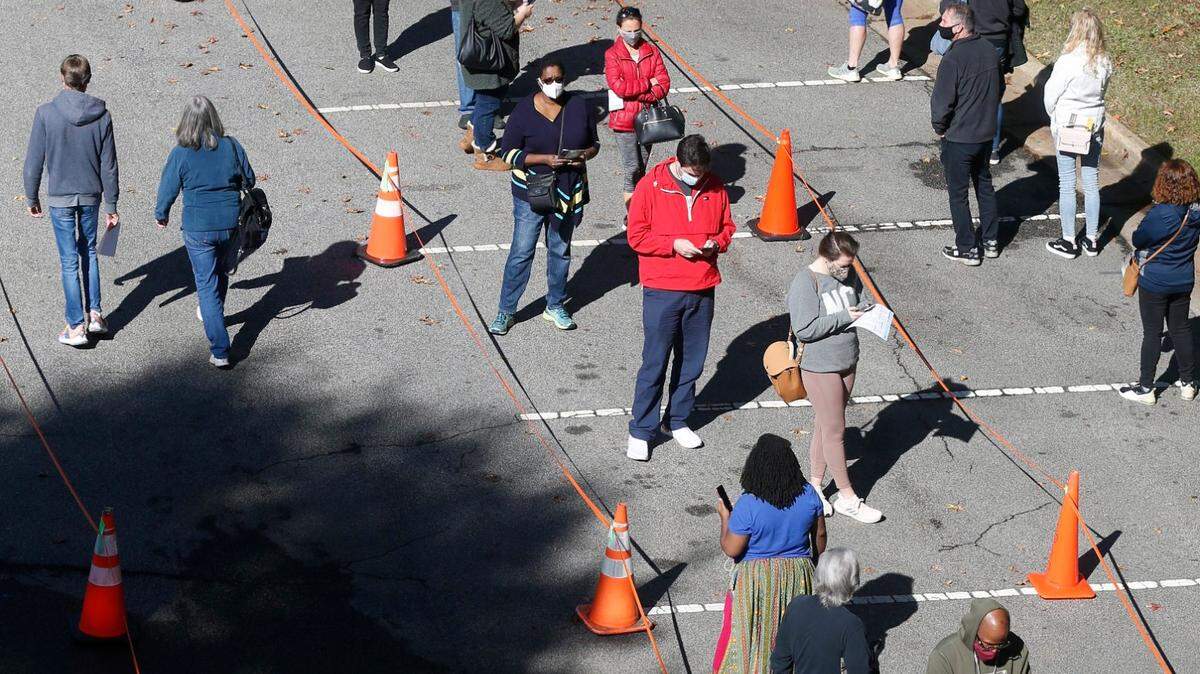
Casting a vote is a right provided to citizens by the U.S. Constitution, and but it’s a right people can exercise only if the polls are accessible.
Over the last few weeks, some voters have complained about accessibility issues for disabled voters and elderly voters at early voting sites in North Carolina.
Ashley Harrington, 32, went to cast an early vote at the Durham County South Regional Library when she noticed that the parking lot closest to the polls was full and many voters had to park across the street.
“There was a sign that said ‘Voter parking only,’ but there was no crossing guard to help the elders walk across, and traffic was busy,” Harrington said in an interview with The News & Observer.
So Harrington and other voters went into the street themselves to help people cross, so everyone could get in line safely. She said it took 2 hours to get through the line once polls opened.
“I cannot imagine having a disability, or handicap — or even just being a little older — and having to wait in a line like that,” she said.
In Guilford County, Jacqueline Hawkins found herself waiting in line to vote with a 90-year-old man before it dawned on them that there’s curbside voting available for the elderly or immunocompromised. But there weren’t any signs to indicate that it was an option, she reported to ProPublica’s Electionland project.
In an interview with The N&O, Hawkins described the experience as unprofessional and “maybe not direct oppression, but a big mistake.”
The polls must be accessible
Polling places are legally required to be accessible to all voters. The Americans with Disabilities Act outlines the requirements in regards to polling sites. They include:
- Accessible parking: This includes having proper signs indicating that this is an accessible spot, the parking space itself, and having enough space next to the spot to let voters with a mobility disability get in and out of their car.
Passenger drop-off locations: If the polling place is served by passenger drop-off, then at least one of those areas must be accessible.
Accessible routes: There must be an accessible path from the accessible parking spots, passenger drop-off areas, sidewalks, and public transportation stops that lead to the entrance of the polling location. There must also be an accessible path inside the polling location leading to the voting area.
Ramps: If any accessible route has a step, it must have a ramp that meets ADA requirements.
Protruding objects: Only objects up to 27 inches above ground are detectable to people who are blind, so if an object is higher than 27 inches and mounted on the wall, the ADA states that it “must not protrude more than four inches into the path of travel.”
Building entrance: A polling place must have at least one accessible entrance, and that door needs to be at least 32 inches wide.
Elevators/lifts: If the voting area is not on the same floor as the entrance, there needs to be at least one elevator that can be used independently.
For more information about accessibility requirements and solutions, go to www.ada.gov/votingchecklist.htm.
Polling locations in North Carolina are also legally required to have voting systems that are “equipped with features to help voters with disabilities cast their ballot privately and independently,” according to the NC State Board of Elections.
Voters can have an assistant help them
All voters are allowed to receive assistance at the polls from a near relative, which can include a:
- parent
- spouse
- child
- sibling
- grandparent
- grandchild
- mother- or father-in-law
- son- or daughter-in-law
- stepparent or stepchild
But voters who are illiterate or whose disabilities prevent them from entering a voting booth or marking a ballot without assistance may get help from anyone, according to the N.C. State Board of Elections. There are two exceptions: The assistance can’t come from a representative of the voter’s employer or labor union.
Not all disabilities are visible, and the State Board of Elections says that elections officials are prohibited from asking a voter to identify or explain the nature of the disability.
If a voter is able to communicate their needs, they should “request an assistant from the chief judge upon entering the voting place and identify the person the voter desires to provide such assistance,” according to board of elections.
If a voter is unable to communicate, elections officials must try their best to comprehend and respond to assistance requests.
The State Board of Elections provided a script for election workers to use when they come across voters with voting assistants, which they note “should be modified if the voter’s disability limits their ability to communicate.”
All voters are allowed to request assistance from an election worker, as long as the worker isn’t the voter’s employer or union representative or an agent of one.
If privacy or integrity is a concern, the board of elections says assistants are not allowed to persuade or induce anyone to cast a vote in any particular way or for any particular candidate. They are also prohibited from communicating to others about how the voter voted.
Curbside an option at every polling site
All polling locations in North Carolina have curbside voting available during the 2020 Election.
This is for voters who cannot enter their polling location without help due to age or disability (physical or mental).
This also applies to voters who are experiencing COVID-19 symptoms, have medical conditions that put them at greater risk of COVID-19, and voters that are unable to wear a mask because of a medical or behavioral condition or disability.
The NC State Board of Elections says “signs should be in place to direct voters to the curbside voting location.”
Curbside voters are also permitted to have voting assistants, like all voters.