Fort Bragg name would be changed within three years under defense bill sent to Trump
Fayetteville’s Fort Bragg, home of the 82nd Airborne and named after a Confederate general, must be renamed within three years, according to the annual defense spending bill passed by Congress this week.
The $740 billion National Defense Authorization Act conference report passed the House earlier this week and the Senate on Friday. It includes 3% pay raises for military members.
It also creates a commission to provide recommendations for the removal of names, symbols, displays, monuments and paraphernalia that honor or commemorate the Confederate States of America and calls for the defense secretary to act within three years.
President Donald Trump has threatened to veto the legislation over the base names and an unrelated Internet provision. But the defense bill passed the House and Senate by veto-proof majorities, which could set up a rebuke of a Trump veto in the final weeks of his presidency.
Fort Bragg is one of the most prominent bases named after a Confederate officer.
Camp Bragg was established in 1918 and named after North Carolina Gen. Braxton Bragg, who served in the U.S. Army during the Mexican-American War and then was a general in the Confederate Army during the Civil War. In 1922, Camp Bragg became Fort Bragg.
“It has been suggested that we should rename as many as 10 of our Legendary Military Bases, such as Fort Bragg in North Carolina, Fort Hood in Texas, Fort Benning in Georgia, etc. These Monumental and very Powerful Bases have become part of a Great American Heritage, and a history of Winning, Victory, and Freedom,” Trump wrote in a series of tweets in June.
“The United States of America trained and deployed our HEROES on these Hallowed Grounds, and won two World Wars. Therefore, my Administration will not even consider the renaming of these Magnificent and Fabled Military Installations. Our history as the Greatest Nation in the World will not be tampered with. Respect our Military!”
Bragg, who was born in Warrenton, had a “reputation for incompetence, for wantonly shooting his own soldiers, and for losing battles,” according to the summary of Earl J. Hess’ 2016 biography of Bragg, subtitled “the most hated man of the Confederacy.”
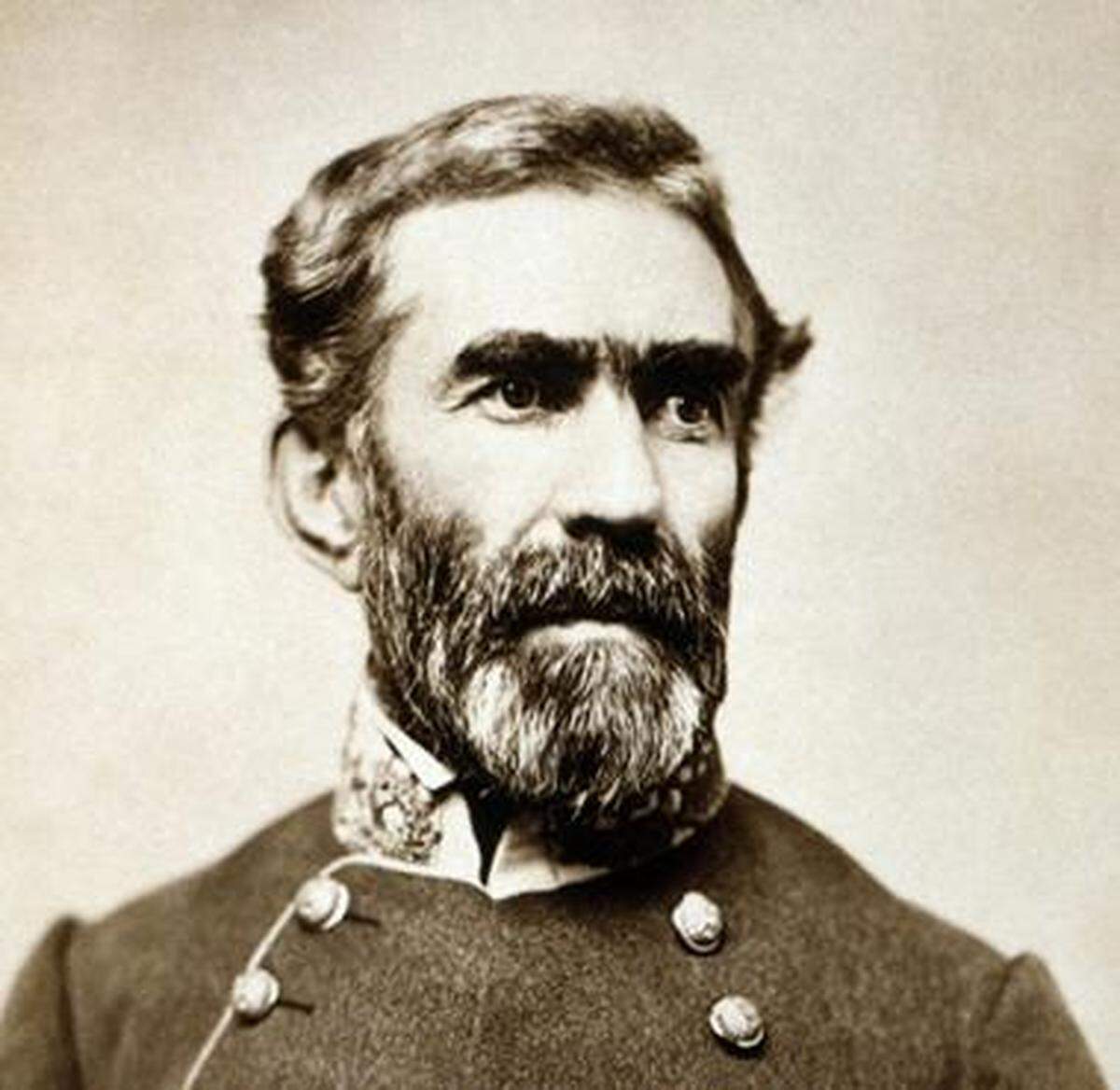
“Bragg was not responsible for the Confederate defeat, nor was he a monster or an imbecile,” Hess writes in his preface. “It is true that he had some glaring weaknesses, but he also had some admirable strengths.”
Fort Bragg’s website makes no mention of his service in the Confederacy.
Sen. Thom Tillis, a North Carolina Republican who served on the Armed Services Committee, opposed the provision, which was proposed by Democratic Sen. Elizabeth Warren, in committee. Friday, he voted for the overall bill, which includes many of his priorities such as the pay raise and reforms to improve military housing.
Sen. Richard Burr, a North Carolina Republican, voted for the bill, citing a need for “the right resources and strategic direction to continue protecting American interests.”
“This bipartisan legislation provides that by rebuilding and modernizing our Armed Forces, enhancing our competitive edge against China and Russia, and prioritizing the needs of military families,” Burr said in a statement. “I’m pleased to support this critical funding bill. By strengthening our national defense now, we ensure that American national security interests are protected for years to come.”
In the House, Republican Reps. Dan Bishop, Ted Budd and David Rouzer voted against the defense bill. Rep. Mark Walker did not vote.
Bishop said the defense bill limits the president’s ability “to control the troops — including (to) bring our troops home to stop futile ‘forever wars.’” He said other provisions could cost small businesses millions in regulatory costs. Budd said he voted no because the bill did not address, as Trump wanted, changes to the law regulating how Internet platforms handle speech.
“We’ve talked about conservative censorship for too long. It’s time to draw a line in the sand,” Budd wrote in a tweet.
Opinions on changing name
While Americans oppose displaying the Confederate flag in public places, polling from this summer shows more are against removing statues or changing names of schools and streets that honor Confederate leaders. About one-third of respondents in a YouGov/HuffPost survey favored removing statues and changing names, while about 50% were opposed.
“My answer: How about Fort Bragg. Don’t erase my history,” wrote Michael Rados in an emailed response to a News & Observer editor’s Facebook post about changing the name.
The base has about 57,000 military personnel, 11,000 civilian employees and 23,000 family members, making it one of the largest in the world. And it is home to the 82nd Airborne Division, the U.S. Army Special Operations Command and the U.S. Army Parachute Team.
Democratic state Rep. Grier Martin spent large portions of his military career at Fort Bragg, including eight years with active units and three years with reserve units. His father was stationed at Fort Bragg when he met Martin’s mother.
“The post itself is deeply significant to me,” Martin said. “It’s deeply significant to the state of North Carolina. For me, it’s not the name Fort Bragg. It’s the people, the heightened state of pride and expectations that you feel when you come to the post. It’s an Airborne post and it’s got higher standards than the rest of the Army and you feel that when you get there.
“You feel the obligation to live up to it and to not let down the other soldiers stationed there with you. I’ve got to be my best when I’m there. So they could call it Fort Smith or Jones for all I care. As long as they keep that Airborne mentality, it will keep what’s special about Fort Bragg.”
Joseph Cosgriff spent about 20 of his 29 years in the military at Fort Bragg, first arriving in 1989 and staying there from 1994 to 2013.
“I’m a Fort Bragg baby true and true. I love the base. I love North Carolina,” said Cosgriff, who is retired and lives in Apex. “I do think it’s time for a change though.”
Cosgriff, 54, is white and married to a Black woman, but said his objection to the name stems more from military history.
“It’s a Confederate general. If you look at the history of military officers and the oath they take, they kind of went against that oath,” he said. “So he shouldn’t be held to a position of honor.”
Joey Turner, who lives in Zebulon, has a similar objection to the name of the base he served at for three years. Turner, 38, is Hispanic and married to a Black man.
“Having the base named after a Confederate, it’s a disservice to the men and women who fought under the American flag,” Turner said. “No one is erasing history by not honoring the Confederacy. We need to understand the fact that it was an act of sedition, treason. If you fought against the actual flag of the United States, I don’t think there’s any merit for you being honored for that.”
Daisy Foxx, 65, has lived in Fayetteville since 1996 when her husband was stationed at Fort Bragg for a second time. She said she’s in favor of removing names from all the bases and finding other ways to title them, such as by geography or what they do.
“I don’t care if we name Fort Bragg Jesus, there’d still be someone complaining about it. The country is so divided now. We’ve got to try to get rid of some of this division,” she said. “There are no perfect people. You can find something somebody doesn’t like about them. We need to take that off the table.”
She suggested naming it the home of the 82nd Airborne “and be done with that.”
She said her husband, Ronnie, has suggested the base be named after Roscoe Robinson Jr., the first African American to be a four-star general in the U.S. Army and the first African American to command the 82nd Airborne Division. Robinson served in Korea and Vietnam.
Among some of the other military veterans who have been mentioned as possible people to name the base after:
• William “Bill” Lee, who was born in Dunn, served in World War I and World War II. He is sometimes referred to as the “Father of the U.S. Airborne.” There is a General William C. Lee Airborne Museum in Dunn.
• Rodolfo “Rudy” Hernandez, who lived in Fayetteville after his career, was awarded a Medal of Honor for his service in the Korean War.
“There’s no shortage of great North Carolinians whose names deserve to be attached to Fort Bragg,” Martin said.
For more North Carolina government and politics news, listen to the Domecast politics podcast from The News & Observer and the NC Insider. You can find it on Megaphone, Apple Podcasts, iHeartRadio, Stitcher or wherever you get your podcasts.
This story was originally published December 11, 2020 at 1:52 PM.