
‘Still Trump’s party:’ NC Republicans brace for life after the president leaves office
President Donald Trump not only carried North Carolina in 2020, he lifted other Republicans with him.
So what will happen when he’s out of office?
“That’s one of the biggest challenges that we’re going to have — to make sure we convert Trump voters into Republican voters,” says state GOP Chair Michael Whatley.
Like no one before, Trump has left his mark on the Republican Party in North Carolina and across the country.
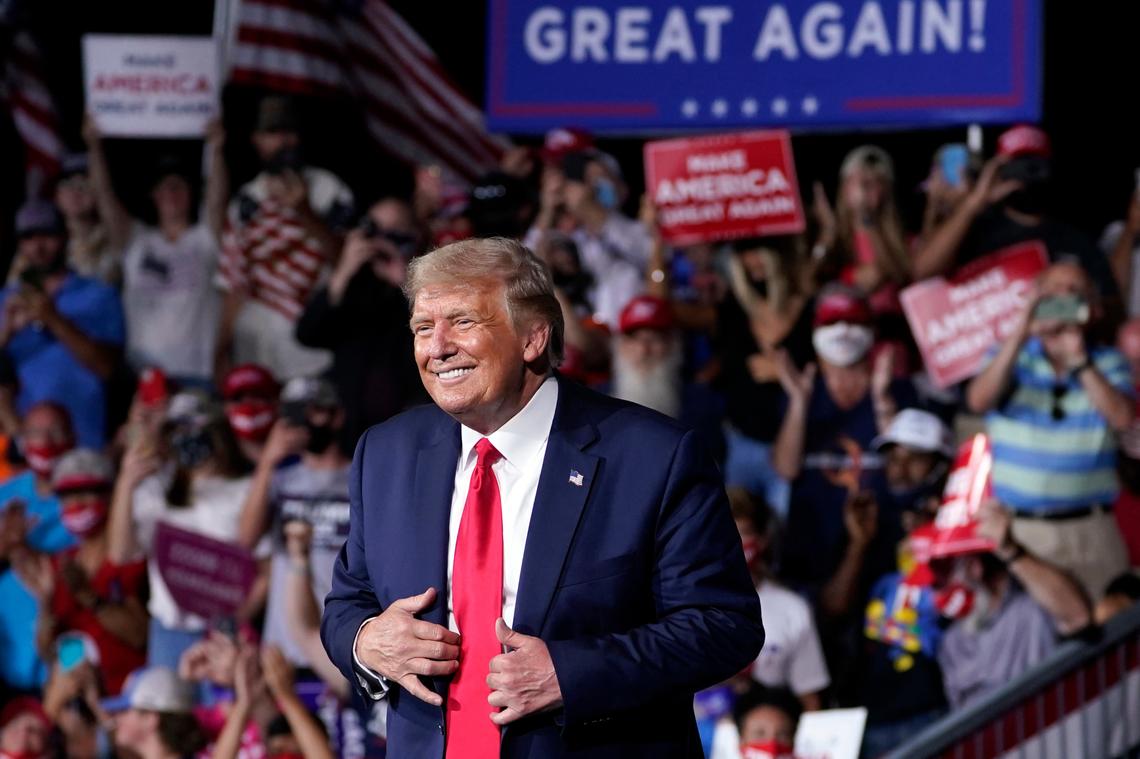
To supporters, he’s been a turnout machine who energized voters by tapping into the economic and cultural issues they care about. To critics, he’s created nothing less than a cult of personality.
“Trump has completely co-opted the Republican brand,” says Republican Bob Orr, a former state Supreme Court justice. “It’s the Trump brand now. That might have short-term benefits for Republicans, but I think in the long term it’s a negative.”
There’s little doubt that Trump galvanized conservative voters.
A remarkable 81% of North Carolina’s Republican voters turned out in November, according to an analysis by political scientist Michael Bitzer of Catawba College. That compares to 75% turnout among Democrats and 69% among unaffiliated voters.
And of the 365,000 registered voters who cast ballots in 2020 but not in 2016, Bitzer found, the single biggest group — 90,000 — were white Republicans.
“(Trump) is able to speak to and motivate a core group of voters who . . . are completely loyal to him,” Bitzer says.
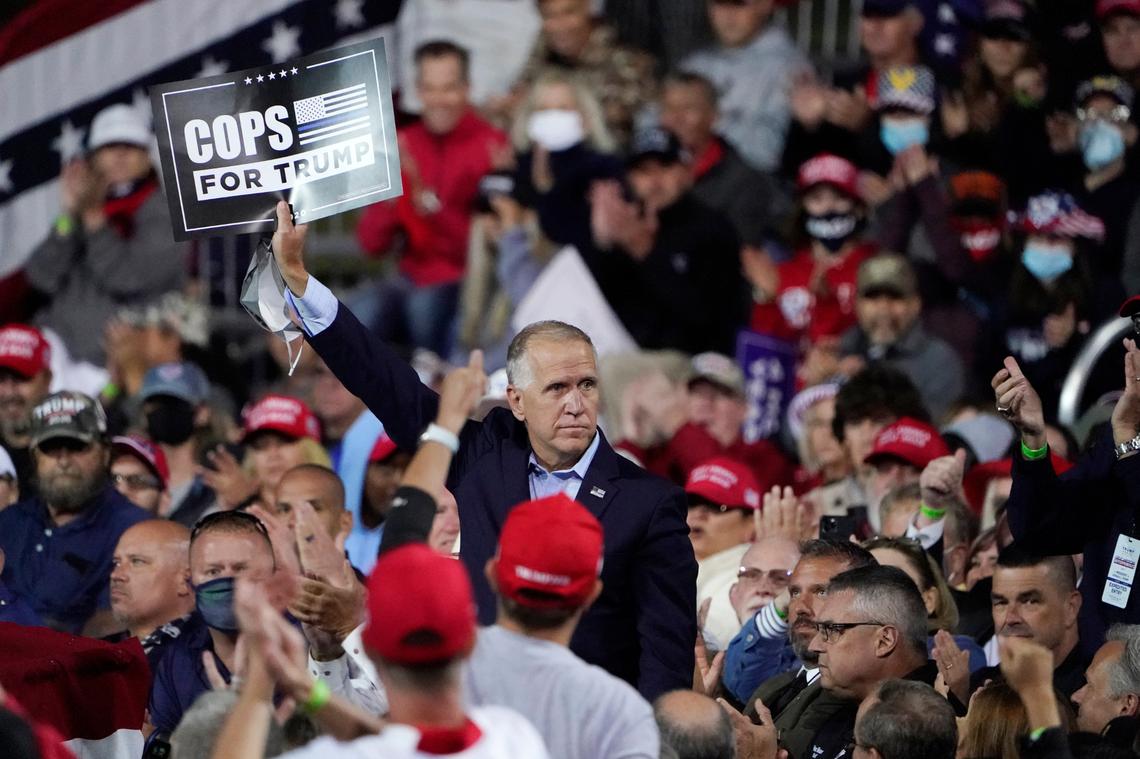
Trump, who carried North Carolina by 74,000 votes, helped Republicans capture six of the 10 Council of State races and sweep all eight major judicial races. They picked up seats in the N.C. House, kept their majority in the state Senate and re-elected U.S. Sen. Thom Tillis in one of the most expensive Senate races in American history.
“Trump is a singular motivating force,” says Democratic strategist Morgan Jackson. “Whether you like him or hate him, Trump was a bigger motivational force in 2020 than any other candidate in United States history.”
The election saw a clear geographic divide. Trump carried rural and suburban counties by wide margins. Democrat Joe Biden won handily in urban counties such as Mecklenburg and Wake. Jackson believes the state’s growing urbanization and other demographic changes will benefit Democrats long after Trump fades away.
“While Republicans thrived under Trump because of his ability to turn out . . . and energize rural and exurban voters, the party’s brand has never been in worse shape with college-educated voters,” Jackson says. “They’re trying to draw votes from an increasingly smaller slice of the electorate.”
Energizing his base
Outside North Carolina’s biggest cities, Trump’s appeal was strong. Turnout in some smaller counties outstripped that of many urban counties, according to the State Board of Elections.
“One of the big miscalculations on the part of the Democrats this year was underestimating what the Republican vote would be in the rural areas and also what the turnout in the rural areas would be,” says Tom Eamon, an East Carolina University political scientist and author of a book on modern N.C. politics.
For that Republicans can thank Trump.
He visited few states more than North Carolina. In the final weeks of the campaign he held eight crowded rallies in places such as Gastonia, Greenville, Hickory and even Lumberton. It paid off. In Robeson County, where whites make up less than a third of voters, he far outperformed his 2016 showing.
Steven Greene, a political scientist at N.C. State, told Politico, “We’re seeing some evidence that the political values that go along with being rural maybe under Trump start to matter somewhat more than the racial (and) ethnic factors”
Dallas Woodhouse, a former executive director of the state GOP, says, “There’s clearly a large part of the electorate that Trump tapped into.
“Trump realized in (2016) something that was important,” he says. “(There was) a large untapped section of voters that should be in the Republican base on immigration and trade.”
Bill Cobey, a former state GOP chair, says Trump “definitely pushed the party in North Carolina in a different direction.
“It has definitely improved our position with the working, blue-collar people of this state,” he says. “Plus, he’s made some inroads for us with minorities.”
Conservative strategist Carter Wrenn says Trump tapped into a populist wave that for many Republicans began with the tea party movement a decade ago. The party’s split between moderates and conservatives, which dominated GOP politics from the 1970s to at least the 1990s, suddenly became more complicated.
“The simple thing about the 1970s and 1980s is it was a pretty clear ideological divide,” he says. “This isn’t. There’s three to four different factors that just complicate it. . . . We could be looking at a lot of infighting between your hard Trump core, your traditional conservatives and populists.”
Challenges for both parties
Democrats have their own challenges. Despite millions of dollars in outreach, they failed to expand their metro base.
“The Democratic Party is increasingly the party of urban college graduates and therefore reflects the values of urban college graduates, which are off-putting to much of rural and exurban America,” Greene told the Observer. “We saw the blue areas go bluer and the red areas go redder. I don’t think that’s ever going to turn back.”
Dan Barry, a Republican activist from Union County, says his party needs its own outreach. For example, only one of Mecklenburg County’s 17 state lawmakers is a Republican.
“The challenge Republicans have is going to be in the urban centers,” Barry says. “We’ve got to build a strategy . . . to be more competitive. It’s not healthy for the taxpayers in Mecklenburg not to have representation in Raleigh.”
GOP strategist Larry Shaheen says a key may be to offer “conservative values with a populist flavor” — and candidates more likely to appeal to the kind of voter turned off by Trump.
“If Republicans were to package his policies in a more palatable package, there’s no stopping them,” Shaheen says.
Looming shadow
Even if Trump decides not to run again in four years, his shadow will continue to loom over his party.
“Trump may be out of power but he will continue to be present in a powerful way,” Bitzer says. “The Republican Party is the Trump party.”
Even with the defection of never-Trumpers like Orr, the former state Supreme Court justice, exit polls showed the president captured 96% of the GOP vote in North Carolina. And a new NPR/Ipsos poll this week showed two out of three Republicans across the country believe — like Trump — that voter fraud elected Biden, claims that have proven baseless.
Jackson, the Democratic strategist, says other Republicans won’t have the same appeal.
’The challenge Republicans have is they’ve been lulled to sleep by Trump’s ability to turn out these voters,” he says. “That’s not something that’s going to transfer. . . . A cult follows the cult leader. It doesn’t follow a movement.”
A test will come as soon as the next round of GOP primaries in 2022.
“I think every candidate that is going to be competing in a primary going forward is going to be judged by the Trump base,” says Whatley, the party chairman.
“Candidates are still going to have to recognize that this is still Trump country,” he says. “(And) for the foreseeable future, this is still Trump’s party.”
This story was originally published December 31, 2020 at 2:40 PM with the headline "‘Still Trump’s party:’ NC Republicans brace for life after the president leaves office."
