
NC-Span: You can now watch state House debates, but not Senate. How to tune in.
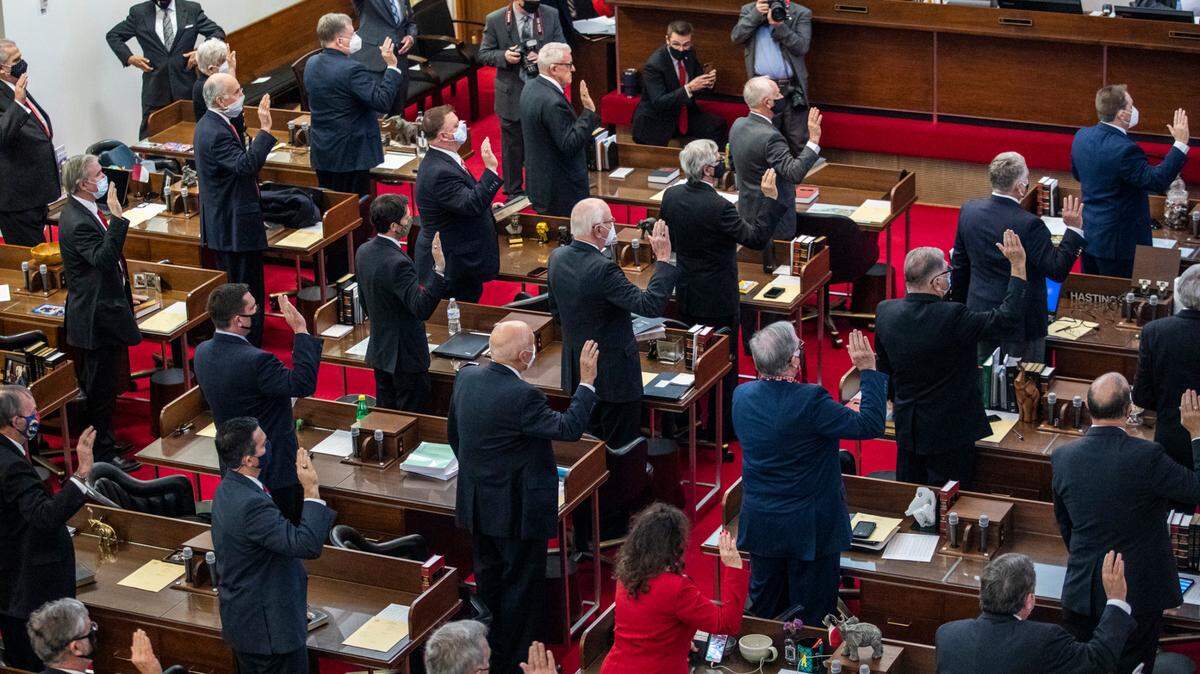
After years of offering only audio of its floor sessions, the N.C. House is streaming video of its sessions — as well as many committee meetings — live on YouTube this year.
Gone are the days of trying to figure out which legislator’s disembodied voice is speaking: On North Carolina’s version of C-Span, seven overhead cameras in the chamber will offer close-ups of lawmakers, with handy graphics listing their names and which bill is under consideration.
“People like transparency and the fact that they can participate at least in hearing and knowing” what’s going on in the House, said Rep. Jason Saine, a Lincoln County Republican and co-sponsor of a 2019 bill to create the video system.
To watch, viewers go to ncleg.gov and click on the video icon next to the session or committee meeting they want to see.
The Senate, however, will still offer only audio of its floor sessions, although some committee meetings will be video-streamed when held in rooms with camera systems.
“There are no discussions about installing video equipment in the Senate Chambers,” said Lauren Horsch, a spokeswoman for Senate leader Phil Berger. That leaves the N.C. Senate as one of only two legislative chambers in the country that don’t provide public video of their proceedings, according to a list maintained by the National Conference of State Legislatures.
Saine said video streaming has been his goal for years, but some of his colleagues were initially hesitant to make the change. Some were concerned that video could prolong debates as lawmakers seek to get their speeches on TV.
Saine said he doesn’t think that will be an issue since most major debates are already live-streamed by TV outlets. Streams of entire sessions, however, could mean more “points of personal privilege” as legislators use the House floor to honor their district’s sports victories and other constituent accolades.
“We might have to put some constraints on that,” Saine noted.
No archived video
Both chambers in North Carolina still lag the country in offering archived video or audio recordings of sessions and committee meetings. The new YouTube streams of House sessions and committees won’t be archived, so viewers who can’t watch the proceedings live won’t be able to take advantage of the new service.
But it “can be rebroadcast by the media or recorded independently,” according to Joseph Kyzer, a spokesman for Speaker Tim Moore. Audio recordings of House sessions (but not Senate sessions) will continue to be available on the legislature’s website, but getting an audio recording of a committee meeting will still require a visit to the Legislative Library, where staffers will provide the files on a CD for $1.25.
Only five other states in the country don’t provide online video archives of floor proceedings, according to the Conference of State Legislatures. Saine says he’s not sure why the videos aren’t archived on YouTube, but he’s hopeful that’ll happen soon.
Video streams won’t be available in all committee rooms, at least for now. Kyzer confirmed that video equipment has so far been installed in Legislative Building Room 1228 (Rules Committee space), Legislative Office Building Room 544 (Finance Committee space) and LOB Room 643 (Appropriations Committee space).
Also, the third-floor auditorium in the Legislative Building is being renovated to become a committee room, and it will have video streaming when it opens later this year. The auditorium hasn’t been used much in recent years, although it become a press conference venue last year to allow for more social distancing. Audio streams will continue in all other committee rooms.
The House spent about $400,000 to install the camera and streaming equipment, and it’s leasing additional equipment for $10,000 per year for the next three years.
A staffer from the House principal clerk’s office operates the equipment during sessions, and to fulfill those duties, the office moved a temporary employee to permanent status, Kyzer said.
Cost was a concern when the House first considered adding video more than a decade ago. There was a “Select Committee on Televising Sessions” in 2008, but the idea was recommended only if the legislature could afford what was then an estimated $1.3 million price. A recession soon put the idea on the back burner.
The initial legislation creating the video stream also called for some of the sessions to be broadcast on UNC-TV, perhaps even with a channel devoted to legislative action.
But don’t look for sessions on the statewide TV network, now known as PBS North Carolina, aside from big events like the governor’s State of the State speech.
“The idea of daily TV broadcasts began in 2016,” said Kelly McCullen, director of the station’s North Carolina Channel. “Five years is an eternity in media evolution, so it’s no longer an idea we’re pursuing since the House video stream is operational and, to my knowledge, PBS NC did everything asked in terms of consultation as a public service-minded organization.
“Former leaders had a concept of a C-Span-style brand, but the support simply wasn’t there so we evolved out of necessity but haven’t lessened our commitment to civic service through other content streams that provide coverage and press pool services on key government events.”
For more North Carolina government and politics news, listen to the Domecast politics podcast from The News & Observer and the NC Insider. You can find it on Megaphone, Apple Podcasts, iHeartRadio, Stitcher or wherever you get your podcasts.