
NC Senate passes bill to require in-person learning option for schools
This story was updated Feb. 9 with the final vote in the Senate.
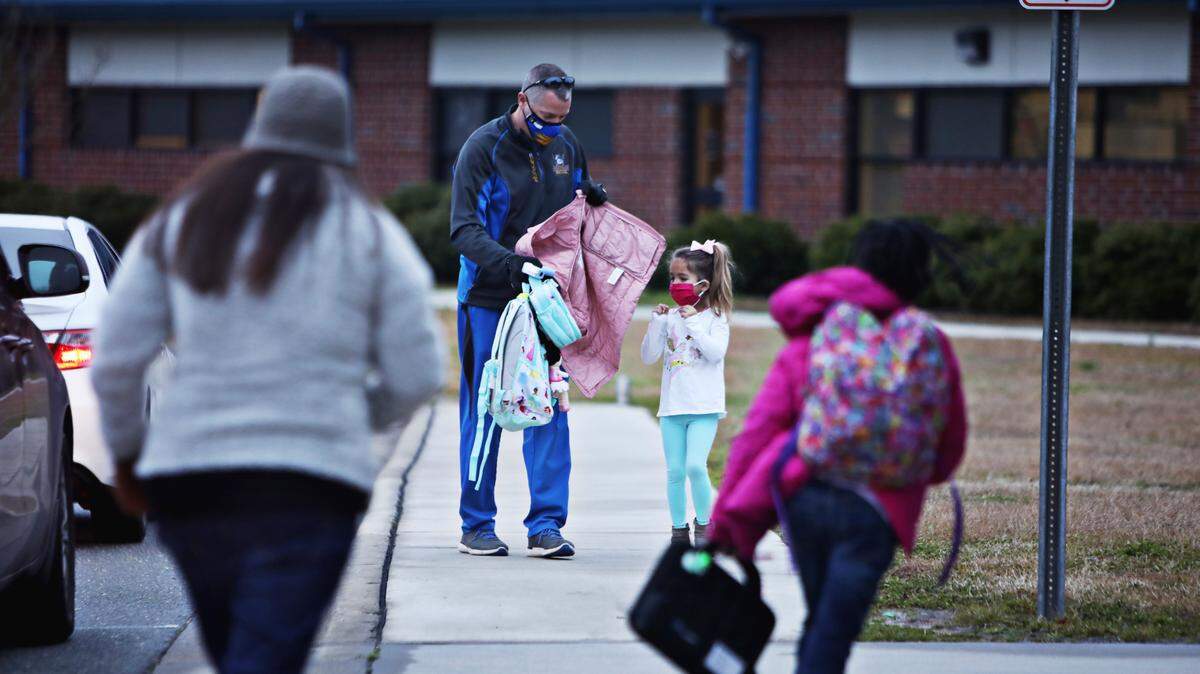
The North Carolina Senate passed a bill Tuesday that would require schools to give some in-person instruction to the state’s K-12 public schools students.
Senators voted 29-15 in favor of the bill. Republicans all voted for the bill, along with two Democrats — Sen. Kirk deViere of Cumberland County and Sen. Ben Clark, who represents Cumberland and Hoke counties.
It now moves to the House.
Sen. Deanna Ballard, a Watauga County Republican and co-chair of the Senate education committee, said during debate last week that the learning loss, lack of routine and other problems that go along with remote learning are leaving a generation of anxious and depressed kids. She urged colleagues to consider recent studies about in-person learning and to give parents the option of in-person learning for their children.
The bill requires school districts to offer a full-time, in-person instruction option — known as Plan A — to special needs students. It would also require schools to offer either Plan A or Plan B, which requires 6 feet of social distancing, to all students.
Ballard said that schools can safely reopen now — including under Plan A for special needs students — with measures in place. She said it could mean more innovative thinking about how students interact in classrooms and when they should change classes in hallways.
“I have confidence in our school leaders to provide a safe environment for our students,” Ballard said.
The latest public health guidance from the state says that elementary schools should open in Plan A while middle and high schools should open in Plan B, which requires six feet of social distancing.
Objections over school reopening timeline, social distancing
Republicans and Democrats in the Senate agreed that they want students to go back to in-person school as soon as possible, but disagreed on when that should be. Some students in North Carolina’s K-12 public schools have not had in-person learning since March 2020, instead being remote only. School districts were allowed to reopen last fall, both remote and in-person, but with restrictions.
Some school districts have remained remote-only all year, like Durham Public Schools. Others, like Wake County, reopened elementary schools after Gov. Roy Cooper allowed younger students to return to in-person school without the 6 feet of social distancing restrictions of middle and high schools. Some middle and high schools across the state reopened on schedule rotations. Masks are required in schools.
Republicans have maintained for months that all students should be given the option of in-person education.
The bill to require schools to reopen, Senate Bill 37, does not include charter schools.
Senate Democrats didn’t like the bill allowing middle and high school students to go back under Plan A, which has minimal social distancing.
“We agree that students definitely need to come back to school under at least Plan B. We agree on that,” said Sen. Don Davis, a Pitt County Democrat said during last week’s debate. But he had “real concerns” over Plan A for middle and high school students.
He also wanted to extend the start of reopening to 30 days, instead of the 15 days in the bill, to give teachers more time to be vaccinated.
Teachers are in the next group of people to be vaccinated in North Carolina, but that is still weeks away. Cooper told reporters on Tuesday that more information would be coming this week about the timeline for vaccinating the next group after health care workers and those age 65 and older. That next group includes teachers along with other front-line essential workers. But he cautioned that there are still thousands of North Carolinians older than 65 who are still on the waiting list to be vaccinated.
Cooper on in-person requirement
If the bill passes both the Republican-led Senate and House, it goes to the desk of Cooper, a Democrat who has already indicated he doesn’t support the bill.
Cooper told reporters last week that he had concerns about safety protocols and wanted to leave specific reopening decisions up to local school districts. However, he strongly urged all K-12 schools to reopen now to allow Plan A or Plan B, along with remote learning options.
The main difference between the Republican-sponsored bill and the Democratic governor’s approach is whether to mandate that there be an in-person option.
“Let’s give these local boards a chance,” Cooper said Feb. 2, the day after Republicans filed the bill. Cooper said he hoped school boards would take action. It did later that same day in the state’s largest school system, Wake County, which had paused in-person instruction since winter break, but which is now set to reopen in mid-February.
The reopening bill would allow Plan A for all students, not just elementary schools. On Tuesday, the governor and Dr. Mandy Cohen, secretary of N.C. Department of Health and Human Services, said that middle and high schools should open under Plan B because that six feet of social distancing is what is needed to mitigate spread. She said older students transmit the virus more like adults do.
Republicans have a majority in both the House and Senate, but not the supermajority needed to override a veto. So they would need a few Democrats in each chamber to obtain the three-fifths vote needed for an override if Cooper vetoes the bill.
Some Democrats asked for schools funding in the bill. Ballard noted that the Senate approved $1.6 billion in schools reopening funding in latest COVID-19 relief bill, which is now on Cooper’s desk.
For more North Carolina government and politics news, listen to the Domecast politics podcast from The News & Observer and the NC Insider. You can find it on Megaphone, Apple Podcasts, iHeartRadio, Stitcher or wherever you get your podcasts.
This story was originally published February 4, 2021 at 1:00 PM.