Does the litter along NC highways seem to be getting worse? Lawmakers propose a fix.
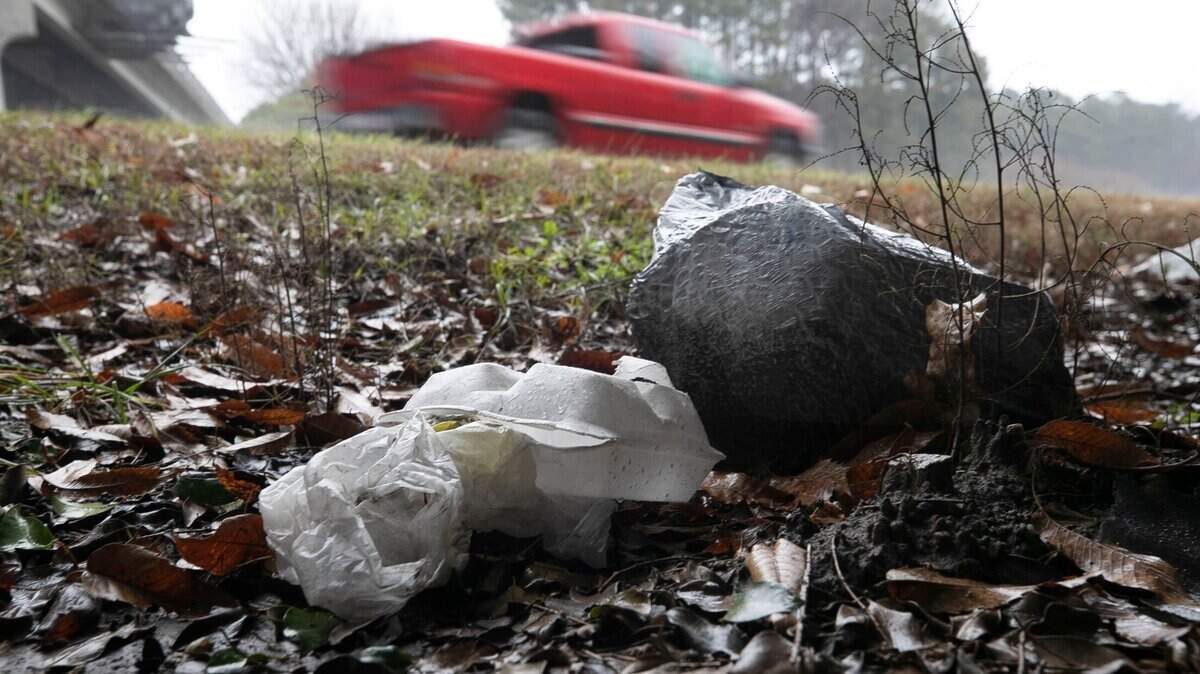
Fines for littering in North Carolina would double under a bill introduced in the General Assembly this week that aims to reduce the trail of trash that now lines the state’s highways.
House Bill 100, The Highway Cleanup Act of 2021, would also provide money for anti-litter campaigns run by the N.C. Department of Transportation and for sheriffs of small counties to pay deputies to pick up debris along rural roads.
Rep. John Bell IV, a Republican from Wayne County and the House majority Leader, said he introduced the bill largely because of what he sees as he drives, including to and from Raleigh.
“I got tired of seeing it on the side of the road,” Bell said in an interview. “But I also have had a number of constituents reach out and say, ‘Hey, is there something we could do to help?’”
Among the three other prime sponsors of the bill is Rep. Pricey Harrison of Greensboro, a Democrat who has a long history of environmental legislation. Harrison says this may be the first time she and Bell have ever worked together to draft a bill.
“I think he knows that I’m passionate for environmental protection, and he called and asked if I’d be interested in joining. And I was very enthusiastic,” she said in an interview. “I don’t think that litter or waste, or even protecting our water or natural areas, is a partisan issue.”
The bill takes on a perennial problem that appears to many to have gotten worse in the past year. Bell and Harrison both think that the shift to more carry-out food during the coronavirus pandemic is one factor, though it doesn’t explain why people feel entitled to litter in the first place.
“I have no clue why people throw stuff out the window,” Bell said. “I know that growing up, if I were to throw stuff out the window, I would have gotten spanked.”
The pandemic has also forced cancellation of volunteer cleanup efforts. Meanwhile, financial problems at NCDOT last year caused the department to cut back on roadside mowing, which is often done in conjunction with litter pickup.
As a result, fewer people have been out picking up the bottles, cans, scraps of tires, car parts and plastic cups, sheeting and buckets that accumulate in highway medians and along guardrails and exit ramps.
Joey Hopkins, NCDOT’s engineer for the Triangle region, said the department’s finances have improved and that it has recently allocated an additional $30 million statewide for roadside maintenance, which includes litter pickup. That means NCDOT will have about $1 million to resume litter cleanups along Triangle highways, Hopkins said.
“When people are purposely, or even accidentally, littering, it costs us all money,” he said in an interview. “If you’re spending money to pick up litter, you’re not spending money to patch potholes or resurface roads or build new roads. It all comes out of the same pot.’
Littering enforcement is down
Littering is illegal. Throwing out something that weighs less than 15 pounds is a Class 3 misdemeanor punishable by a fine and up to 24 hours of community service. But enforcement has lagged, particularly in the past year.
According to state court records, law enforcement agencies of all kinds issued 1,689 citations for littering in 2020, down about 18% from the year before and 29% since 2016. In those five years, nearly two-thirds of settled littering cases were dismissed.
Bell’s bill tries to give those litter laws more bite by doubling the fines. The penalty for a first-time littering charge would range from $500 to $2,000, and a second offense would bring a fine of up to $4,000.
The bill would also set aside $500,000 from NCDOT’s Highway Fund for marketing and advertising through existing anti-litter programs such as Adopt-A-Highway, Litter Sweep and Swat-A-Litter Bug. Recalling campaigns such as “Give a Hoot, Don’t Pollute,” Bell said people need to be reminded that it’s not OK to throw trash along the road.
And the bill would direct another $500,000 from the Highway Fund for a new grant program called Cops Clean NC. The program would offer grants of up to $10,000 to sheriffs in counties of less than 150,000 residents to pay deputies overtime to clean up rural roads.
Rep. Charlie Miller, a Republican bill sponsor who is also chief deputy of the Brunswick County Sheriff’s Office, said getting deputies more involved will help address a growing problem.
“Litter on our highways has become increasingly prevalent not only in my district, but statewide,” Miller said in a statement Wednesday. “It is an unsightly, negative reflection of our scenic coastline and it has detrimental effects on the waterways and ecosystem.”
NCDOT asked for ideas as well
The Highway Cleanup Act won’t be the only state effort to try to tackle litter. Members of the state Board of Transportation have asked NCDOT staff to come up with strategies as well.
Board members said during their virtual meetings this month that they have been hearing complaints about litter as well.
“Whether we ramp up the fines for litter, whether we ramp up the publicity campaign, I think that the public would respond,” said Stephen Rosenburgh, founder and CEO of a real estate investment company based in Charlotte who joined the board last year. “Because most folks are getting really disgusted with the conditions.”
Another new member, former state Sen. Andy Wells, a real estate developer and manager from Catawba County, said he’d like the state to get creative about the problem by perhaps inviting the public to photograph litterbugs in the act and report them.
“There has got to be another way to address this issue,” Wells said. “We’ve let our culture think it’s OK and that we’ll just go out and pick up after them.”
Harrison hopes the Highway Cleanup Act she is sponsoring is just the beginning as well. In an ideal world, she said, North Carolina would move to reduce the use of disposable plastics and add a deposit on bottles and cans that people would get back when they return them to retailers.
“There are stronger ways to limit litter, but I recognize that’s not going to happen anytime soon,” she said. “But this is a very important first step.”
Data journalist David Raynor contributed.
This story was originally published February 17, 2021 at 9:50 AM.