
Why NC has $4 billion to spare despite the pandemic, and where the money might go
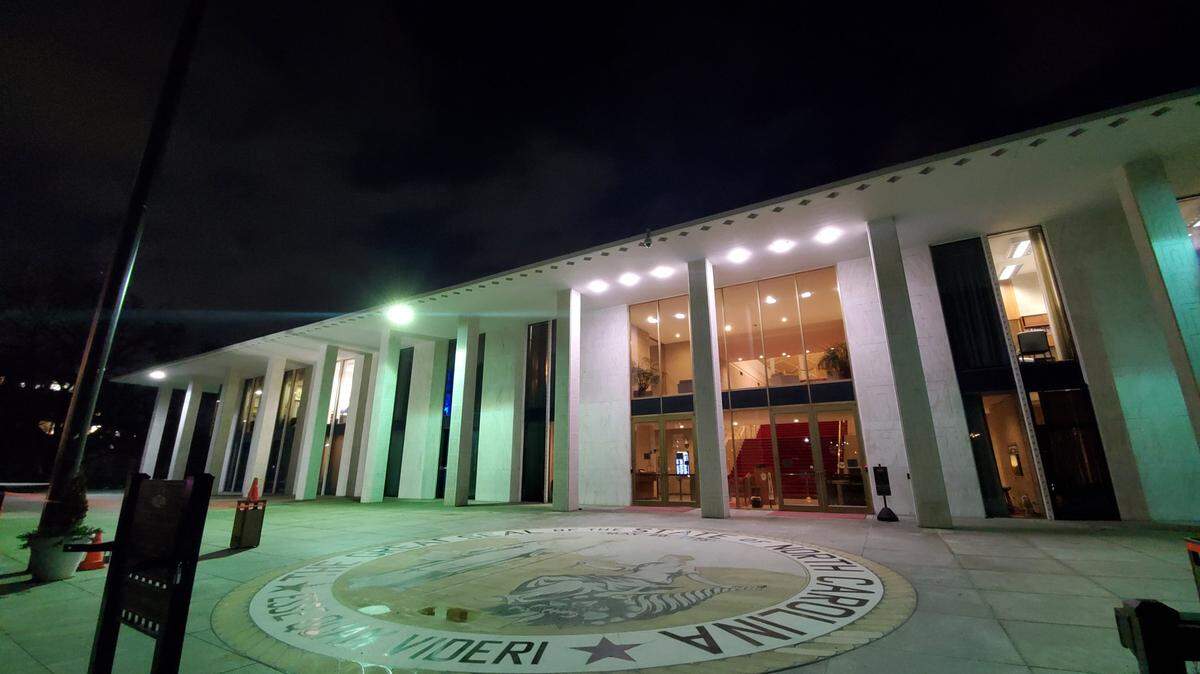
North Carolina state lawmakers will start the budget process this spring with promising news amid a pandemic: $4.1 billion more revenue than they expected.
House and Senate budget writers learned where the state stands financially and how much room they have for more spending during a joint appropriations committee meeting Wednesday.
The two-year state revenue forecast that came out earlier this month expects “modest economic growth” and stability as the pandemic begins to wane, assuming there is more federal COVID-19 relief coming soon. Congress is still negotiating the next round of federal money.
Already, North Carolina has received an estimated $18 billion for households and $12.5 billion for businesses from the federal CARES Act, according to the forecast.
Here’s where things stand:
Where does the $4 billion come from?
The consensus revenue forecast is a joint forecast of the Office of State Budget and Management, which is part of the executive branch, and the Fiscal Research Division of the General Assembly. Expected revenue collections are 17.6% higher than the May 2020 revenue forecast, or $4.1 billion.
That anticipated revenue surplus is due to sales tax collections still increasing despite the pandemic, along with delayed tax payments after the deadline had been extended from April 15 to July 15 in 2020.
Recovery on the horizon
The forecast says the economy is in a “recovery phase” after a quick recession precipitated by the pandemic.
Barry Boardman, the top economist at the legislature, said that the state economy could be at a pre-pandemic level by the middle of 2022 or by 2023.
“For the rest of the year we don’t really see any shift up or down in the economy,” Boardman said.
Replacing permanent employment losses take time, Boardman told lawmakers. He said the growth has not been a full recovery.
Sales tax collections went up 8% because online shopping has skyrocketed. And court cases and recent laws requiring online retailers to stop sidestepping tax collections have helped the state benefit from the growth in online shopping, he said.
Unlike other states, North Carolina did not have layoffs or extreme cuts to agencies because it used existing funds or federal funds for costs this past year.
Now budget writers have more money for budget items like raises or disaster relief. Jennifer Hoffman, who works in the legislature’s fiscal research division, cautioned that it’s one-time money.
What does this mean for raises?
Not all state employees received raises during the last budget process in 2019. Teachers received step increases and bonuses in 2020, however. And Gov. Roy Cooper has said he wants more bonuses.
The governor has proposed new one-time bonuses of $2,500 for teachers and principals, $1,500 for non-certified school personnel in public K-12 schools and $2,000 for workers in the state’s community colleges and the UNC system, The News & Observer previously reported.
Cooper included those employees because they didn’t get raises in the last budget.
The amount of teacher raises, as well as Medicaid expansion, was at the center of the 2019 budget battle between Cooper, a Democrat, and the Republican-led General Assembly. Cooper won reelection in 2020, as did House Speaker Tim Moore and Senate leader Phil Berger, who are both Republicans. So the same key players are at the top.
Jobs lost
Most of the jobs the state has lost are on the lower end of the pay scale, he said, and most income tax revenue comes from people with middle and upper class incomes.
So that means that in terms of state revenue, “2021 ended up a whole lot better than we thought because those people did not suffer as much as we thought they would,” he said.
Boardman also told lawmakers that even businesses that are allowed to be fully open still aren’t operating at their full capacity because customers are still making choices based on COVID-19.
Known unknowns
There are two unknowns that will affect the state budget: how many students will be in K-12 public schools and community colleges the next few years, and if the legislature will “hold harmless” the schools, which means not penalize their funding.
The legislature just sent Cooper the final version of a bill that would require the state’s public school systems to offer some sort of in-person learning option.
For more North Carolina government and politics news, listen to the Under the Dome politics podcast from The News & Observer and the NC Insider. You can find it on Spotify. Apple Podcasts. Stitcher. iHeartRadio. Amazon Music, Megaphone or wherever you get your podcasts.