
NC lawmakers fire back in absentee-ballot battle with new election bill
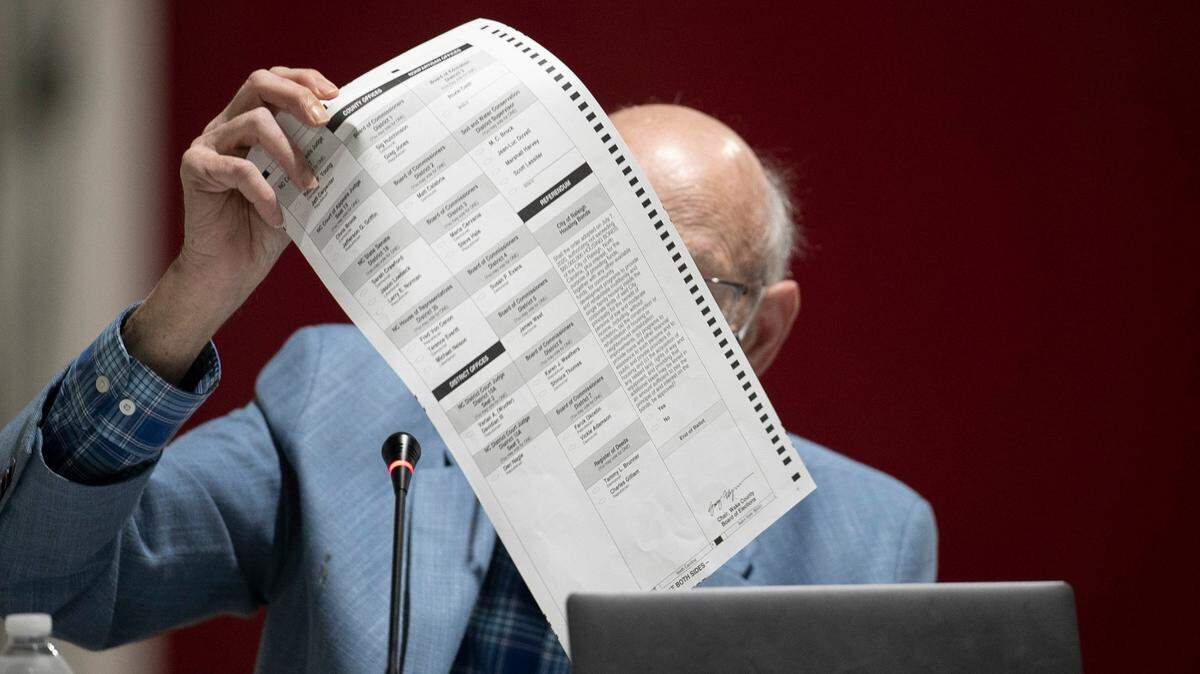
North Carolina lawmakers want to stop the state’s elections boards from collecting absentee ballots after Election Day.
On Thursday, Republican Sens. Warren Daniel, Ralph Hise and Paul Newton filed Senate Bill 326, the Election Integrity Act.
The bill would prevent the collection of any absentee ballots after 5 p.m. Election Day or the date of the primary regardless of when the voter mailed the ballot.
The bill appears to respond to a legal battle between House Speaker Tim Moore and Senate Leader Phil Berger and the N.C. Board of Elections last fall that decided the fate of voters’ ballots just days before the 2020 election.
The N.C. Board of Elections collected 14,500 mail-in ballots after Election Day.
Under North Carolina’s current laws, absentee ballots can be collected three days after the election if they are postmarked by Election Day.
But the N.C. Board of Elections adopted a policy in a settlement that surprised state lawmakers and allowed local boards to collect the ballots for 12 days following the election if they were postmarked by Election Day. That was due to the increased number of absentee voters because of the COVID-19 pandemic, coupled with delays at the U.S. Postal Service.
The U.S. Supreme Court ultimately refused to hear an emergency motion from state lawmakers who argued they were the only ones with constitutional authority to set North Carolina’s voting laws.
“We’re disappointed that, in this instance, the Court majority appears to agree that the legislature’s authority to determine the time, place and manner of election is subject to being set aside by a partisan panel of unelected bureaucrats,” Senate Leader Phil Berger said in a written statement after the ruling.
What happens if the bill becomes law?
If the Election Integrity Act becomes law, elections boards in the state’s 100 counties will have a series of new rules to follow when handling absentee ballots.
“The goal of the bill is to bring clarity, simplicity and a clear set of rules to ensure everybody’s on the same footing,” Newton said in an interview, “and the overarching goal is to really restore trust, restore confidence in the election process.”
The bill mandates that voters eligible to cast absentee ballots must complete a request form by 5 p.m. the Tuesday two weeks before the election.
As soon as the county board receives that application staff must mail to the voter the official ballot, a return envelope for the ballot, and instructions regarding the requirement for a photocopy of the voter’s identification.
Newton said he wants every person’s vote to count.
“We think 14 days is sufficient time to ensure anyone who waited till the deadline to get their absentee ballot mailed will in fact have their vote counted,” Newton said.
If a voter becomes sick or disabled and cannot vote on Election Day, the bill gives the person, a relative or a guardian the ability to come in person between the second Tuesday before the election and 5 p.m. the night before Election Day to request an absentee ballot. In this case the elections boards are allowed to personally hand deliver the ballot to the applicant.
The bill mandates that boards of elections accept an absentee ballot application anytime before the election but not mail the ballot to the absentee voter more than 60 days out from the election on even-numbered years or 50 days out on odd-numbered years.
The ballots must be returned by 5 p.m. Election Day or the date of the primary.
The new deadlines would not affect military or overseas voters.
Beyond absentee voting, the bill also develops a $5 million fund to provide a photo ID for anyone who needs it.
It also prevents boards of elections from collecting money from outside sources to pay for temporary employees, something Newton said happened in more than 30 counties during the last election cycle.
Newton said he did not work with the state board of elections to draft the bill but is hoping for bipartisan support. He said it doesn’t favor any political party but the election process as a whole.
He acknowledged that the changes will likely result in litigation but said he is ready for that.
Staff writer Tyler Dukes contributed to this report.
For more North Carolina government and politics news, listen to the Under the Dome politics podcast from The News & Observer and the NC Insider. You can find it on Pandora, Spotify, Apple Podcasts, Stitcher, iHeartRadio, Amazon Music, Megaphone or wherever you get your podcasts.
This story was originally published March 18, 2021 at 3:59 PM.