
Eastern NC has seen record flooding during recent hurricanes. Local leaders want help.
The City of Whiteville is applying for a FEMA resilience grant, but Mayor Terry Mann is worried that it won’t be competitive when matched up against proposals from larger cities and counties with specialists on staff.
In Columbus County, Mann said, “None of us have engineers on staff and we just can’t afford to get these projects designed and not know that we’re going to get this grant funding.”
The Eastern N.C. Recovery and Resiliency Alliance, a newly formalized coalition of governments that has been working with advocacy groups that specialize in resilience, is advancing a series of proposals that it says will help the region better prepare for future storms like Hurricanes Matthew and Florence.
Thursday, the group called for a series of legislative measures that would fund a statewide flood blueprint that would include hydrologic modeling; position staff from the N.C. Office of Resilience and Recovery across the state to help local governments address the technical aspects of mitigation projects; and provide additional funding for flood mitigation projects.
The alliance began meeting informally in the months after Hurricane Florence caused more than $22 billion in damage. It was organized by City of Wilmington officials but has often met in places like Burgaw and Wallace.
“I and several other leaders found value in sharing advice and concerns amongst each other, as we all were impacted,” said Bill Saffo, Wilmington’s mayor. He said more than 60 mayors and county officials from the region have participated in the group’s meetings.
Since then, the group has met with state and federal lawmakers to advance ideas about resilience and to urge them to consider flood mitigation when making spending decisions. Saffo and others expressed optimism Thursday that at least some of their ideas could be included in coming legislation from the N.C. General Assembly.
Climate change is likely to cause more frequent, wetter hurricanes to North Carolina in the future, according to the state’s Climate Risk Assessment and Resilience Plan, which was released last summer. Those storms will damage vulnerable communities, according to the report, and will make it more difficult to recover because they are likely to happen in relatively quick succession.
Wallace Mayor Charley Farrior thought he’d seen the worst flood of his life after 1999’s Hurricane Floyd, which he called a “biblical, 1,000-year event.” Then Hurricane Florence happened.
“It made Floyd look like almost a non-event,” Farrior said Thursday, noting that the Northeast Cape Fear River flooded over its banks quickly after the storm finally passed.
Many of the houses flooded during those storms remain vacant, Farrior said, their fates still uncertain. Many who have repaired their homes are pledging that this will be the last time before they move elsewhere.
“We’ve got counties involved here, we’ve got large cities involved, we’ve got smaller towns like mine,” Farrior said, “and I can tell you that none of us have the money needed to try to address these issues on our own, so we’re going to need help.”
Melissa Roberts, the executive director of the American Flood Coalition, said increased funding to help smaller governments build capacity is “incredibly important” to help those places prevent the worst impacts of flooding.
“We have a system where you need to have money or technical expertise in place already if you’re going to jump over all of the hurdles in your way to get more funding and more expertise,” Roberts told The News & Observer.
Positioning resilience staff across the state could also help local governments coordinate their efforts, suggested Mann, the Whiteville mayor.
The Eastern North Carolina coalition also called on the N.C. General Assembly to provide funding for the Division of Mitigation Services to pilot floodwater retention projects. The mitigation services division was established by House Bill 1087 last year, but it was not funded.
Will McDow, the director of the Environmental Defense Fund’s resilient landscapes initiative, said Wayne County’s Stoney Creek watershed is a logical place for a floodwater storage pilot project. When there are heavy rains, flooding in the watershed spills across Goldsboro’s Memorial Drive, making it difficult for emergency personnel to access Wayne UNC Healthcare.
The EDF estimates that installing 500 acres of wetlands or natural infrastructure would be enough to keep the road open. For the project to work, McDow said, the Division of Mitigation Services would have to craft a request for proposals and private mitigation companies would then develop different, smaller projects within the watershed that would add up to the targeted amount of water storage.
“It would almost certainly be multiple projects kind of spaced around the landscape instead of one big reservoir,” McDow said.
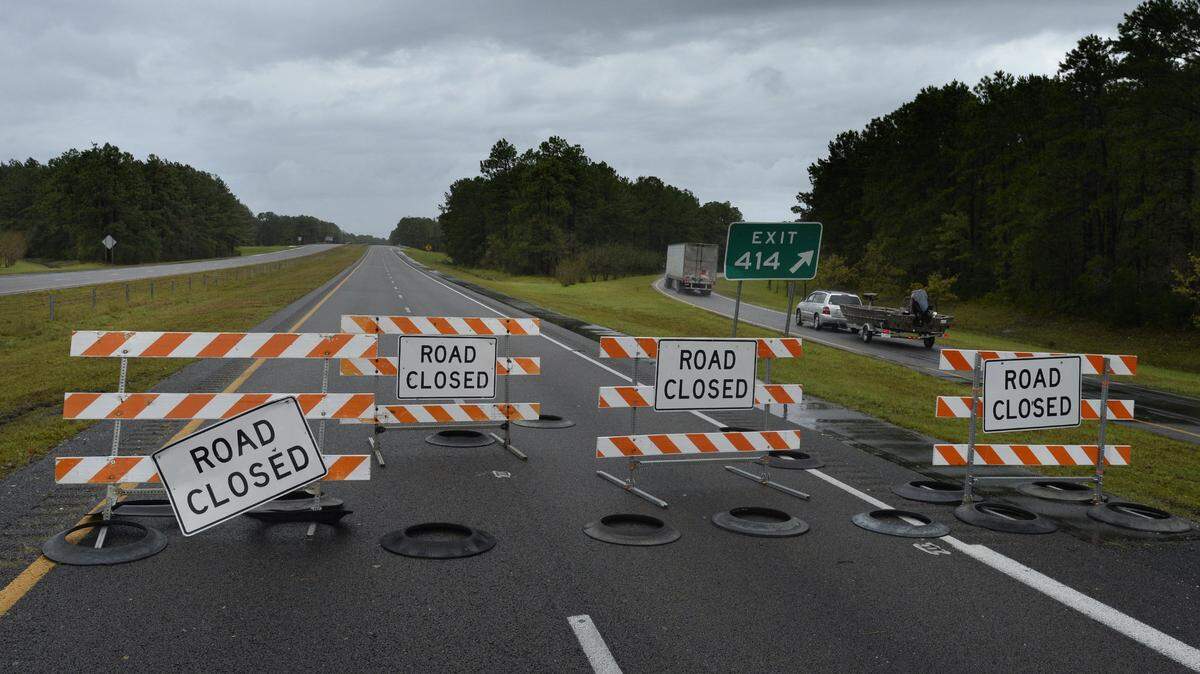
Saffo, of Wilmington, and other mayors also expressed concerns about road construction, calling for the General Assembly to pursue more studies like the state Department of Transportation’s 2019 look at how it could protect Interstate 40 and Interstate 95 against floodwaters. That work was spurred after Florence’s flooding effectively cut Wilmington off for days after the storm, making it impossible for supplies to reach many Eastern North Carolina areas in the aftermath.
“This is probably the only issue that I’ve ever seen where it’s kind of brought the urban areas and the rural communities together,” said Saffo. “If we want to support and protect our rural communities, we have to do something in regards to flood mitigation and resilience.”