
Outing kids, cutting off treatment will harm transgender teens, NC bill’s critics say
Allison Scott was 10 years old when she tried to kill herself.
Her grandmother found her unconscious and revived her. Scott played it off as a game gone wrong, but it wasn’t.
She said she knew she wasn’t meant to be a boy and had nowhere to turn. Her family didn’t want a gay son. Her classmates bullied her for wanting to be a girl, and her family’s religion forbade it. Scott said as a child she didn’t have the money or support to seek help.
“I had zero outlets,” Scott said. “I know what it is like, what it felt like for me to have zero outlets and it was torture, and it’s what led me to just feeling like there was no way out.”
Scott, who began to medically transition in 2013, said she now fears for the youth coming up behind her because state lawmakers in North Carolina filed Senate Bill 514, the Youth Health Protection Act, which would make it illegal for doctors to provide health care to teenagers that helps them transition, and would force school employees to out teenagers to their guardians.
It’s one of eight bills currently filed that deal with the rights of LGBTQ North Carolinians. The other making headlines would prevent transgender females from playing on girls’ sports teams. Those two bills are part of a flurry of restrictions being considered around the country, with some already becoming law in Tennessee, Arkansas and Mississippi.
Scott now works as the director of impact and innovation at the Campaign for Southern Equality. She said the organization has heard nonstop from teens, their parents and teachers concerned about the various bills including SB 514.
Ash, a 16-year-old from Western North Carolina, is one of those teenagers. He asked to be identified only by his first name due to his age and the impact speaking out might have on his future.
He said if SB 514 passes, many of North Carolina’s teens and young adults will die.

Ash said he suffered from gender dysphoria, which the American Psychiatric Association defines as psychological distress resulting from not identifying with the gender assigned to a person at birth.
Ash sought medical treatment.
“The only thing keeping me alive was the knowledge that I would have access to care relatively soon,” Ash said. “I can safely say I would have been dead about two years ago if I hadn’t had access to health care.”
Risk of suicide
The Trevor Project, an LGBTQ organization providing suicide prevention and crisis intervention services to youth under 25, supports gender-affirming care, saying that non-binary and transgender youth experience higher rates of depression, anxiety and suicide.
Statistically, The Trevor Project says lesbian, gay and bisexual youth seriously consider suicide at a rate three times higher than their heterosexual peers and that 40% of transgender adults have attempted suicide. Of that 40%, 92% attempted suicide before turning 25.
Duke psychologist Dane Whicker said North Carolina’s suicide ideation rate among LGBTQ youth is much higher than their peers. A survey from the North Carolina Institute of Medicine found that the ideation rate is 4.5 times higher. The survey also found that 40% of transgender adults attempted suicide.
Whicker said most of the completed suicides happened before someone turned 24 and this bill targets transgender youth under 21.
“We’ve already lost a few of our patients to suicide,” said Kristen Russell, a clinical social worker who works with Whicker on Duke Health Care’s sexual and gender minority clinician team. “I’ve taken some to the ED while they’ve been in clinic. Self harm is just so prevalent, and that’s when they have access to care.”
Russell said treatment has a proven track record of helping combat suicide.
Support for the bill
But not everyone agrees with the doctors.
Tami Fitzgerald, executive director of the NC Values Coalition, said that she believes that gender-affirming care is unhealthy, harmful to children and experimental.
“What we do know is that it increases a lot of abnormal and unwanted medical issues for the people that have undergone puberty blockers, especially in hormones,” Fitzgerald said.
She said those risks include cardiovascular disease and strokes. She also worries about what the hormones could do to a child’s brain development and cognitive ability.
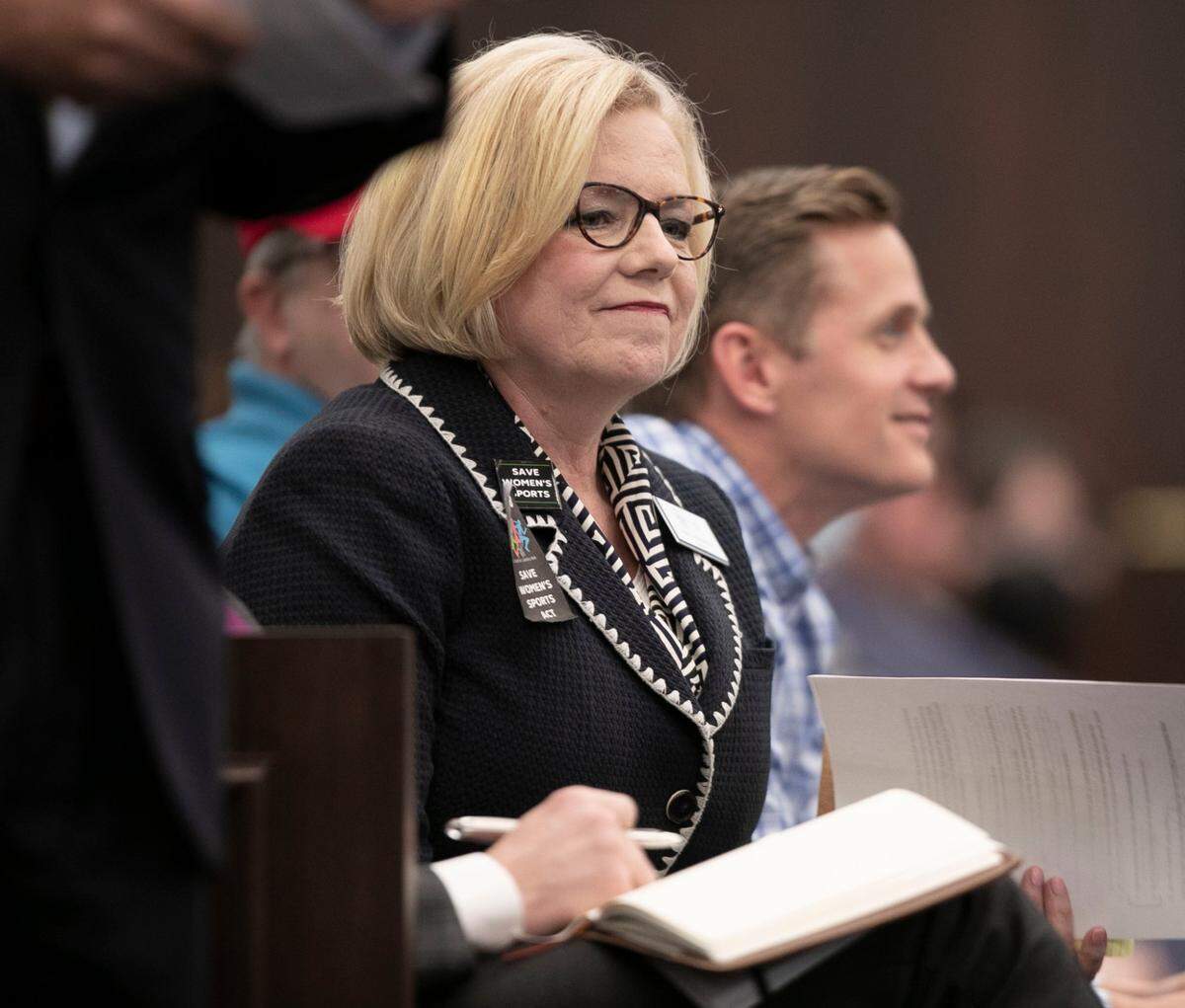
Fitzgerald said her organization began fighting against gender-affirming care after learning that Duke and UNC Health had both opened clinics in North Carolina. Whicker said there’s a third clinic in Charlotte, as well.
Fitzgerald said she has spoken with the bill sponsors who include Reps. Ralph Hise, Norman Sanderson and Warren Daniel, all Republicans.
Sanderson and Daniel did not respond to voicemails from The News & Observer seeking comment.
Hise sent a text message that he would try to call back if he could clear his schedule.
Regret over transition?
The bill sponsors also have the support of people like Walt Heyer, a North Carolina resident who lived as a woman for eight years until 1991 and is working to stop gender-affirming practices from continuing.
Heyer runs the website Sex Change Regret and works with youth who want to reverse their transition. He said until kids stop calling him, no one will change his mind that providing this type of care to minors is not OK.
Heyer points to a court case out of the United Kingdom, Bell v. Tavistock. A judge there ruled that puberty blockers and hormone therapy should not be used on teenagers under 16, in most cases, without a court order, because it is experimental and there is no appropriate way to talk to a child about losing fertility or sexual function.
“They shouldn’t be doing this to children,” Heyer said. “Even young adults, in my view until they’re past the age of 19.”
Heyer has written seven books and around 80 articles on the subject.
“To this date, I have not seen one case that medically justifies giving a young person hormone blockers or hormone therapy, just because they want to identify as a different gender,” Heyer said.
Scott said she has never regretted her transition, outside a few fleeting seconds when she wishes her family would speak to her or she wouldn’t have had the first article about her suicide attempt used against her at work.
And Scott said that seems to be true among her peers.
“I will say it is real,” Scott said of de-transitioning. “It does happen.”
But Scott said statistically the number of people who transition back are low and most stem from societal pressures.
Russell said out of the 425 patients at Duke less than 1% have regretted transition.
How treatment works
Beverly Gray, an obstetrician-gynecologist who works at Duke, said she feels that lawmakers have a misconception that teenagers come to their clinic on a whim to change genders.
“That’s not how this works,” Gray said, adding that the process is complex and thought out. “We go through a lot of counseling, a lot of discussion with both the patient and their parents.”
Russell said when patients come to the clinic she does a psychological assessment to determine the minor’s support from family, friends and their school. She finds out their history of sex, drugs and alcohol use.
She assesses their sleep, diet, exercise and stress levels. She assesses their mental health and what they want from the clinic.
She goes through their history with gender dysphoria. She also spends time with parents to see where they stand, what they know about gender dysphoria and what concerns they might have.
Russell said that children can deal with gender dysphoria for years before coming out to their parents and by that point the children are in a lot of pain and needing help from their parents. She said that can cause confusion because the child has spent years thinking about their gender but for parents it feels like everything happened fast.
When pre-teens come to the clinic they have the option to delay puberty, giving the child a chance to talk with psychologists and figure out if they really want to make the decision to change genders.
Doctors said they won’t delay puberty past when “late bloomers” among their peers would start, usually around 13. At that point the teens have to make a decision.
At the same time, the group provides support for the parents of these teenagers. Whicker said there’s a lot of stigma in North Carolina around the care his team provides, but parents tell him they just want to keep their kids safe.
The doctors work with the teens using workbooks, letting them try on clothing they might not feel comfortable wearing and talking through how people will react throughout their lifetimes.
If a child decides to transition they’ll be given hormones for the opposite gender, which is closely monitored and given at the same levels of what their peers receive naturally.
Duke’s doctors do not do any surgeries on the teenagers until they are at least 18, or the summer before they go to college.
Whicker said the clinic treats teens from across the state and from Tennessee, Georgia, Florida, southern Virginia and South Carolina.
Reporting to parents
For teenagers who have already started hormone therapy, Russell said, the bill leaves no way for doctors to continue with treatment, leaving teens ripped off the hormones they have been taking.
The doctors would not have a chance to taper down the hormones, either.
Ash said his family is prepared to move out of state if the bill passes. But he said a year ago they wouldn’t have been in a financial position to do so, and most of his friends aren’t now.
But there’s another element of the bill — a nonmedical element — that has put transgender people and their advocates on edge.
“If the bill goes through, teachers will have to out kids to their parents if they’re exhibiting any kind of behavior not in alignment with their sex assigned at birth,” Ash said. “There are closeted trans people at my school who feel much safer at school than they do at home, so this safety net that they have at a supportive school would be completely removed if this bill were passed.”
Ash said many of his friends would be outed to unsupported parents who would likely kick their child out of their home.
“The rate of homelessness among trans youth is so ridiculous,” Ash said.
He said that’s the part of the bill that is devastating.
“That’s just asking for someone to get abused or kicked out of their house,” Russell said.
Fitzgerald said that a parent has the right to be involved in the upbringing of their own child and it would be wrong for a government official to withhold that kind of information. She said she would want to see statistics showing that there could be adverse effects.
Scott said that she’s not just worried for transgender and nonbinary youth. It could affect other students that teachers are suspicious of.
“It’s really scary and dangerous,” Scott said. “What is going to happen to one of those kids who are not trans or nonbinary?Are they going to feel the pressure to be like, extra masculine or extra feminine, because their parents may have really strict, rigid rules that, you know, this can get them in trouble at home.”
For more North Carolina government and politics news, listen to the Under the Dome politics podcast from The News & Observer and the NC Insider. You can find it on Pandora, Spotify, Apple Podcasts, Stitcher, iHeartRadio, Amazon Music, Megaphone or wherever you get your podcasts.
This story was originally published April 15, 2021 at 11:46 AM.