Southern states move to protect vulnerable landowners. Why has NC been holding out?
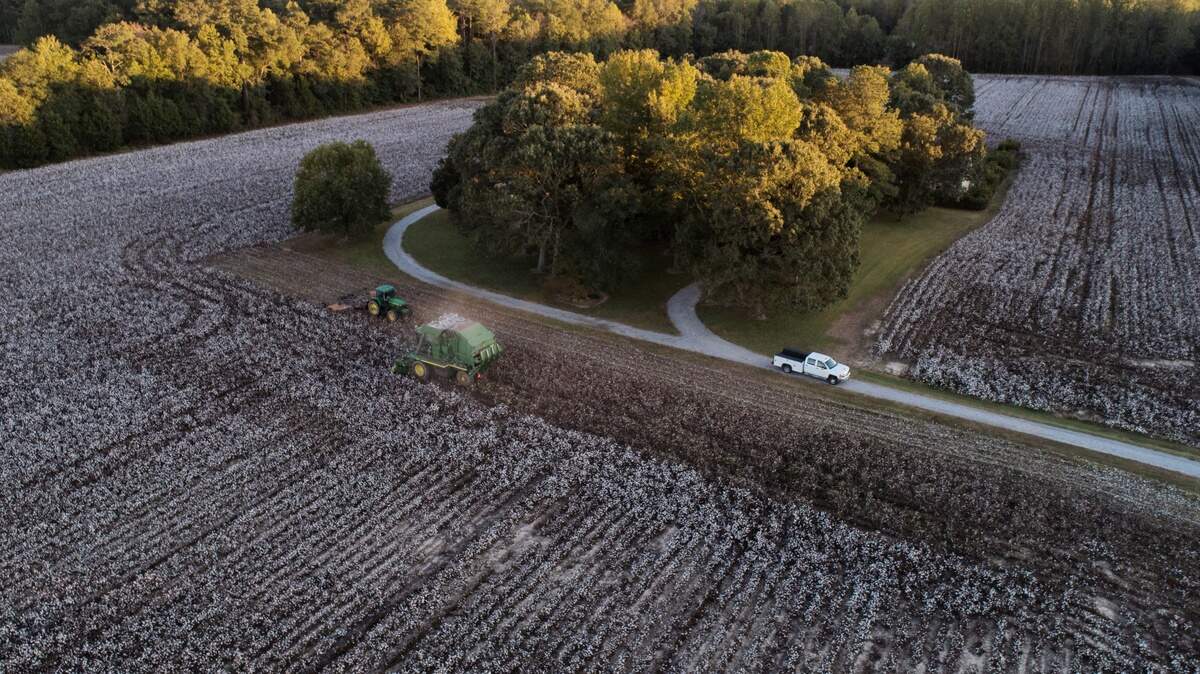
North Carolina landowners are one step closer to joining residents of five other Southeastern states that have enacted legal protections for owners of family property passed down for generations.
Known as heirs’ land, jointly owned property inherited from a family member who died without a will is more prominent in this part of the country and throughout the South, experts say, where there are more Black farmers.
Without a clear title for their property, lower-income, disadvantaged or minority families who are more likely to own land passed down to them in this way remain vulnerable to wealthy speculators seeking to divide family members and make a profit by forcing a sale of the land at what is often far less than market value.
While other states said to have high concentrations of heirs’ land and a steep decline in Black land ownership have passed legislation in recent years protecting owners of the land, North Carolina remains a holdout. This year, legislation headed up by two Republicans in the conservative-majority state legislature seeks to remedy that. House Bill 367 passed the state House in May.
Though North Carolina has one of the largest populations of Black farmers and an estimated $1.86 billion of heirs’ land, the proposal has faced more opposition among lawmakers here than it has in other states that recently passed the legislation.
That may be partly because those who would benefit the most from this legislation lack the same political and economic power that many other bills that successfully pass North Carolina’s legislature have behind them.
“They just don’t have the juice to move a bill through the legislature,” said Thomas Mitchell, who drafted the Uniform Partition of Heirs Property Act that 18 states have adopted. “It’s sad, but it’s a fact of life.”
These same groups of people also tend to have a greater distrust for the government and legal systems, experts say.
The proposed legislation would benefit rural and urban landowners of all races and socioeconomic statuses across the state, advocates say. But some lawmakers have argued that the additional protections proposed would create more work for court clerks, who would be tasked with determining whether property being sold or split is heirs’ land and finding an appraiser and real-estate broker if the land will be sold. Those clerks are the force behind the opposition.
It remains to be seen if the proposal will face opposition in the Senate, whose members are sponsoring an identical bill.
“At the end of the day, when you think about how many families are at risk of losing land that makes up pretty much their wealth and their legacy, and perhaps even their humanity,” said Mavis Gragg, an attorney and director of the Sustainable Forestry and African American Land Retention Project at the American Forest Foundation.
Gragg and her siblings own heirs’ land in Western North Carolina.
“I think it makes sense for us to make sure we have the laws in place to support them through a fair process,” Gragg said.
Incentives for states with heirs’ land protections
Under current state law, any landowner can file a partition action and ask the court to require the property to be either divided equally among owners or sold. The problems come, supporters of the legislation say, when a speculator buys a share from one of the heirs, giving that buyer the power to force a sale of the entire property.
Dozens of distant family members can jointly own heirs property, and a speculator only has to buy a share from one owner to petition the court and force a sale.
The price that the entire piece of property sells for is typically far below market value, advocates say, stripping family members of one of their main sources of wealth.
“It just goes to show that there’s enough holes in the current system that property owners are being taken advantage of,” said Rep. John Szoka, a Republican from Fayetteville, who is sponsoring the House version of the bill.
It’s difficult to know how many landowners are vulnerable to partition actions from third parties in North Carolina, said lobbyist Zach Wallace, who works for conservation and bird advocacy organization Audubon North Carolina.
One study estimated some 1.6 million acres of heirs’ property exist across the South in counties where African Americans make up more than 25% of the population, but experts say that number is hard to calculate.
The state’s office of the courts tracks the number of partition actions, but not all heirs’ property is partitioned, and not all partition actions are for heirs’ property.
It’s hard to know for sure how many families stand to benefit from this legislation, Wallace said, “but we know that it would have an effect on folks in all 100 counties.”
One reason other states have moved to protect heirs’ property owners is because of the 2018 Farm Act, a federal law which creates incentives for states that pass the Uniform Partition of Heirs Property Act. The legislation gives heirs’ landowners the ability to qualify for federal assistance, which is unavailable in states that haven’t passed the legislation.
Seven states have joined North Carolina in proposing the same legislation this year.
Of the southeastern states, Tennessee and North Carolina are the only ones that haven’t passed the legislation yet.
Florida and Virginia were among four states that passed the legislation last year. In both of those states, lawmakers unanimously voted in favor of the proposal.
The North Carolina state House passed the bill in an 80-28 vote.
The bill will now wind through Senate committees, but with other items like the budget higher up on the Senate’s priority list, it’s unclear when it will come up for a vote on the Senate floor before being sent to the governor’s desk.
Asked if he expected the legislation to pass, Senate majority whip and sponsor of the bill, Sen. Tom McInnis, a Republican from Ellerbe, said, “I don’t see why it wouldn’t.”
For more North Carolina government and politics news, listen to the Under the Dome politics podcast from The News & Observer and the NC Insider. You can find it on Pandora, Spotify, Apple Podcasts, Stitcher, iHeartRadio, Amazon Music, Megaphone or wherever you get your podcasts.
This story was originally published June 1, 2021 at 12:05 PM.
CORRECTION: A previous version of this story incorrectly reported the estimated number of acres of heirs land in North Carolina, a number that experts say is difficult to calculate.