
NC Supreme Court says records of state-owned private railroad are not public
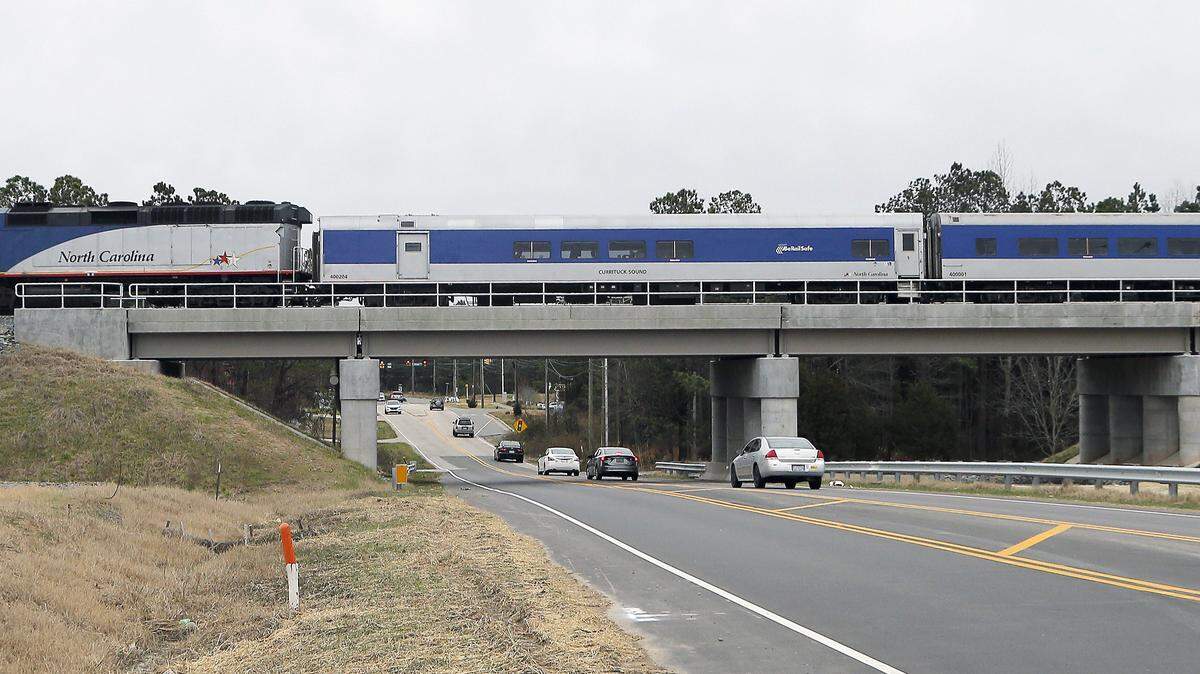
The private, state-owned corporation that built and runs a key railroad in North Carolina is not required to release information under the state’s open records law, according to the N.C. Supreme Court.
The N.C. Railroad should not be compelled to release documents about its work under the Public Records Act because it is not a state agency, a majority of the seven-member court ruled Friday.
While the state controls the railroad in several key ways, including appointing members to its board of directors, the state’s power primarily comes from being the company’s sole owner, the justices ruled. The company owns and manages the 317-mile rail line from Morehead City through the Triangle and the Piedmont to Charlotte.
“We determine that the Railroad has been an independent, private corporation since it was chartered in 1849 and that, while the State does exert a considerable degree of control over the Railroad, it primarily exercises this authority in its capacity as the Railroad’s sole shareholder rather than in its capacity as a sovereign,” Justice Samuel Ervin IV wrote for the majority.
The court was ruling in a case brought by the Southern Environmental Law Center, which had sought records from the railroad related to the Durham-Orange Light Rail project. The planned $2.7 billion transit line would have used part of the railroad’s corridor in Durham.
GoTriangle, the regional transit agency, ended the project in the spring of 2019 in the face of several challenges, including opposition from Duke University and concerns raised by the railroad. SELC asked for documents from the company to help it understand “the circumstances surrounding this project’s demise” and sued when the company refused.
SELC argued that because the railroad was created for a public purpose, receives taxpayer money and enjoys other benefits of a public agency, it should be accountable to the public.
The General Assembly created the N.C Railroad because it feared no private entity would build a rail line on its own. The railroad was established as a private company, with the state as its majority shareholder. The state bought out the remaining shareholders starting in 1998 and became the sole owner by 2006.
The railroad is a unique blend of public and private. It pays no state or federal income tax but pays property taxes in communities where it owns land and buildings. It has the power to take property through eminent domain, but gained that authority under a state law that applies to private entities.
Court decides railroad is more private than public
In its ruling Friday, the court cited several times when the General Assembly had an opportunity to treat the railroad as a state agency but did not. In 2013, for example, it noted that lawmakers voted to require the railroad to provide information requested by the governor or legislative committee, a move the court said would not have been necessary if the railroad was a public agency subject to the Public Records Act.
“Various components of state government have acted on numerous occasions in such a manner as to suggest their belief that the Railroad is a private corporate entity rather than a governmental agency or subdivision,” Ervin wrote.
But in a 19-page dissent, Justice Anita Earls wrote that declaring the railroad exempt from the Public Records Act ignores the purpose of the act and the railroad’s relationship with the state. Earls cited a 1981 case in which the court found that a nonprofit corporation was so intertwined with the government that it should be treated as a government agency under public records law.
“When the State owns the corporation, appoints its board, mandates its reporting, spends its revenue, and stands to receive the assets in the event of dissolution, we should recognize the obvious truth that the identity of the corporation and its sole shareholder — the State — are meaningfully intertwined,” Earls wrote. “NCRR’s argument — that the activities of this kind of corporation can be hidden from scrutiny by the people of North Carolina — is a self-interested attempt to cleave its public business from its public responsibilities.”
Earls was joined in her dissent by Justice Robin Hudson.
“An interpretation that results in an entity created by the State for public benefit shielding its records from public scrutiny is an absurd one,” Earls wrote.
Kym Hunter, an attorney for the SELC, said the organization has not received any of the information it requested from the railroad. In a statement, she cited Earls and said she hoped the railroad’s new president, former CSX executive Carl M. Warren, would take a different tack from his predecessor.
“We are hopeful that, regardless of the Court’s ruling, the North Carolina Railroad under its new leadership will act with transparency and in the best interest of the public it serves,” Hunter wrote in an email. “We endorse Justice Earls’s assessment in dissent that ‘the public’s trust in government suffers when government decision-making is shielded from public view.’“
