
Legalize sweepstakes machines and NC will profit, lawmakers say
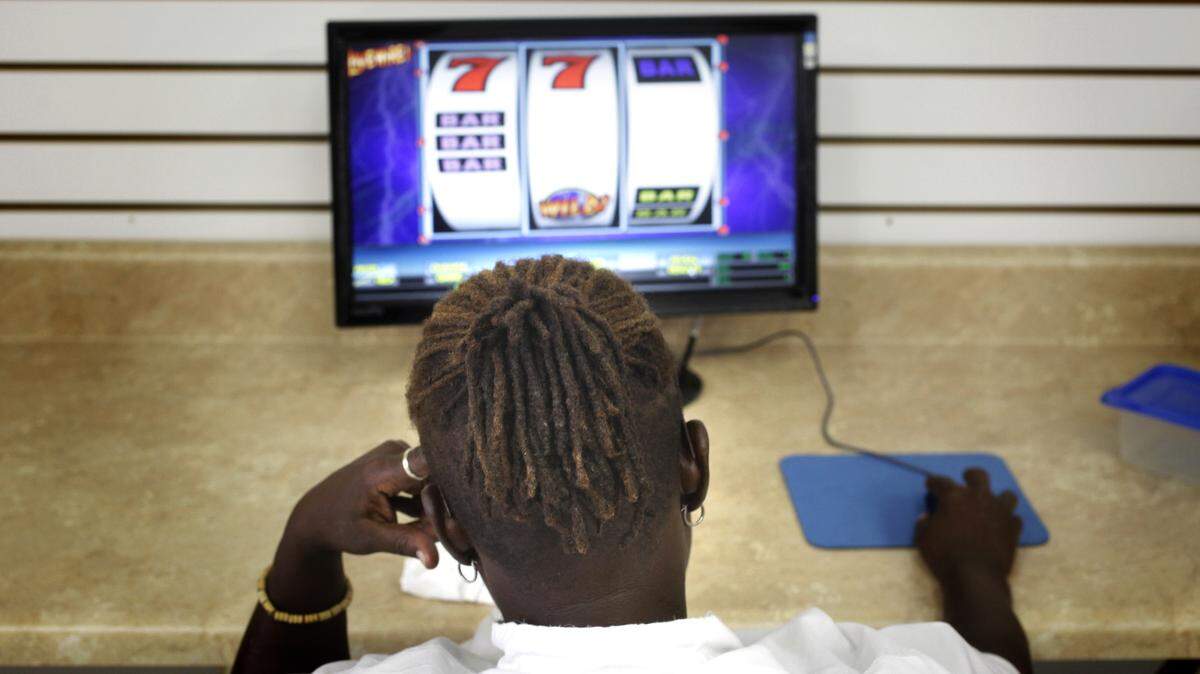
Some North Carolina lawmakers have decided after years of trying to ban sweepstakes operations to give in and try to turn a profit.
On Tuesday, the House Committee on Commerce introduced a new version of House Bill 954 that would require strict rules and regulations to operate a sweepstakes business that is heavily monitored by the N.C. Education Lottery Commission.
Some of the revenue from the sweepstakes would go to fund a forgivable loan program for students attending community colleges and provide funding for six state colleges, with the majority being historically Black colleges and universities.
“This bill has been designed to eliminate sweepstakes parlors and many casinos,” said Rep. Harry Warren, a Rowan County Republican. “The main intent is not to legalize what’s out there right now.”
Sweepstakes are distinct from other video games because they’re not based on skill and offer prizes that can be redeemed for cash. Lawmakers have spent more than a decade trying to ban them in North Carolina. But no matter what the legislators do, sweepstakes companies have found loopholes in the law that allows them to continue operating.
Because of that, law enforcement in most counties have been reluctant to crack down on operations and district attorneys have been weary about prosecuting the cases.
Warren said this bill fixes that problem.
“This is not just off the cuff, let’s go ahead and make them all legal,” Warren said. “That’s exactly the opposite of what we’re trying to do. When implemented, we believe that the total number of legal certified video lottery terminals in the state will be about 65% to 70% less than the number that are operating now in the state illegally.”
If passed, the bill authorizes the lottery commission to issue licenses and regulate game play on sweepstakes machines. Certification will be required for manufacturers, operators and retailers.
Lawmakers said that the state would try to cap the number of allowed manufacturers to five and the number of operators to 12.
Retailers would not operate a sweepstakes as their only business and would have to hold an active Alcoholic Beverage Control license. By law, the retailer would be able to operate up to six machines, or, with the permission of the commission, up to 10. Merchants could not also hold manufacturing or operating licenses for sweepstakes.
The sweepstakes machines would need to display permits provided by the commission indicating they had been approved. The games would need to be tested by the commission for use and approval, and then all activity on the machine would be electronically monitored to ensure compliance with the laws and to record the revenue due to the state.
The commission would be ordered to come up with a maximum wager a person can make and pay out any prizes over $600.
Besides a cut of the revenues, the state would require an annual privilege tax that must be paid by the operator, merchant and manufacturer.
Revenues from the machines would go several different places.
No less than 32% of revenues must go to the North Carolina Video Lottery Fund, no more than 8% would be used for the commission’s administrative expenses, 35% would go to operators and 25% would go to merchants.
Each year the North Carolina Video Lottery Fund would be required to provide forgivable loans for community college scholarships through the State Education Assistance Authority
The General Assembly would give $2 million each of the revenue annually to Elizabeth City State University, Fayetteville State University, N.C. A&T State University, North Carolina Central University and Winston-Salem State University.
Warren said the bill’s sponsors intended to include UNC-Pembroke and will make sure that school gets added.
Several committee members raised concerns about the bills related to ensuring that the colleges use the money appropriately and that community college students complete their degree. There were other concerns about enforcement.
Warren said he knows this bill is not perfect and is open to suggestions and changes needed before it goes to the House floor. Warren said the point of the bill was to get rid of the seedier operations and better control sweepstakes gambling.
John Rustin, president of the N.C. Family Policy Council, asked lawmakers to vote against the bill.
“North Carolina has been fighting for decades to eradicate highly addictive video poker, a.k.a. video sweepstakes, from our state,” Rustin said. “Not only would House Bill 954 do absolutely nothing to eliminate video poker in North Carolina, but it would also place into operation tens of thousands of additional video gambling machines, under the auspices of the state lottery.”
State lawmakers are also considering legalizing sports wagering this year.
For more North Carolina government and politics news, listen to the Under the Dome politics podcast from The News & Observer and the NC Insider. You can find it at link.chtbl.com/underthedomenc or wherever you get your podcasts.
This story was originally published August 31, 2021 at 6:40 PM.
