
North Carolina isn’t alone in political push to rein in emergency powers
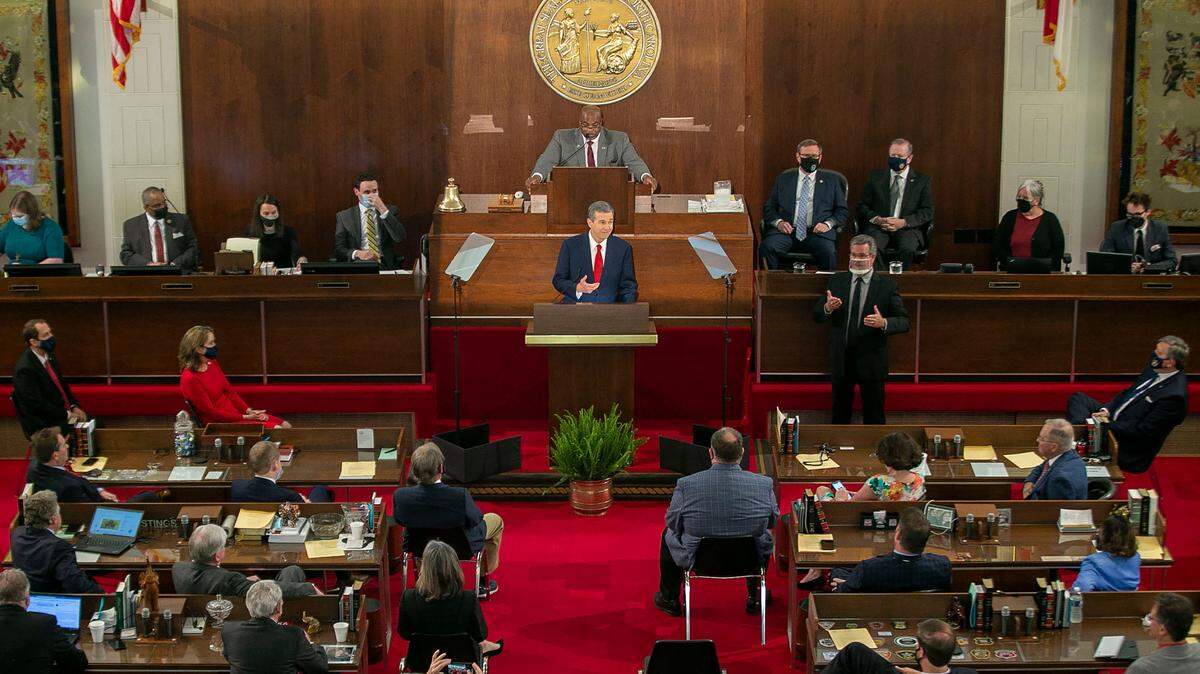
For more than a year, the coronavirus pandemic spotlighted who gets to make statewide decisions during an emergency.
In North Carolina, the Republican-majority General Assembly pushed back against COVID-19 restrictions in 2020 and into 2021 from Democratic Gov. Roy Cooper.
North Carolina hasn’t had any statewide restrictions since late July, but Republican lawmakers want to change the emergency management law to limit how long, and how often, Cooper and future governors can issue new orders during emergencies.
A version of the latest bill limiting emergency powers could also end up as a policy provision in the final version of the budget, which is overdue.
North Carolina isn’t alone in taking a closer look at how state laws could change after dealing with an unprecedented event — a public health crisis that lasted much, much longer than emergencies like hurricanes and other natural disasters.
Pending NC bill
The Senate passed House Bill 264 27-15 along party lines in September, with Republicans for and Democrats against.
The bill requires concurrence from a majority of the Council of State within seven days of the governor issuing a state of emergency, or the emergency expires. If the Council of State agrees and extends the state of emergency, it would expire after 45 days unless it is extended by the General Assembly. The Council of State is the 10 statewide elected officials that include the governor, lieutenant governor, attorney general, labor commissioner, auditor, treasurer, agriculture commissioner, insurance commissioner, superintendent of public instruction and secretary of state.
Sen. Danny Britt, a Robeson County Republican, said during the Senate’s debate that “this only impacts us in the future, not the current executive order in place now.” North Carolina has been under a state of emergency for 19 months, after Cooper declared one at the start of the coronavirus pandemic in early 2020.
A version first appeared this summer in the Senate budget, which Cooper spokesperson Ford Porter called “politically motivated.” Cooper himself has said repeatedly this year that he did not support changing the law in the middle of the pandemic.
The bill passed by the Senate weeks ago has been on hold in the House as Speaker Tim Moore said he was waiting on bill sponsor Rep. Keith Kidwell, a Chocowinity Republican, to return. Kidwell had been absent for more than a month as he and his wife fought COVID-19 complications. Kidwell has since returned, and a House vote is expected this week.
Proposed legislation across the country during the coronavirus pandemic aimed to give state legislatures and other government entities more oversight of executive orders relating to the emergency.
What other states are doing
The National Conference of State Legislatures tracks states’ action on COVID-19 response, including legislation about states of emergencies.
Here’s a sample of how North Carolina compares to some other states, from the NCSL tracking list:
▪ In South Carolina, the Senate adopted a resolution opposed to the governor’s issuing of new states of emergency every 15 days, as state law requires legislative approval for any orders beyond 15 days.
▪ In Alabama, Republican lawmakers sponsored a bill that would have changed the law to terminate states of emergency after 14 days. They would have only been able to be extended by a joint legislative resolution if the legislature was in session, or if not, by the leaders of the chambers. That bill failed in April.
▪ In Georgia, a Republican-sponsored pending bill would limit the duration of states of emergency. The bill would require a concurrent resolution from both the House and Senate if a governor wanted to continue the emergency beyond 30 days, and also if two declarations were made within 90 days.
▪ In Hawaii, a pending bill sponsored by Democrats would put limits on the amount of fines for violating the governor’s mask mandate.
▪ In Illinois, multiple Republican-sponsored bills, which didn’t make it out of committee, would change state law on emergency management. One bill would have limited the governor from issuing more than one proclamation per disaster, and another would only allow an extension if the legislature approves.
▪ In Indiana, some bills sponsored by Republicans, which failed, would have ended states of emergency on a certain date.
▪ In Kentucky, a Republican-sponsored bill became law over the Democratic governor’s objections, and was upheld by the courts. It allows executive orders from the governor to be extended only if approved by the legislature, and no new orders about the same emergency can be issued without legislative approval.
▪ In Louisiana, a Republican-sponsored bill passed that would have let the legislature terminate a state of emergency. It was vetoed.
▪ In Maine, multiple Republican-sponsored bills failed — including one that proposed an amendment to the state Constitution — that would limit the length of states of emergency without legislative approval.
What’s next for NC
North Carolina’s pending emergency powers bill is expected to pass the House, and hence the General Assembly, headed to a likely veto from Cooper. What is still unanswered is if some of the policy language will be in the final negotiated state budget, as it was in earlier proposals.
Cooper and Republican legislative leaders Speaker Tim Moore and Senate leader Phil Berger plan to meet in person this week to iron out their final agreements, and disagreements, in the state budget.
On Tuesday, Cooper told reporters that he had seen the budget but did not want to “get into the details at this point. I mean, obviously they put a number of things in the budget that we don’t like, and that’s one of the negotiations.”
“So we want to add things we want and try to take away some things we don’t want,” Cooper said.
Whether the powers provision is in a final budget signed or vetoed by the governor is to be determined. It could also come up again in the 2022 legislative session.
For more North Carolina government and politics news, listen to the Under the Dome politics podcast from The News & Observer and the NC Insider. You can find it at link.chtbl.com/underthedomenc or wherever you get your podcasts.
.jpg)