A debate over biases on the NC Supreme Court is rocking the legal and political worlds
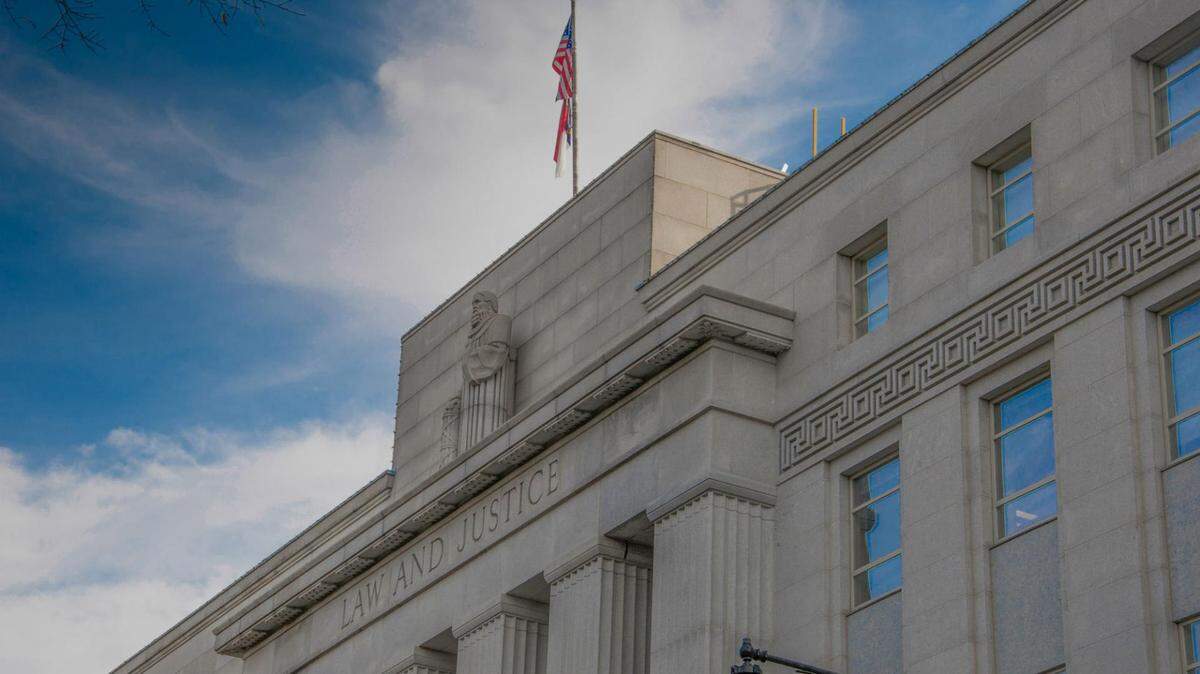
The political allegiances of justices on the N.C. Supreme Court are getting renewed attention as a case with massive political implications heats up: whether racial gerrymandering made the legislature so artificially skewed toward the GOP that state lawmakers lost their legitimacy as representatives of the people.
The case revolves around two amendments to the state constitution that Republican lawmakers put on the ballot in 2018 — one capping the income tax rate and the other requiring voters to show photo ID.
The crux of the case is that the GOP only had enough votes to get those amendments on the ballot due to political districts that had been ruled unconstitutional — they had been so egregiously gerrymandered that they effectively disenfranchised Black voters, courts ruled. And since the legislature was therefore not representative of all the state’s citizens, the NAACP argued in the lawsuit, those lawmakers shouldn’t get to write amendments to the state constitution.
They won with that argument at trial.
“An illegally constituted General Assembly does not represent the people of North Carolina and is therefore not empowered to pass legislation that would amend the state’s constitution,” wrote the Wake County judge who ruled the amendments unconstitutional.
The N.C. Court of Appeals overturned that ruling, so the case is now at the N.C. Supreme Court. And now another complex political question with potentially huge implications has come up: Should justices on the state’s highest court be allowed to force their colleagues off a case if they think they’re too closely tied to the politicians and issues being debated?
The court has a 4-3 Democratic majority. But the NAACP has requested that two of the three Republican justices recuse themselves from participating in the case. One of them, Phil Berger Jr., is the son of the Republican N.C. Senate leader who is a main defendant in the case.
The other, Tamara Barringer, is a former Republican senator who voted in favor of the amendments at the heart of the case, and was still in the legislature when it was originally sued in this case.
What happens if they won’t recuse themselves? Is that the final word, or can their fellow justices step in and force them to?
It’s a question with potentially far-reaching consequences that is coming up in this case, possibly for the first time ever, and the result could have long-lasting implications for future political lawsuits in North Carolina.
Judges don’t comment on pending litigation, and a Senate spokesman for the elder Berger declined to comment. Rev. Anthony Spearman, president of the NAACP, said in a written statement that the request is simply an attempt to “ensure that our highest court remains a venue where all can go to get fair, impartial justice.”
An unprecedented question for the court
For two months it was unclear if the court would even consider the unorthodox idea.
But that changed this past week. On Tuesday the court issued an order to both sides, indicating that the justices were weighing their options. They listed eight specific legal questions they wanted to hear arguments about, on this question of recusal by force.
“I would say the order is unprecedented, in my experience,” said Bob Orr, who served as a Supreme Court justice from 1994-2004, in an interview. “...It never came up in my time on the court.”
And, he said, it’s not hard to imagine future challenges about different justices’ impartiality, if the court allows it.
Judges at every level in North Carolina are elected. Orr said he could see this case potentially leading to similar requests in the future, with one side or another saying that justices are biased due to the election support they get from their political party — or from other supporters like lawyers, business leaders and others who have cases before the court and are sometimes heavily involved in the campaigns.
“What about lawyers who are supporting your campaign?” he said. “Or your opponent’s campaign?”
Kym Hunter, the lead attorney for the NAACP in this case, said judicial bias is a legitimate concern and “it is perhaps unsurprising that a case which questions the legitimacy of our representation in the legislature would prompt these crucial questions about the integrity of our courts.”
Martin Warf, the lead attorney for the legislature, responded in a recent court filing that not only do justices lack the ability to force their colleagues off a case, there’s also no reason for Berger or Barringer to recuse themselves. He said the NAACP just wants to get rid of two Republican judges to give themselves an easier path to victory.
“Far from a concern for the institutional role of this Court, this motion is designed to achieve what (the NAACP) perceives as a more desirable balance of the court,” he wrote. “Such motivation is certainly no justification for any justice to strain to recuse.”
What does it mean to recuse?
Judges are supposed to recuse themselves from a case, meaning they won’t rule on it, if there are strong reasons to suspect they might not be impartial. That might be because they’re related to someone involved, or have a financial stake in one side, or if there’s any other reason to doubt they can rule fairly.
Historically, the decision has been left up to individual judges. Sometimes they decide on their own to recuse themselves, and sometimes they recuse themselves after lawyers on one or both sides ask them to.
“There were times I’d have to ask myself, ‘OK, should I recuse myself?’” Orr said. “And then I’d make that decision. And nobody on the court ever said anything to me about it one way or the other.”
But in this case, after Berger and Barringer did not recuse themselves, the ensuing question of whether the rest of the court can step in and remove them has since exploded in the North Carolina legal and political worlds.
Conservatives have been apoplectic that it might happen, and liberals have been indignant that it had to be requested at all.
Rob Scofield, writing for the liberal N.C. Policy Watch, said the recusal question at least for Berger stems from an “extraordinarily blatant (if not at all surprising) conflict of interest” — since he is not only the son of a defendant in the case but also is headlining a $1,000-per-person political fundraiser with yet another defendant, N.C. House Speaker Tim Moore, even though the legislature’s case is still pending.
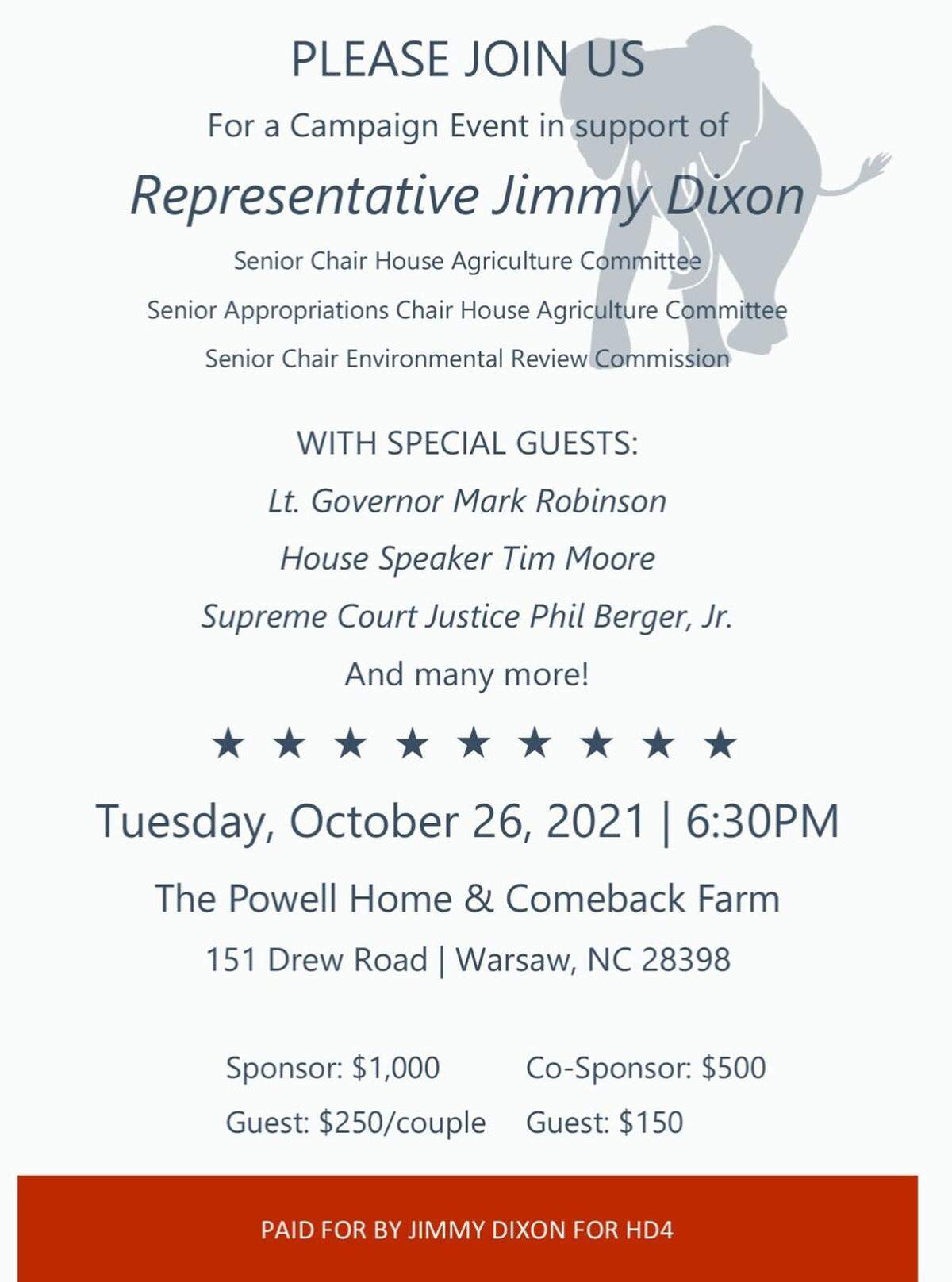
The issue of the fundraiser also raised red flags with veteran government watchdog Bob Hall. He told The News & Observer in an interview that he’s more concerned about Berger’s impartiality in the case due to that fundraiser than because of his father’s role in the Senate.
“I think it’s a smoking gun for the recusal,” Hall said. “Because it’s beyond just his personal relationship with his father — it’s his personal loyalty to the party, to the Republican legislature.”
Not all would agree.
Dallas Woodhouse, writing for the conservative Carolina Journal, called the possibility of a ruling against either Berger or Barringer “a bloodless coup d’état” that “could destroy the court for years to come.”
Recusal decisions should be left up to individual justices, he said, and not whoever has a majority on the court. He also questioned whether Anita Earls and Mike Morgan, two Black Democrats on the court, should also be forced off the case. Both have been formally honored by the NAACP in the past, and Earls was the keynote speaker at an NAACP fundraiser in 2019, while this case was pending but before it reached the Supreme Court.
The worry about how the Supreme Court might rule on the larger question — whether a racially gerrymandered legislature truly represents the people — is not new for Woodhouse.
In 2018 when he was the NCGOP executive director, he raised the possibility of impeaching any Supreme Court justice who might someday rule in favor of the NAACP in this case.
Politics and judges
While those in the legal system sometimes try to stay above partisan politics, many cases make it hard to separate politics and the judges ruling on the cases — especially since in North Carolina, every judge is elected, from district court up to the Supreme Court.
And in this case, the rulings by the judges involved have so far all aligned with their party affiliation. That doesn’t necessarily mean the judges are making their rulings based on politics instead of the law, but it is how the rulings have gone.
The Wake County Superior Court judge who heard the case at trial and ruled in the NAACP’s favor was Bryan Collins, a Democrat. The N.C. Court of Appeals then overruled him, with a panel voting 2-1. The two who ruled in the legislature’s favor, Chris Dillon and Donna Stroud, are Republicans. The one who dissented, Reuben Young, is a Democrat.
And now the case is at the Supreme Court.
The court used to be officially nonpartisan. But GOP legislators passed a law making Supreme Court elections partisan just weeks after the Democrats’ preferred candidate won in 2016 even as Republican candidates won most other statewide races that year.
This story was originally published October 2, 2021 at 5:30 AM.