
As more state employees get vaccinated, governor says some could get incentives
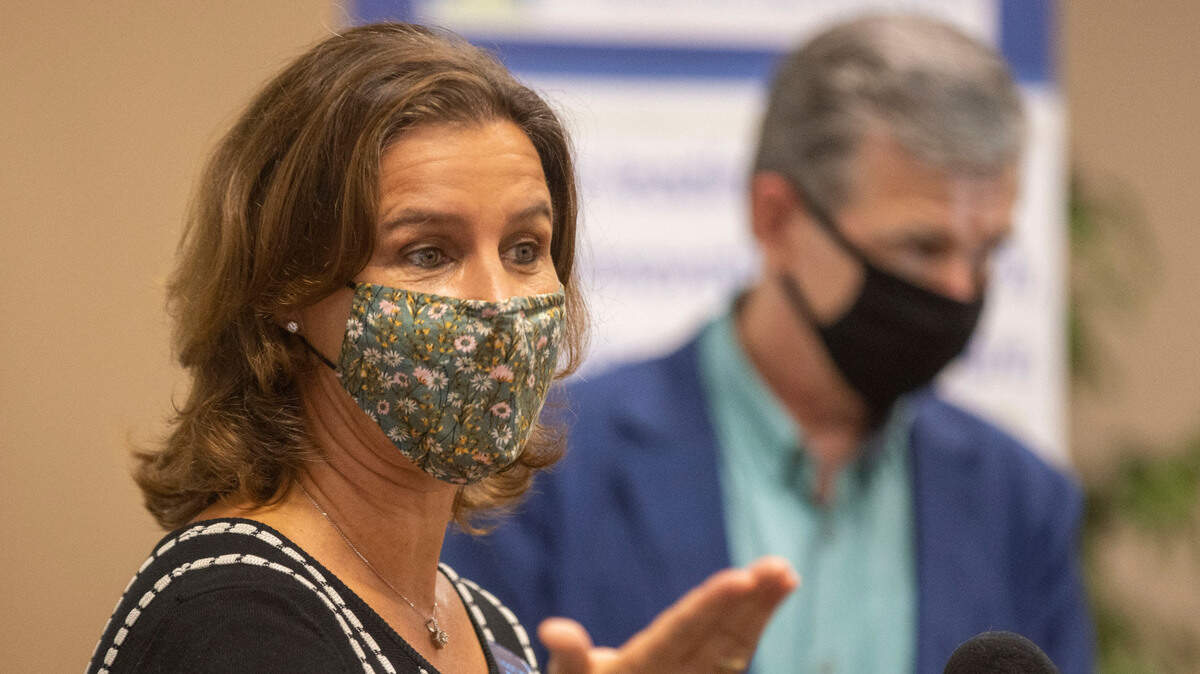
Thousands of North Carolina state employees spent September getting tested weekly for COVID-19 if they weren’t already vaccinated. Gov. Roy Cooper said that the Department of Public Safety, which has the lowest vaccination rate, will soon announce an incentive program for corrections officers who are not yet vaccinated.
One of the highest state employee Cabinet agency vaccination rates is at the N.C. Department of Health and Human Services. DHHS has an 81% vaccination rate. That includes some workers who are are required to be vaccinated, as well as those who must verify vaccination or be tested weekly. Of DHHS’ 15,418 employees subject to Cooper’s order requiring proof of vaccination or testing, 12,513 were vaccinated as of Sept. 30.
The vaccination rate for the 55,000 state employees of the governor’s Cabinet agencies has increased slightly since the initial deadline in early September.
Federal guidelines are expected in coming days about President Joe Biden’s mandate for private employers of more than 100 workers to require vaccinations or regular testings of non-vaccinated workers. Many local governments have already started doing so.
Cooper told reporters on Thursday that his office has not yet decided on any disciplinary measures, including firing, for employees who do not follow the rules.
“We are working hard to convince employees who have not yet verified that they have been vaccinated to do so,” Cooper said Thursday.
“It’s already resulted in getting people vaccinated who otherwise would not have,” Cooper said. “We urge all employers — state, local, private — to do this kind of thing.”
He said the Department of Public Safety is working on an incentive plan for corrections officers, as they work in close proximity with others, and expects to announce it soon.
COVID-19 numbers ‘still too high’
Cooper said while the state’s overall COVID-19 hospitalizations, number of cases and people in intensive care units have all dropped, those numbers are “still too high.”
“We have a way to go before we are on the other side of this, but it does show that things are getting better,” he said. The governor visited Health Park Pharmacy in northern Raleigh on Thursday to get his flu shot and tour the independent pharmacy’s vaccine clinic.
About 60,000 North Carolina state employees had to be vaccinated by early September or be tested weekly for COVID-19.
Wake County is home to the largest number of those state employees. There are about 55,000 permanent state employees impacted, and another 4,000 who are temporary workers.
The deadline for DHHS employees at all state-run health care facilities to be fully vaccinated was Sept. 30. Weekly testing was not an option.
UE Local 150, the North Carolina Public Service Workers Union, supports the DHHS vaccine mandate and urges everyone to get vaccinated.
“Workers need to be protected from an easily transmitted virus which they desperately do not want to bring home to their loved ones. A solid majority of people in the U.S. have received the vaccine and support vaccine mandates,” UE Local 150 President Sekia Royall said in a statement.
“This is not an issue of personal rights or encroaching authoritarianism, but an act of social responsibility that recognizes that the most vulnerable because of our jobs, poverty and the historical inequalities in a profit-driven society are the working-class, especially its Black, Brown and indigenous sectors,” Royall said.
Vaccination rates
Here is the breakdown as of Sept. 30 of vaccination rates for Cooper’s other Cabinet agencies and other workers subject to his order, from the Office of State Human Resources:
Department of Public Safety: 56%, which is a 3% uptick since early September. The Department of Public Safety has the largest number of workers of all the Cabinet agencies. Of 19,905 workers, 11,239 are fully vaccinated. DPS has the lowest vaccination rate of Cabinet agencies. Within DPS, the State Bureau of Investigation has a 91% vaccination rate, which is 86 of 94 employees.
Department of Administration: 82%. Of 509 workers, 415 are fully vaccinated.
Department of Environmental Quality: 81%. Of 1,642 workers, 1,322 are fully vaccinated.
Department of Military and Veterans Affairs: 79%. Of 106 workers, 84 are fully vaccinated.
Department of Natural and Cultural Resources: 76%, which is an almost 20% increase since early September. Of 2,384 workers, 1,898 are fully vaccinated.
Department of Revenue: 76%. Of 1,436 workers, 1,095 are fully vaccinated.
Department of Transportation: 65%. Of 9,354 workers, 6,073 are fully vaccinated.
Information Technology: 86%. Of 1,128 workers, 980 are vaccinated.
Department of Commerce: 82%. Of 1,623 workers, 1,331 are vaccinated.
Some non-Cabinet offices that are also subject to Cooper’s order:
Office of State Human Resources: 92%, which is 93 of 101 workers.
Office of State Budget and Management: 91%, which is 107 of 117 workers.
The Governor’s Office, which has 72 permanent and temporary employees, has a 97% vaccination rate, according to Cooper spokesperson Jordan Monaghan.
Cooper announced the vaccination and testing requirements in July, with an early September deadline for those state employees to document their vaccination status or start being tested every week.
Ardis Watkins, director of the State Employees Association of North Carolina, said in late August that SEANC had received few complaints from state employees about it.
UE Local 150’s president said workplaces already struggling with staffing cannot afford to lose any more workers.
“We firmly support the vaccine mandates that are presently operational at our respective work sites because they are supported by the scientific evidence from the CDC/NIH, thus far. We recognize that due to misinformation, some workers are choosing to quit their employment rather than receive vaccines,” Royall said.
Royall urged employers to offer financial incentives for vaccinations, and also worker-to-worker conversations about the need for vaccination.
State workers can find out more about the policy at oshr.nc.gov/vaccination-or-testing-policy.
Vaccinations are free and available to North Carolinians age 12 and older. For information, visit covid19.ncdhhs.gov/vaccines.
For more North Carolina government and politics news, listen to the Under the Dome politics podcast from The News & Observer and the NC Insider. You can find it at link.chtbl.com/underthedomenc or wherever you get your podcasts.
This story was originally published October 1, 2021 at 2:26 PM.
.jpg)