
Some NC counties have no women in charge. But the only all-women board is in the Triangle
Slightly more than half of all North Carolinians, and voters, are women. Yet year after year they are still not half of elected officials.
Meredith College, a private school in Raleigh, has released its Status of Women in North Carolina Politics report, calling the latest gender representation in the state “a mixed bag.”
Here are some key takeaways from the report.
Many counties have no women county commissioners
Nationwide, women hold between 25% and 30% of city, town and county elected positions, the report says. But on North Carolina county commissions, just 22% of commissioners are women. And that is an increase from a decade-low of 14.7% in 2018, Meredith College reported.
The report also notes that almost half — 46 of 100 counties in the state — had no women serving as county commissioners in 2018. After the 2020 election, that number dropped to 31 counties with all-men boards. Among those counties are Johnston, Union, Duplin, Burke and Beaufort.
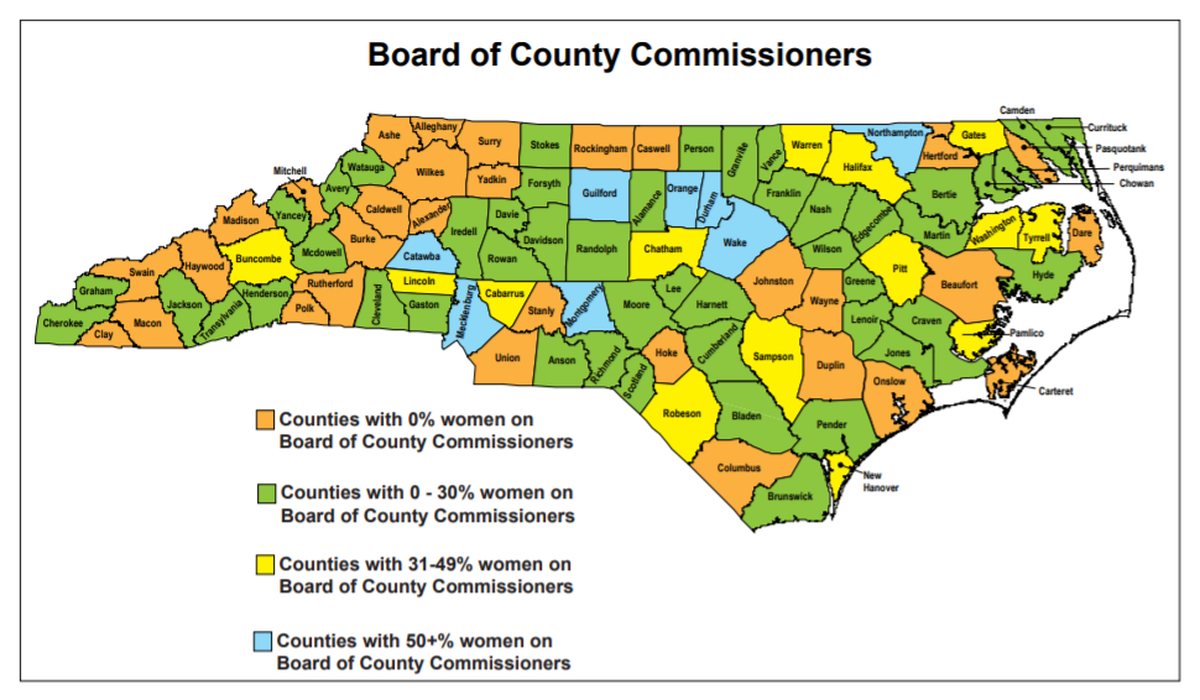
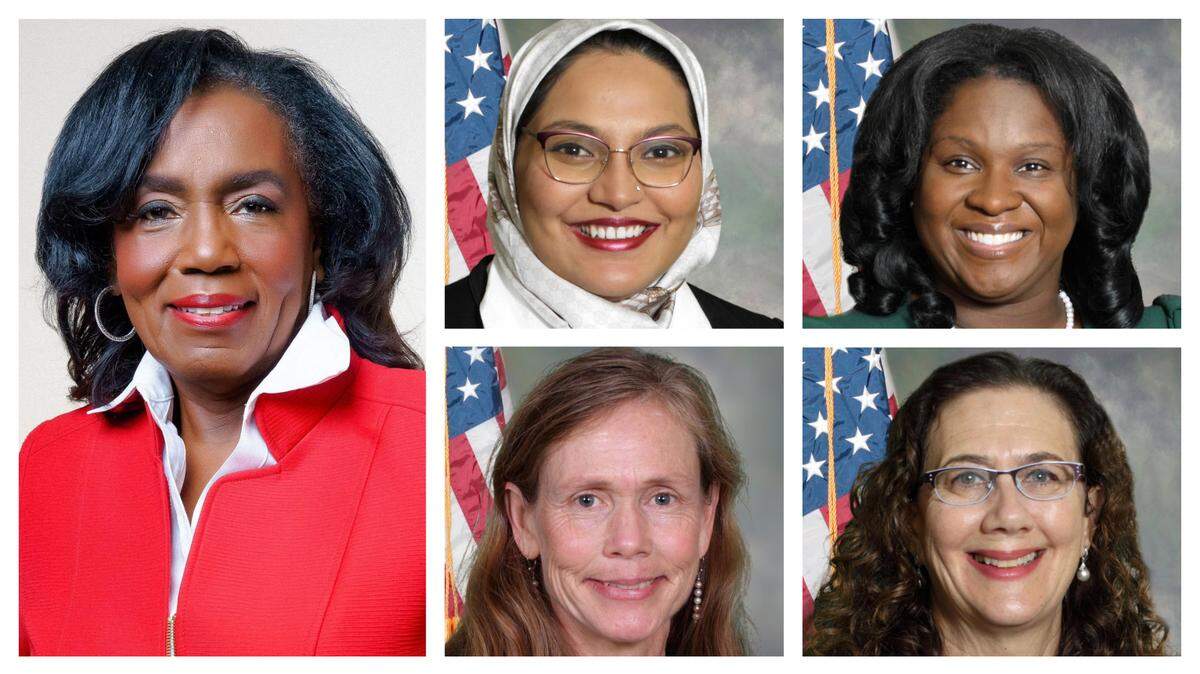
However, the Triangle has an all-women board: the Durham County Board of Commissioners. One of those members, Nida Allam, declared her candidacy for Congress this week. Durham has five county commissioners, and is chaired by Brenda Howerton, who has served as president of the N.C. Association of County Commissioners.
Howerton, who is also African American, told The Herald-Sun in 2017 that, for her, “it’s saying to little girls that you can do whatever it is you set out to do.”
“But understand it takes work. This didn’t just happen because I woke up and wanted to do it. It takes a lot of work,” Howerton said.
Seven other counties have boards with at least half women: Catawba, Guilford, Mecklenburg, Montgomery, Northampton, Orange and Wake. After Durham, the second highest number of women commissioners are Mecklenburg with seven of nine commissioners who are women, and Montgomery with four out of five commissioners who are women.
Of the three main points of the Triangle — Raleigh, Durham and Chapel Hill — all three will soon have women mayors. Durham voters elected Elaine O’Neal as mayor last week, and Pam Hemminger was reelected as mayor of Chapel Hill. Raleigh’s mayor is Mary-Ann Baldwin.
Top 5 counties with highest voter registration
Statewide, one of the five counties with the highest percentage of women voters is in the Triangle.
The state’s top five:
1. Edgecombe: 57%
2. Hertford: 56%
3. Scotland: 56%
4. Vance: 56%
5. Durham: 56%
Of the five counties, four favored President Joe Biden in the 2020 election, with Scotland County favoring former President Donald Trump in 2020.
Executive branch static
North Carolina has only had one woman governor, Gov. Bev Perdue, who served from 2009 to 2013 and as lieutenant governor before that. However, on the Council of State, the 10 statewide elected officials, there are three women: Department of Public Instruction Superintendent Catherine Truitt, a Republican; Secretary of State Elaine Marshall, a Democrat; and State Auditor Beth Wood, a Democrat. Marshall and Wood won reelection in 2020. Truitt replaced a man, but a man replaced former Labor Commissioner Cherie Berry, so the gender demographics remained the same. Marshall was the first woman elected to a statewide position in the executive branch in 1996.
Few in top legislative leadership
Leadership within the General Assembly is also short on women.
Nationwide, women hold more than a quarter of legislative leadership roles, according to Meredith College’s report. North Carolina has less, with 23%. In the House, the top positions of speaker, majority leader and minority leader are all men. The Senate president pro tempore is a man, as well as the minority leader. Republican Majority Leader Kathy Harrington broke ground when she became leader for the current session.
Women serve in other leadership roles in the legislature including House Speaker Pro Tempore Sarah Stevens, a Republican, and Deputy Democratic Leader Rep. Gale Adcock.
The report says women in the legislature overall have achieved only “modest gains” over the past several years.
Nationwide, 8.2% of all people serving in legislatures are minority women, though in North Carolina that number is 8.8%.
In the General Assembly, there was an all time high of 98 women candidates for the legislature in 2020, according to the report. Of those candidates, more than 70% were Democrats. Of candidates, the largest number ran in urban districts — 39% compared to 33% in rural districts. The rest were in suburban districts.
Disparities persist
“There is a wide disparity in terms of women serving in elected office. At one end of the spectrum are positions such as Register of Deeds, Clerk of Superior Court, and school board member, where women are close to or at gender parity,” the report concludes. “In other elected positions around the state — including major policy making positions in the General Assembly or on county boards of commissioners, women are significantly underrepresented.”
The report was produced by Meredith political science professor David McLennan, who said it is “meant to be a wake-up call for North Carolina politics.”
Women voters ‘not a monolith’
The report also includes recommendations for the media’s coverage of women in politics, saying that too many stories in North Carolina media organizations framed women voters as saviors for Democrats.
“Many stories addressed the gender gap between men and women. Although this gap is significant, women voters are not a monolith. Many close races in North Carolina featured women voting for Republican candidates and helping them win races,” the report says. It also suggests stories focus on how women govern and what they bring to the table rather than what they lack.
This story was originally published November 10, 2021 at 8:30 AM.
.jpg)