
NC’s 2022 election campaigns are underway, as candidates start filing Monday. What to know
Update: The North Carolina Court of Appeals halted candidate filing in U.S. House, state Senate and state House districts just before filing was set to start at noon Dec. 6 in those races.
Candidate filing for the 2022 elections in North Carolina started Monday, Dec. 6 for many races, and lasts for the next two weeks.
The state will be in the national spotlight because of its U.S. Senate race, which is wide open with Sen. Richard Burr’s decision not to seek reelection. But there’s much more on the ballot.
Here’s what you need to know.
Why it matters
The state legislature is responsible for passing laws that involve how much you pay in taxes, how that tax money is spent, how much state workers are paid, how often roads are built and maintained, what is taught in public schools, environmental rules and all the other state laws that govern your daily life.
All 170 seats are up for election in the North Carolina General Assembly: 50 state Senate seats and 120 state House seats. Candidates of the two major parties first need to win the March primary election before proceeding on to the general election in November. There are new political maps, so the districts where you live may have changed.
Which party controls a majority or supermajority in the state House and Senate determines what policy priorities are passed and sent to the governor to sign into law or veto. Currently, North Carolina’s governor is Democratic Gov. Roy Cooper, whose term runs through 2024, and both chambers in the General Assembly have Republican majorities, but not supermajorities that can override vetoes.
Many of those laws end up in the courts — and control of the state’s courts is also on the line in the coming elections. Democrats currently have a majority on the N.C. Supreme Court.
North Carolina has 10.4 million residents. Slightly more than half are women, but the General Assembly is not half women. Of the 50 members in the Senate, 16 are women — 10 Democrats and six Republicans. That is less than a third. In the House, 29 representatives out of 120 are women — 21 Democrats and eight Republicans. That is just 24% women.
More than a fifth of the population — 22% of North Carolinians — are Black or African American. There are 12 African American state senators out of a total of 50 senators, which at 24% is slightly higher than the state’s demographics. In the House, 20% of representatives are African American, slightly less than in the state’s population. All African American state lawmakers are Democrats.
What offices are up for election in 2022?
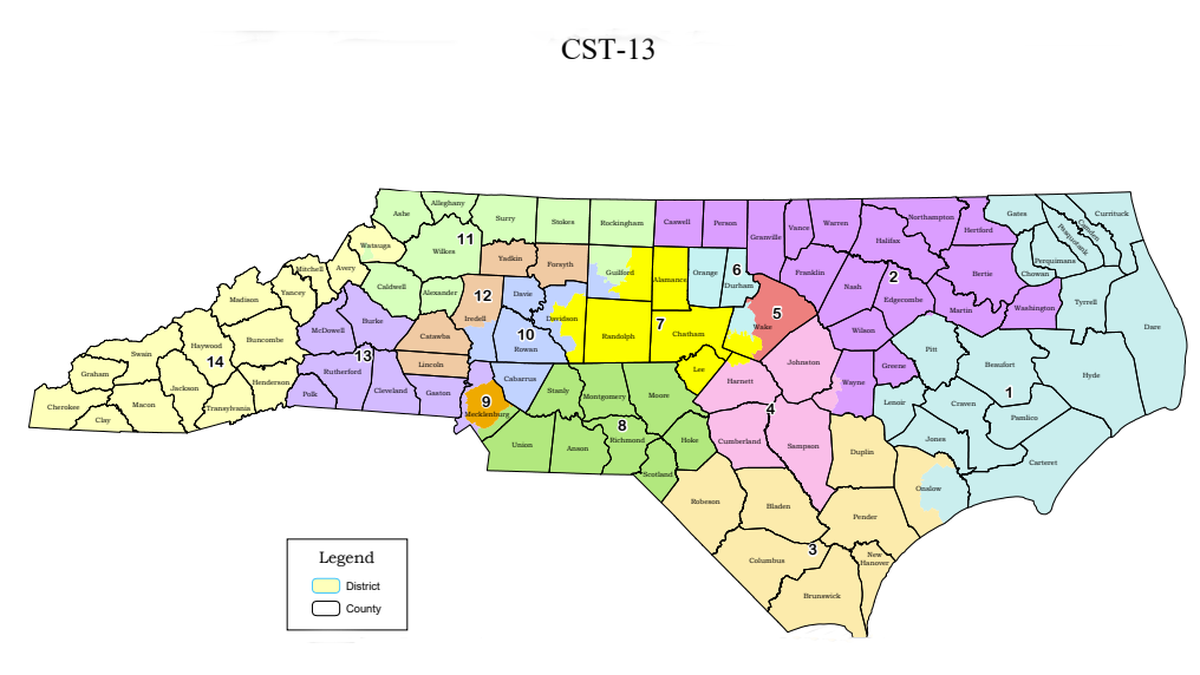
In addition to the 170 state lawmaker seats, North Carolina has 14 newly drawn congressional districts, after increases in population garnered an additional seat in Congress for the Old North State. All 14 U.S. House seats are up for election in 2022.
Other elections this coming year include those for judges of the N.C. Court of Appeals, Superior Court judge, District Court judge, district attorney and county and municipal offices.
How can I participate?
You can run for office.
Candidates need to file a “notice of candidacy” form they can find here: ncsbe.gov/candidates/running-office.
There are also a range of filing fees. Filing fees to run for the state legislature are $140.
Candidates for the state House, state Senate and county and municipal offices may all file to run with their county board of elections.
All other candidates file with the State Board of Elections at the Exposition Center at the N.C. State Fairgrounds, 4285 Trinity Road in Raleigh. Filing is not taking place at the State Board of Elections office because of space constraints and the coronavirus pandemic, according to the Board of Elections. Filing hours at the fairgrounds are:
▪ Dec. 6: Noon to 5 p.m.
▪ Dec. 7-16: 8 a.m. to 5 p.m. weekdays.
▪ Dec. 17: 8 a.m. to noon.
If you’re not running for office but want to see who has filed to run, the Board of Elections will update candidate filings here: ncsbe.gov/results-data/candidate-lists.
Other important dates:
- The partisan primary is March 8.
- If a second primary is needed for a runoff election, that is May 17 for a federal office or April 26 for other offices.
- The general election is Nov. 8.
For more North Carolina government and politics news, listen to the Under the Dome politics podcast from The News & Observer and the NC Insider. You can find it at link.chtbl.com/underthedomenc or wherever you get your podcasts.
This story was originally published December 6, 2021 at 5:00 AM.
.jpg)