
With omicron wave causing COVID spike, NC Gov. Cooper urges vaccine, boosters
As North Carolina hits record high COVID-19 cases and hospitalizations due to the omicron variant, Gov. Roy Cooper repeated his calls for people to get vaccinated, including booster shots, and to wear masks.
“As we close in on two years dealing with COVID-19, I know many of you are weary and frustrated,” he said.
But, he said, people have to keep doing what works to get the virus to the “endemic stage,” Cooper said.
“We will have to learn how to live with it, and continue to keep kids in schools and businesses open, and government operations running effectively and efficiently,” Cooper told reporters at a COVID-19 news briefing on Tuesday at the Emergency Operations Center in Raleigh.
He also said that testing supply should increase in the next few weeks to accommodate the recent demand for tests.
The governor’s press conference comes as the state has seen the largest spike in new cases over the entire pandemic, due to holiday gatherings and the highly transmissible omicron variant.
On New Year’s Day, the N.C. Department of Health and Human Services reported a pandemic high of 19,620 new COVID-19 cases. The previous highs were Thursday and Friday when over 18,000 cases were reported each day. The previous record was over 12,000 one-day cases reported in February, during last winter’s surge.
“Last week we set a single day record for COVID-19 cases. The next day, we broke it. And the next day, we broke it again,” said DHHS secretary Kody Kinsley at his first COVID-19 press briefing as head of the agency. He follows Dr. Mandy Cohen, who resigned at the end of December.
This week, Cooper said he plans to extend an executive order that requires state employees to be vaccinated against COVID-19, or get tested weekly.
Cooper said when the Centers for Disease Control and Prevention includes an additional booster dose as a part of the full vaccine regimen, the Office of State Human Resources will be permitted to include this booster requirement as well.
“That is the strongest protection we have to fight this virus and live normal lives,” Cooper said. “Most of the people with COVID in the ICU right now are unvaccinated. There’s still time for you to get the vaccine and booster.”

Omicron variant spike
Public health officials say that the rapid spread is due to omicron, which was first detected in South Africa in late November. It has been reported in over 100 countries since then.
The new variant, while highly contagious, is believed to induce less severe symptoms than previous strains.
However, the number of people hospitalized due to COVID-19 statewide is spiking as well. Hospitalized COVID-19 patients across North Carolina topped 3,000 on Tuesday for the first time since late September, when hospitals were still weathering last summer’s surge of the previously rampant delta variant. Cooper said that hospitals are not at capacity, but workers are tired.
Fewer than 2,000 were hospitalized a week ago, and just over 1,200 were reported at the beginning of December.
It’s unclear which variant is causing this spike in hospitalizations.
According to DHHS, just 14% of viruses tested for variants is omicron, but that dates only to Dec. 18. Omicron was first detected in North Carolina the week before.
The CDC’s regional variant detection report indicates that the Southeast has over 97% omicron cases. The report, which was updated Tuesday, covers North Carolina. Kinsley said that omicron is “rapidly crowding out all the other variants.”
“It is safe to assume that every positive we are seeing is omicron,” he said.
And those unvaccinated are driving this surge.
Over 83% of hospitalizations due to COVID are among those unvaccinated, according to data from DHHS during the week ending Dec. 11, the latest data available. For patients requiring intensive care, the unvaccinated rate is even higher at over 88%.
Kinsley said that even with a less severe variant, hospitals are nearing capacity.
“Individuals that do not have immunity still have severe risk potential here. Even if a smaller percentage of those cases end up in the hospital eventually — thinking about the number who are unvaccinated, thinking about how quick this is moving,” Kinsley said. “It’s still a serious risk for both those individuals and the hospitals.”
As of Tuesday, 59% of North Carolina’s population has received either two doses of the Pfizer or Moderna vaccine or one dose of the single-shot vaccine from Johnson & Johnson. Among the eligible population, ages 5 and up, the rate is 62%.
Public health officials recommend that anyone eligible get an additional booster dose of the vaccine.
In North Carolina, over 2.5 million people have gotten their booster.
Limited testing supply
Meanwhile, the COVID-19 testing supply has also been strained so much so that public health advice to get tested before and after holiday gatherings led to long lines and lack of available appointments at many testing locations.
“I know that people are frustrated, but it’s because they are doing what they should do, and we’re grateful for that, and we’re grateful for the record number of people who have gone in to get tested,” Cooper said.
Over 91,000 people tested for COVID-19 in North Carolina on New Year’s Eve, a pandemic record.
And nearly 30% of tests administered Sunday were positive, another record.
DHHS responded to the demand for testing by opening more testing locations, including large ones like PNC Arena in Raleigh.
Cooper said he has asked the Biden Administration to help North Carolina with more testing, and expects more tests with the next few weeks.
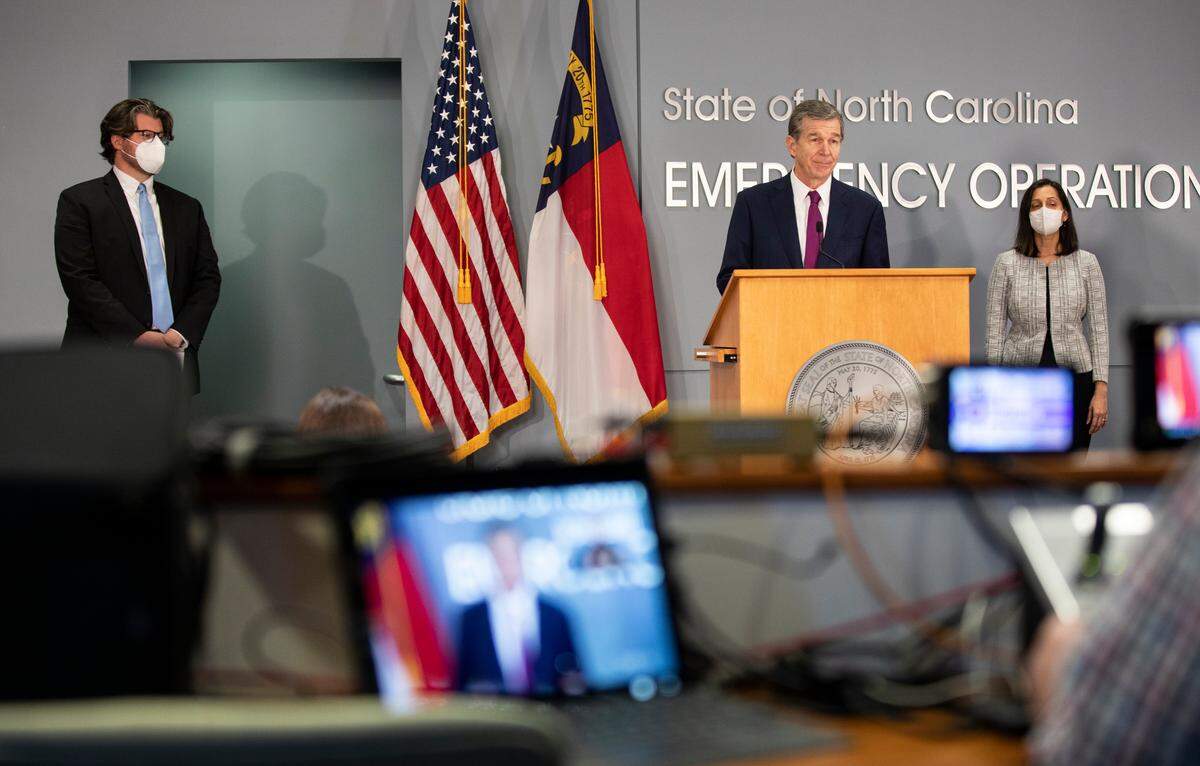
For people waiting a long time for tests, Cooper urged them to check all of their options for testing locations. He thanked people for “doing the right thing and working so hard to get themselves and their families tested.”
The U.S. Food and Drug Administration authorized the use of booster shots for 12- to 15-year-olds on Monday. The news comes as students returned to school after winter break. Vaccinations for children ages 5 and older have been available since the fall. Vaccinations — both first doses and booster shots — are free and readily available across the state.
Recent public health guidance given the omicron variant being a more contagious strain has included upgrading to masks that are K95 or KN95s, which offer more protection against transmission. Kinsley said that the state’s personal protective equipment supply is available upon request for areas in need, including schools.
The CDC recommends wearing a mask indoors in areas with substantial or high community spread, which currently includes nearly all of of North Carolina.
Kinsley said wearing masks around vulnerable people, including children too young to be eligible for vaccinations, is a layered strategy. “It is also important for those around children to be vaccinated. One of the reasons vaccines are so important is we are protecting them as well, by getting ourselves vaccinated.”
For information about vaccination locations in North Carolina, visit covid19.ncdhhs.gov/vaccines.
This story was originally published January 4, 2022 at 2:27 PM.
.jpg)