
NC lawmakers set record with long session. None like it, but what’s the solution?

Never in North Carolina has a legislative long session been so long.
The first session of North Carolina’s two-year legislative cycle is called the “long session,” and the 2021 one lived up to its name. It is the longest long session in state history and, though the House and Senate are not planning to do more business during brief meetings in early April and early May, the final tally is not yet set.
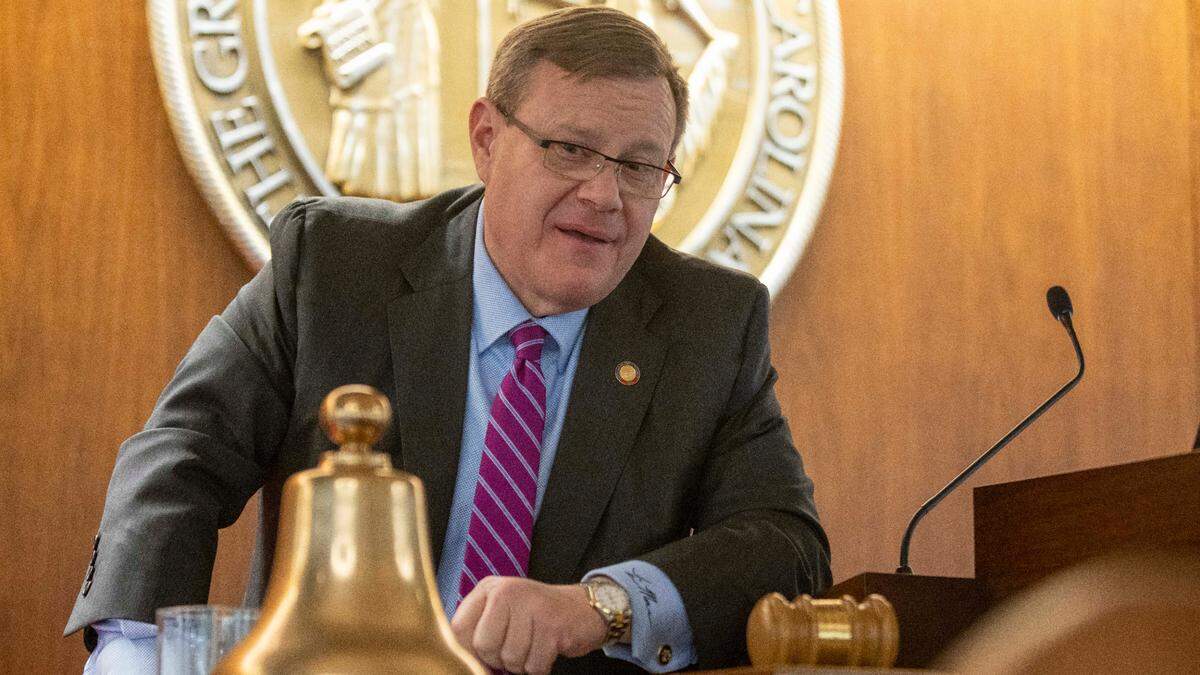
“I hope it is a record that we don’t try to break. I certainly won’t,” House Speaker Tim Moore told the chamber Thursday after completing work on its 198th legislative day.
The previous record holder in the House, by legislative days, was in 2001 with 179 legislative days. The Senate held its 196th legislative day on Thursday, far eclipsing its record of 173 set in 2001. The legislature keeps detailed records on session statistics from 1965 to present.
The House, which held a brief non-voting session on Friday morning for its 199th day, will reach at least 201 legislative days before the beginning of the second-year session, or the “short session.”
The numbers are helpful, but the part-time lawmakers — many of whom represent districts in the mountains or coast and must travel hours to Raleigh for meetings and votes — can measure the length of the session by other markers. Missed family vacations. Struggling businesses. Time away from other interests.
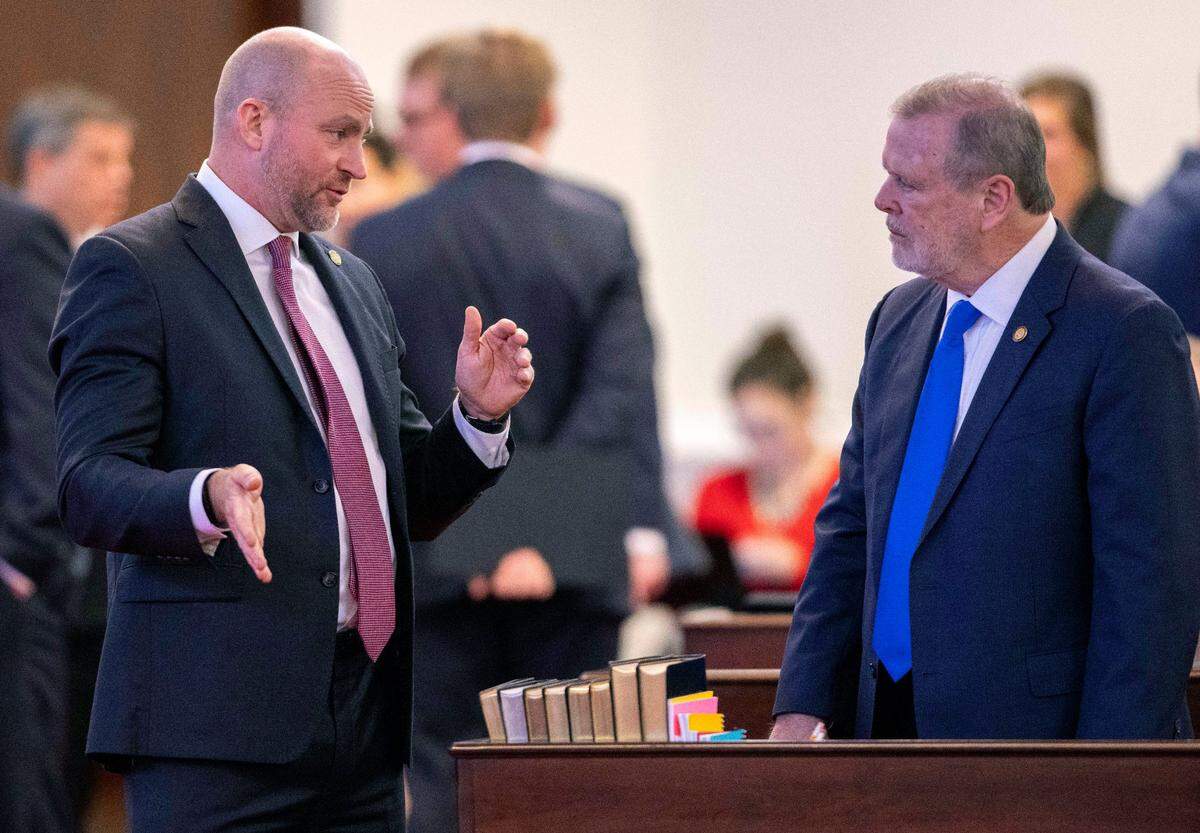
“I tell folks that if I go back to Eden to my office, it’s to try to salvage what’s left of my law practice,” said Senate leader Phil Berger, a Rockingham County Republican in his 11th term in the Senate.
No raises on the horizon
For some lawmakers, who are paid $13,951 annually and receive mileage reimbursement and a $104 per diem, the inconsistent, ever-lengthening schedule became too much of a sacrifice.
Rep. Brian Turner, a Buncombe County Democrat, announced in November he would not seek a fifth term.
“I love serving,” said Turner, who is 48, married and has a 14-year-old daughter. “I have really enjoyed this job. It just became unsustainable.”
Moore, a 51-year-old attorney from Cleveland County, said it would be “politically unpopular” to raise lawmakers’ pay and vowed Thursday “as long as I’m Speaker, we’re not going to do it.”
But he acknowledged that being a lawmaker often costs money, which, in turn, limits the citizens who are able to run for office — skewing the legislature older and wealthier than North Carolina as a whole.
Turner drives his camper to the State Fairgrounds at the beginning of each session, so he has a place to stay when he’s in Raleigh. Several other lawmakers live at the fairgrounds with him in their own vehicles. It’s a sacrifice lawmakers make, and they don’t expect people to feel sorry for them.
Turner wants North Carolina to become a full-time legislature, one that pays a livable wage to lawmakers and provides staff to handle the complexities of managing the nation’s ninth most-populous state with a $25 billion annual budget.
“North Carolina needs to have a professional full-time legislature that really reflects the economic power that we are. I get to this idea of a power imbalance. It really eliminates a large number of people who could run and serve,” Turner said.
Part-time only in name
Berger, who is 69 and has grown children, said the fact that lawmakers are part-time in principle, but not in reality, is problematic.
“We end up in a situation where it’s difficult to get folks who are younger, trying to build a career, trying to support a family to take the time away and be here,” Berger. “I recognize that as a problem. I just don’t know that we’ve got the ability from a consensus standpoint to effectively address that. I don’t know that a full-time legislature is the answer.”
Texas, which has about three times the population of North Carolina and a much larger budget, meets for 140 days every other year. The state, however, had three “called” or special sessions in 2021 in addition to its regular session.
North Carolina could limit the number of days the legislature can be in session, an approach used by most Southern states. But many, like Texas, have been extending their calendar through special sessions.
A bipartisan bill in 2019 called for limiting the session in odd-numbered years to 135 calendar days and 60 calendar days in even-numbered years. One 10-day extension would be permitted under the bill sponsored by Reps. Jay Chaudhuri, a Wake County Democrat; Natasha Marcus, a Mecklenburg County Democrat; and former Rep. Jerry Tillman, a Guilford County Republican.
It went nowhere.
One reason for the lengthy session was the budget standoff between the Republican-led legislature and Democratic Gov. Roy Cooper. Despite long negotiations, the sides never agreed on a compromise budget. Instead, lawmakers passed a bill that included enough Democratic priorities, though not Medicaid expansion, to win bipartisan support and Cooper’s signature.
“Given the divided government that we’ve got, it took us until November to get to the point where we had a budget that we could feel would garner the votes that we got,” Berger said. “I don’t know that if we had an artificial stop date that we would have gotten to the same place or not.”
A need for flexibility
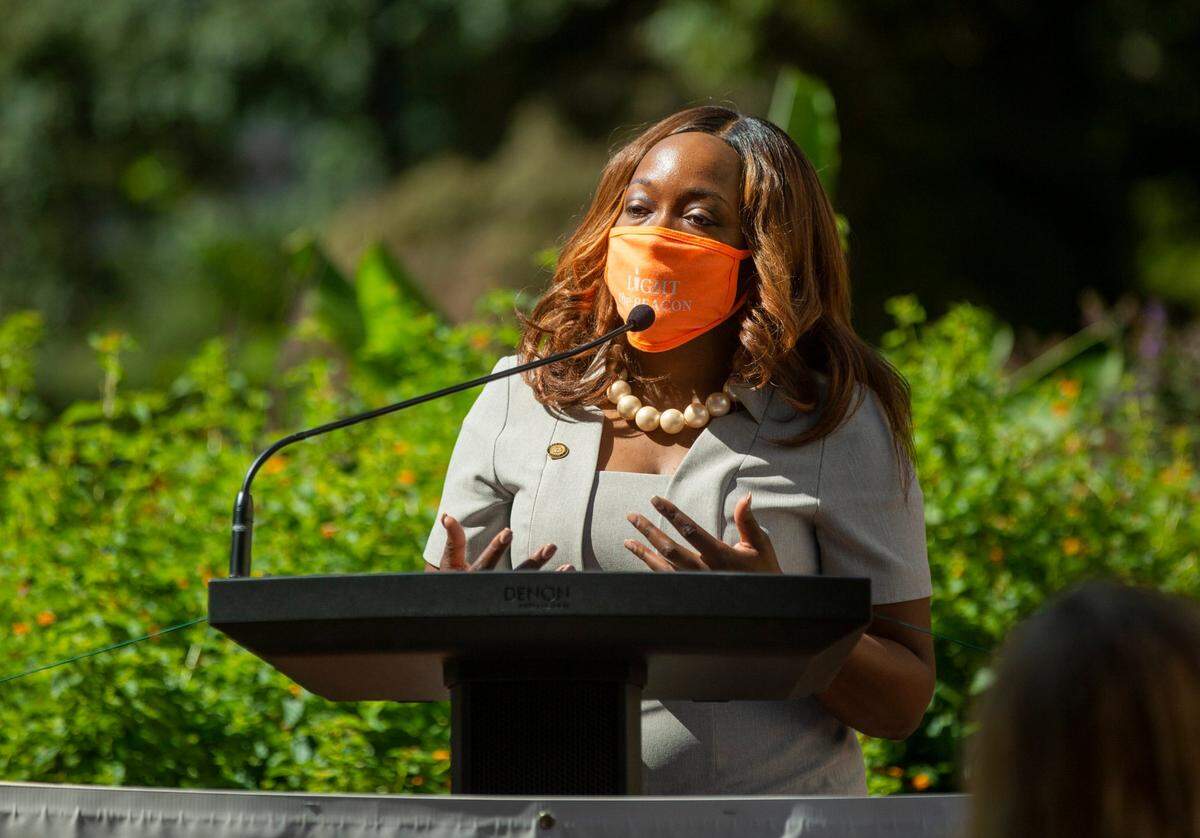
When Natalie Murdock, a Durham Democrat, was sworn into the Senate in 2020, she was the first Black woman under 40 to serve in the chamber. Murdoch owns her own consulting firm, which offers her flexibility in her work schedule. Still, Murdoch said she has had to revisit her business model and decline work due to the schedule.
“We need to create a structure that makes it easier for someone in their 20s to run or for young parents,” Murdock said.
She said the perspective of younger generations is often missing when it comes to issues such as paid leave, child care, student debt, affordable housing, funding public and higher education and environmental issues.
“It’s why we need more young people to run. That is more reflective of our state and more reflective of democracy,” she said.
Turner said more than the length of the session, it is the unpredictability — not knowing when the legislature will be in or out — that can cause the most stress. Could the legislature, as Congress does, produce a yearly schedule with on-periods and off-periods?
Murdock, who is in the Democratic minority, said she often wakes up on Sunday mornings to an email with the schedule for the week, making it difficult to plan anything in advance, including work schedules for employers.
“If we are a part-time legislature, we could truly be part-time. With full-time, do you really open it up to a lot of different people? You’re still dealing with the same kind of restrictions,” she said. “Part-time provides flexibility, but it should be flexible.”
Moore said the idea of a citizen legislature is important to him — and to the state.
“I do think it’s important that we remain a part-time legislature. The fact that all of us here have jobs or careers back home, except for those who are retired, keeps members grounded. It keeps you at home and in touch with the folks that you represent,” Moore said.
He said the time commitment is a top question during candidate recruitment.
“You can’t be part-time and treat it like a full-time schedule,” he said. “It’s an absolute challenge.”
Lawmakers will be back in little more than two months — after some have dealt with primaries — for another session. Republican leaders, at least this week, were optimistic that having dealt with major issues such as the budget, the energy bill and redistricting during the long session, the “short” session will truly be quick. It likely has to be as most members also face a November general election.
They all agree something should be done, however no one has offered a perfect solution to solving the problem.
Said Berger: “I do know that what we’re doing now is way less than optimal.”
For more North Carolina government and politics news, listen to the Under the Dome politics podcast from The News & Observer and the NC Insider. You can find it at https://campsite.bio/underthedome or wherever you get your podcasts.
This story was originally published March 11, 2022 at 3:22 PM.