
NC governor paints grim future for state if Congress doesn’t fund COVID-19 relief
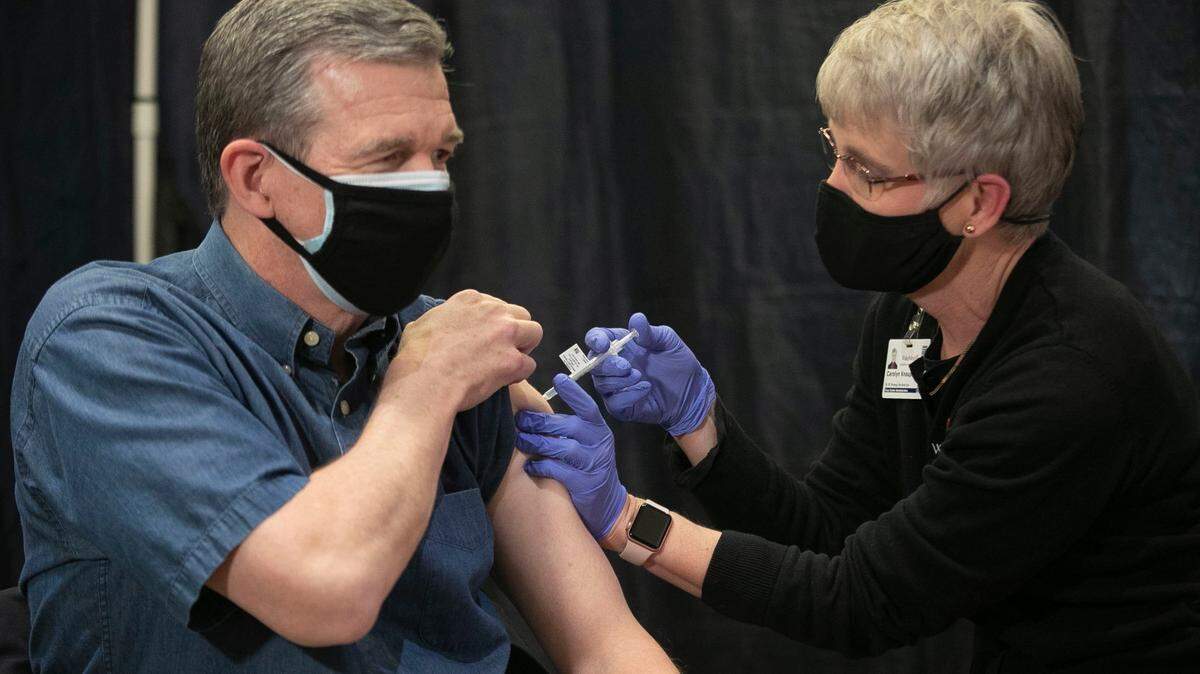
Gov. Roy Cooper painted a grim picture for North Carolina’s congressional delegation of the state’s future if they don’t act quickly to get additional funding for COVID-19 relief.
As federal money has begun to dwindle, uninsured patients have been charged or turned away from testing sites, vaccine administration money is about to run out and federal shipments of monoclonal antibodies have significantly decreased.
“Failure to act will create procurement chaos not seen since the early days of the pandemic as states compete for testing and treatment resources,” Cooper wrote in a letter to the state’s members of Congress. “A single buy from the federal government to sustain the production of critical supplies is the right approach and will help us win the fight against COVID-19.”
Congress is considering whether to approve a new package of COVID-19 relief funding. Sen. Richard Burr said he is working with the White House and the Department of Health and Human Services to learn the needed size and cost of a COVID package based on COVID tests, therapeutics and vaccines, Punchbowl reported. There’s confusion about what’s in the country’s inventory, he said.
Burr, a Republican from North Carolina and ranking member on the Committee on Health, Education, Labor and Pensions (HELP), said it’s clear more therapeutics are needed immediately but unclear how many COVID-19 tests the department has and has purchased.
He also told Punchbowl that he has received conflicting reports of the number of vaccines the department has, ranging from 20 million to 400 million.
Burr said he doesn’t yet have a cost estimate for the items in the package but believes it would be around $15 billion.
Dwindling funds
Uninsured Americans became the first group, this week, to feel the effects of federal money dwindling from COVID-19 relief packages.
NPR reported Tuesday that the uninsured in some locations throughout the country have been charged or turned away from testing sites and funding for vaccine administration will run out next week.
Cooper addressed that situation in his letter and said the COVID-19 Uninsured Program paid hundreds of millions of dollars to North Carolina providers as reimbursement for testing, treatment and vaccinations for the uninsured.
“The Uninsured Program stopped accepting new claims for testing and treatment this week and will do the same for vaccination claims in two weeks,” the Democratic governor said. “This program has been essential to our state’s COVID-19 response and efforts to reduce disparities in healthcare. Without this funding, providers must absorb the cost or turn away the uninsured, people who are already high-risk for health crises.”
NPR also reported that federal shipments of monoclonal antibodies were cut by 35% last week.
“Already this week, North Carolina has seen its allocation of highly effective monoclonal antibody treatments reduced by 30% due to insufficient federal funds,” Cooper wrote. “The state has far exceeded its budgeted funds for testing due to back-to-back Delta and Omicron surges and record-setting community testing efforts.”
Cooper said even if demand for testing is low, leaders need to stockpile tests before future threats strike.
Cooper’s plea comes as health officials brace for the possibility for a wave from a new subvariant of omicron to hit the United States in the coming weeks.
Act now, Cooper says
Cooper made a request that as Congress considers funding additional relief efforts, it doesn’t take money from packages already passed.
“These funds are vital to our ongoing recovery efforts,” Cooper said, “funding Business Recovery Grants, expanding high-speed internet, and local government support.”
But he urged the delegation to demand leadership make COVID-19 funding a priority.
“North Carolina’s COVID-19 metrics continue to decline, ushering in a new phase of COVID-19 where the virus is still with us but not disrupting us,” Cooper wrote. “However, to succeed in this phase and not go backward Congress must act immediately on the pending COVID-19 supplemental funding package so we can prepare for the next surge and stop it from overwhelming us.”
For more North Carolina government and politics news, listen to the Under the Dome politics podcast from The News & Observer and the NC Insider. You can find it at https://campsite.bio/underthedome or wherever you get your podcasts.
This story was originally published March 30, 2022 at 5:46 PM.
