You can still register to vote during the early voting period in NC. Here’s how.
Registration to vote in the 2022 primary election on May 17 ended on April 22, but it’s still possible to register (or make changes to your voter registration, minus party affiliation) and vote during the early voting period.
We have info here on how to register to vote in Wake, Durham and Orange counties — and also how to update some information, like your address or party affiliation — ahead of the election.
Voter registration deadlines in NC
The statewide primary election is on May 17, and the voter registration deadline is Friday, April 22. (In North Carolina, the voter registration deadline is 25 days before Election Day.)
But if you miss the registration deadline, it’s possible you can register (or make changes to your voter registration, minus party affiliation) and vote during the early voting period. More on that below.
How to register to vote in NC
North Carolina offers two primary ways to register to vote: online or in person through the Department of Motor Vehicles and by mail through NC Board of Elections.
Online via the Department of Motor Vehicles: Here are the main takeaways from registering to vote using the DMV, which can be done by visiting ncdot.gov/dmv.
Registration can be done online or in person.
You can complete a new voter registration application, or you can update your address or your party affiliation.
There is no fee to apply to register to vote. Make sure you click “Continue as guest” to avoid creating an account.
Voter registration applications submitted fewer than 25 days before an election will not be processed until the election ends.
By mail via State Board of Elections: Here are the main takeaways from registering to vote by mail, which can be done by visiting ncsbe.gov/registering.
You can download and complete voter registration applications in either English or Spanish. Both can be found at the website listed above.
You must sign the application “ink to paper,” meaning the application must be printed out and signed by pen.
Mail the form to your county board of elections, which can be found by visiting vt.ncsbe.gov/BOEInfo.
If you would prefer to register to vote online or in person, you can do so through the DMV, and information is listed above.
For more details about registering to vote, including a list of frequently asked questions, visit ncsbe.gov/registering.
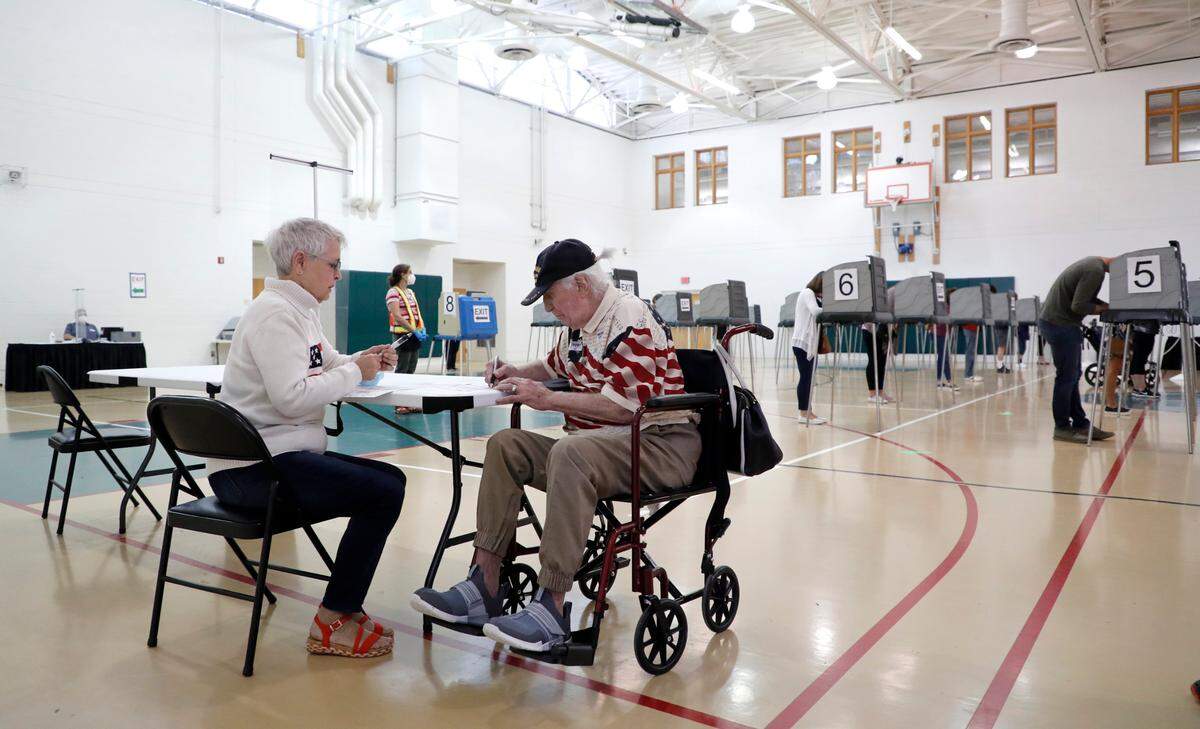
How to register during NC’s early voting period
In-person during early voting: You can also register to vote in-person during early voting.
The early voting period begins April 28 and ends May 14. Same-day registrants need to prove their address by bringing any of these documents:
Your NC driver’s license
A government-issued ID, as long as it includes your name and address.
A current utility bill, bank statement, government check or other government document that includes your name and address.
A current college photo ID with proof of campus residency. (For more information about registering as a college student, visit ncsbe.gov/registering.)
How to check your voter registration in NC
Make sure you’re not already registered to vote before going through the steps of registration.
To see if you’re registered to vote in NC, visit vt.ncsbe.gov/RegLkup.
You’ll need to fill in your fist and last name, as well as your voter status, which will either be “registered” or “removed or denied.”
If you are registered to vote, here is some of the information you’ll find:
Precinct
Congress
NC Senate
NC House
Superior Court
County Commissioner
You can also find information on voting locations and a sample ballot for the upcoming election.
How to update your voter registration NC
Here’s how to update your name, address and party affiliation, as well as how to cancel your registration.
Update address, party affiliation: DMV customers can update their address and/or party affiliation through the online voter registration application. (Note, you cannot use the DMV’s voter registration service to change your name.)
For more information, visit ncsbe.gov/registering.
Update name: The applications must be signed (though a “wet ink” signature is not required for updates) and mailed to the appropriate county board of elections. You can also update your address or party affiliation by mail.
For more information, visit ncsbe.gov/registering.
Cancel registration: To cancel your own voter registration, you need to fill out the Cancellation of Voter Registration form, then send it to the county board of elections. Only the voter can complete this form.
To report a deceased voter, fill out the Notification of a Deceased Voter form and send it to the county board of elections.
For more information, including PDFs of both forms, visit ncsbe.gov/registering.
Which address should I use to vote in NC?
If you have multiple properties or split your time between different homes in NC, you should use your primary address (what you call home) when determining your address for voting purposes, said N.C. Board of Elections spokesperson Patrick Gannon.
“Being away from a person’s primary residence for temporary purposes does not mean they lose residency status at their primary residence for voter registration purposes, as long as they intend to return to their primary residence,” Gannon said.
To get more information about determining your primary residency, visit ncleg.gov.
If voters have questions about their residency, they are encouraged to contact their county board of elections. Find contact information for your county by visiting vt.ncsbe.gov/BOEInfo.
Voter eligibility in North Carolina
Here’s what’s required to be able to register to vote in North Carolina, according to the NC Board of Elections:
Citizenship: You must be a U.S. citizen.
Age: You must be at least 18 years old by the date of the general election. You can vote in a primary election at 17 if you will be 18 by the time of the general election. You can preregister to vote at 16 and 17.
Residence: You must live in the county where you’re registering, and you must have lived there for at least 30 days ahead of the election date. (Certain members of the military and U.S. citizens abroad may be able to submit a mail-in ballot. For more information on military and overseas voting, visit ncsbe.gov/voting.)
Felony convictions: If you are currently serving a sentence, you are not eligible to vote. But some serving an extended term of probation, post-release supervision or parole may register and vote. If you have completed a felony sentence (including probation, parole or post-release supervision, or received a pardon), you can register and vote.
For more information, visit ncsbe.gov/registering/who-can-register.
This story was originally published April 13, 2022 at 10:10 AM.