McCrae Dowless’ legacy: An NC law banning the type of political work he made famous
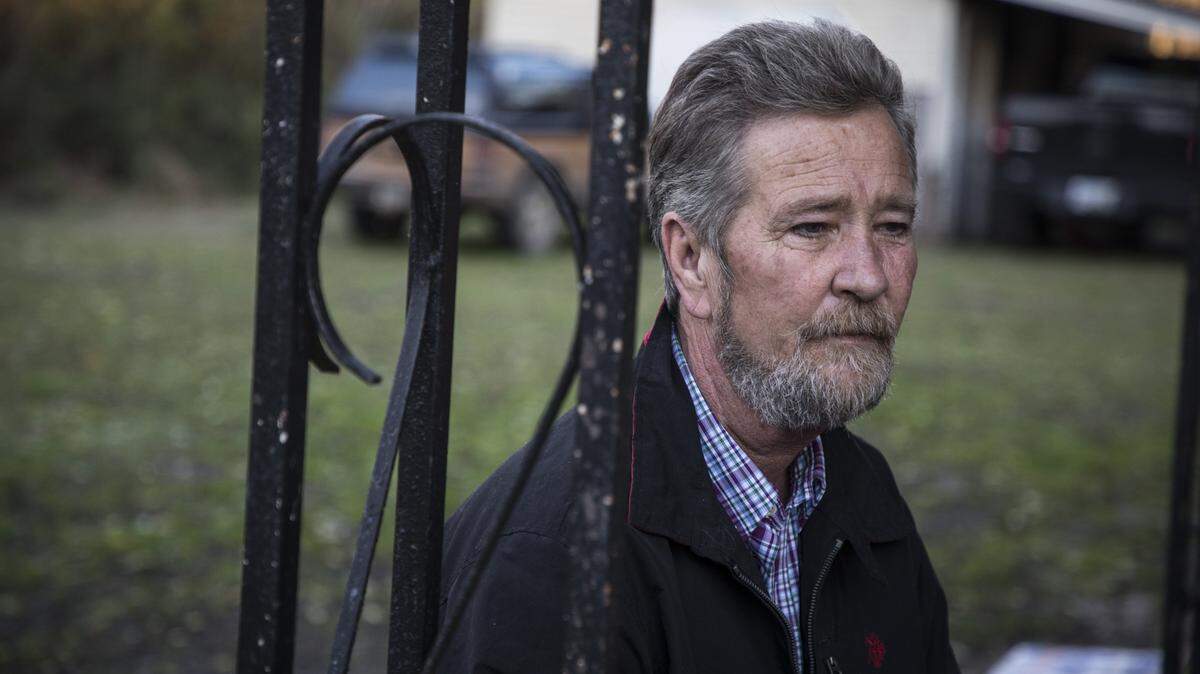
McCrae Dowless, the political operative who died last weekend while awaiting trial for an election fraud scandal that made national news, leaves a varied legacy.
Many politicians in southeastern North Carolina will remember him fondly, after years of work on the ground for their campaigns — at first for Democrats and, more recently, for Republicans.
Most people, however, know him only for the 2018 GOP fraud scandal in North Carolina’s 9th Congressional District. Investigators say he and a team of helpers in Bladen and Robeson counties orchestrated what investigators say was a scheme to manipulate mail-in ballots on behalf of a Republican candidate for Congress, Mark Harris, who appeared to win the race until the state called a new election.
But perhaps the most impactful legacy Dowless leaves behind is something many don’t know about at all — two changes to state elections law passed in the wake of that 2018 scandal.
One new law made it harder for groups to run the type of absentee ballot operations that he and other groups like the Bladen Improvement Association ran for years without legal trouble.
So far, the law seems to have worked.
State investigators, reporters and others in 2018 could see evidence of large numbers of absentee ballots in southeastern North Carolina being dropped off at the same time, by the same person. Since the new law passed, a spokesman for the N.C. State Board of Elections said, those tactics appear to have stopped — not just in Bladen and Robeson counties, but anywhere in the state.
“We do not have any evidence of absentee ballots being returned in large numbers from a single source in recent elections,” said Pat Gannon, the NCSBE spokesman.
The legislature passed the changes to crack down on such practices nearly unanimously in 2019, just after a new election was called due to the scandal.
Some Democrats were initially leery of the stricter rules, since a handful of get-out-the-vote groups at the time focused on mail-in voting and complained that the changes also made it harder for individual voters to request mail-in ballots. Republicans ameliorated those concerns by adding a provision to the bill that allowed early voting to once again be held on the final Saturday before an election, which GOP leaders had recently gotten rid of.
“This carefully crafted proposal will provide greater access to voters, close the absentee ballot loopholes and secure our elections,” said David Lewis, the Harnett County Republican who at the time was the lead legislator on elections law, in 2019.
A left-leaning voting group sued anyway, seeking to overturn the law. Advance Carolina said the law infringes on constitutional rights. However, the law is still on the books following its near-unanimous passage — one of the few moments of broad bipartisan agreement on any sort of change to election law in North Carolina in at least a decade.
The other change that happened during the Dowless scandal was much more controversial.
In the early days of the NC-09 scandal, just before Christmas 2018, when it was just starting to gain national attention, lawmakers also passed a law to keep some future election investigations out of the public eye.
Democratic Gov. Roy Cooper vetoed it, calling the change “devastating to the cause of fighting election fraud.” Republicans had enough votes to override his veto, however, and passed it into law over his objections.
The change mandating more secrecy in investigations wouldn’t have directly affected future absentee ballot cases, like the Dowless scandal, but it did make all campaign finance investigations secret.
Unbeknownst to anyone at the time was the fact that a top GOP official — Lewis, the Harnett County lawmaker — had that same year been taking hundreds of thousands of dollars that his supporters had given his campaign and secretly transferring the money into his personal bank account.
He later pleaded guilty in federal court in order to avoid prison time, The News & Observer reported.
Lewis is far from the only politician to face a campaign finance investigation in North Carolina. Since the early 2000s numerous high-profile scandals have resulted in politicians eventually being found guilty, or entering pleas, for various crimes. Former Democratic Gov. Mike Easley, former Democratic Speaker of the House Jim Black, longtime Republican Sen. Fletcher Hartsell and NC GOP Chairman Robin Hayes are perhaps the most notable examples.
When Cooper vetoed the 2018 bill making state-level campaign finance investigations secret, he said voters shouldn’t be kept in the dark about such issues.
“The responsibility of investigators and prosecutors to find and eliminate wrongdoing in our elections is essential to maintaining integrity in our most sacred democratic process,” Cooper wrote in his veto message. “This bill makes it harder to root out corruption in elections and campaign finance.”
For more North Carolina government and politics news, listen to the Under the Dome politics podcast from The News & Observer and the NC Insider. You can find it at https://campsite.bio/underthedome or wherever you get your podcasts.
This story was originally published April 30, 2022 at 7:00 AM.