
Holly Springs mulls LGBTQ protections as people rally in support of them. What they decided
The Holly Springs Town Council took no action Tuesday on a non-discrimination ordinance, which would include more protections for LGBTQ people, despite pressure from residents who rallied outside of the meeting.
The council’s regularly scheduled work session came a week after Holly Springs Mayor Sean Mayefskie refused to sign a proclamation declaring June as Pride Month. He said then that the town already has “diverse and inclusive” policies.
The decision last week sparked outrage from residents who asked for a Pride Month proclamation and for the Town Council to adopt the non-discrimination ordinance. The ordinance, which already has been adopted by 19 municipalities in North Carolina, would protect against discrimination based on ethnicity, race, natural hair and hairstyles, pregnancy, veteran status and disability.
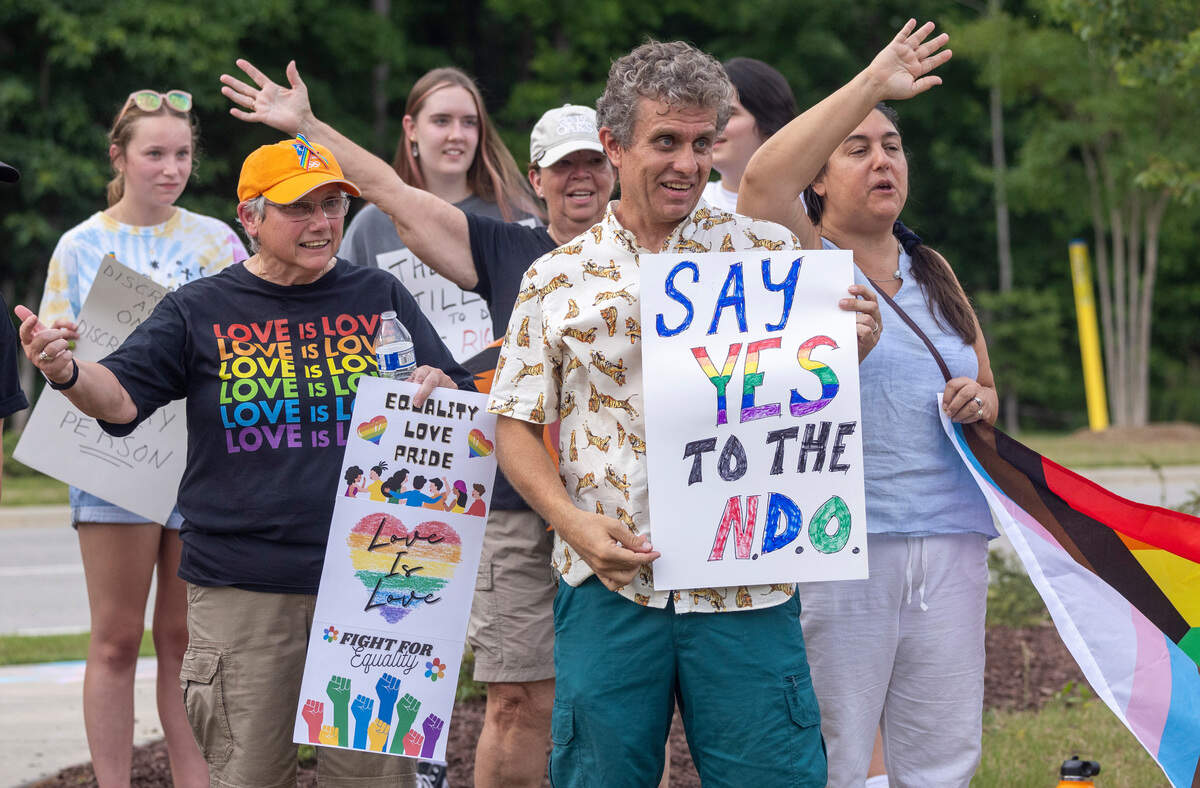
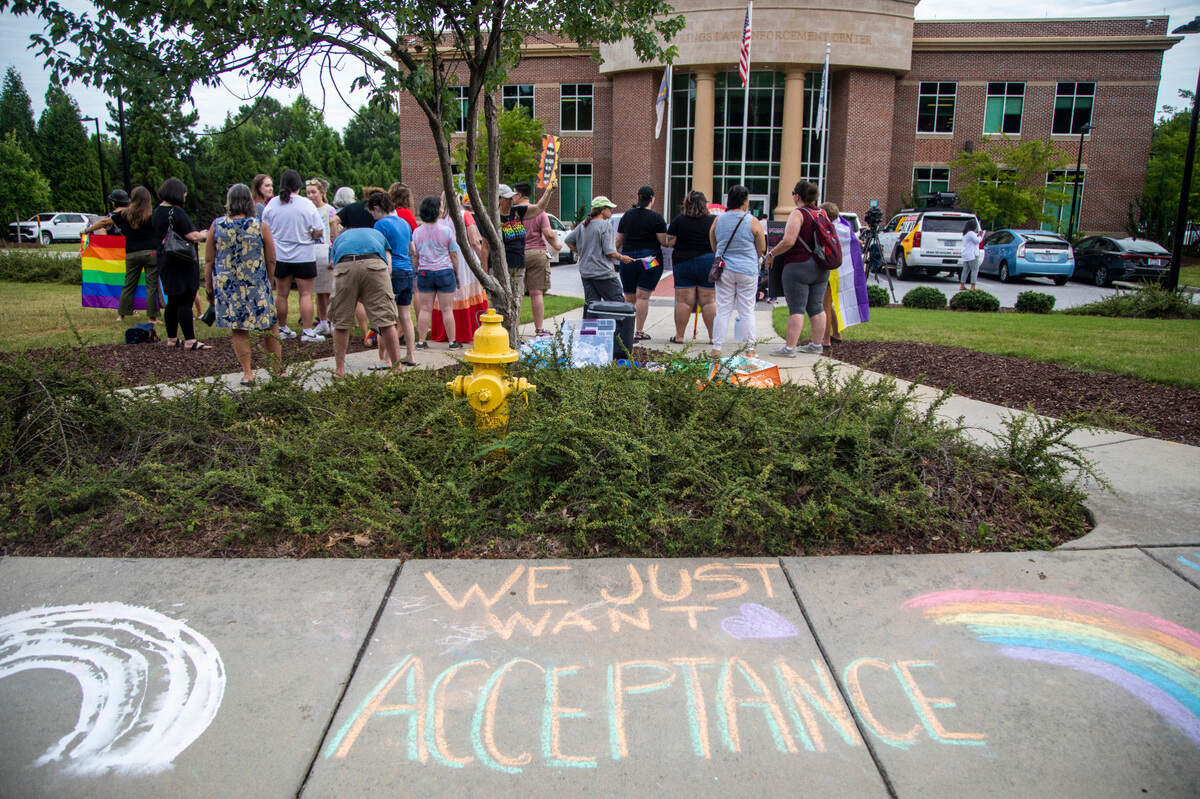
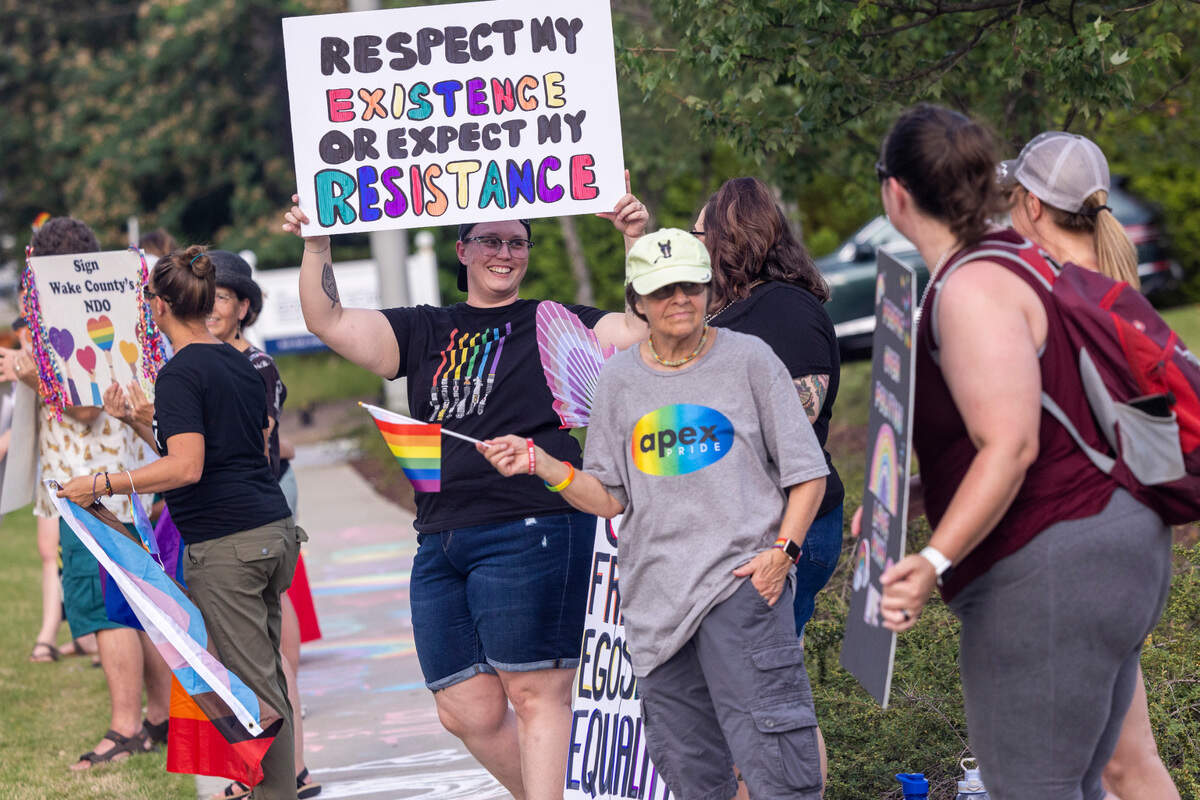
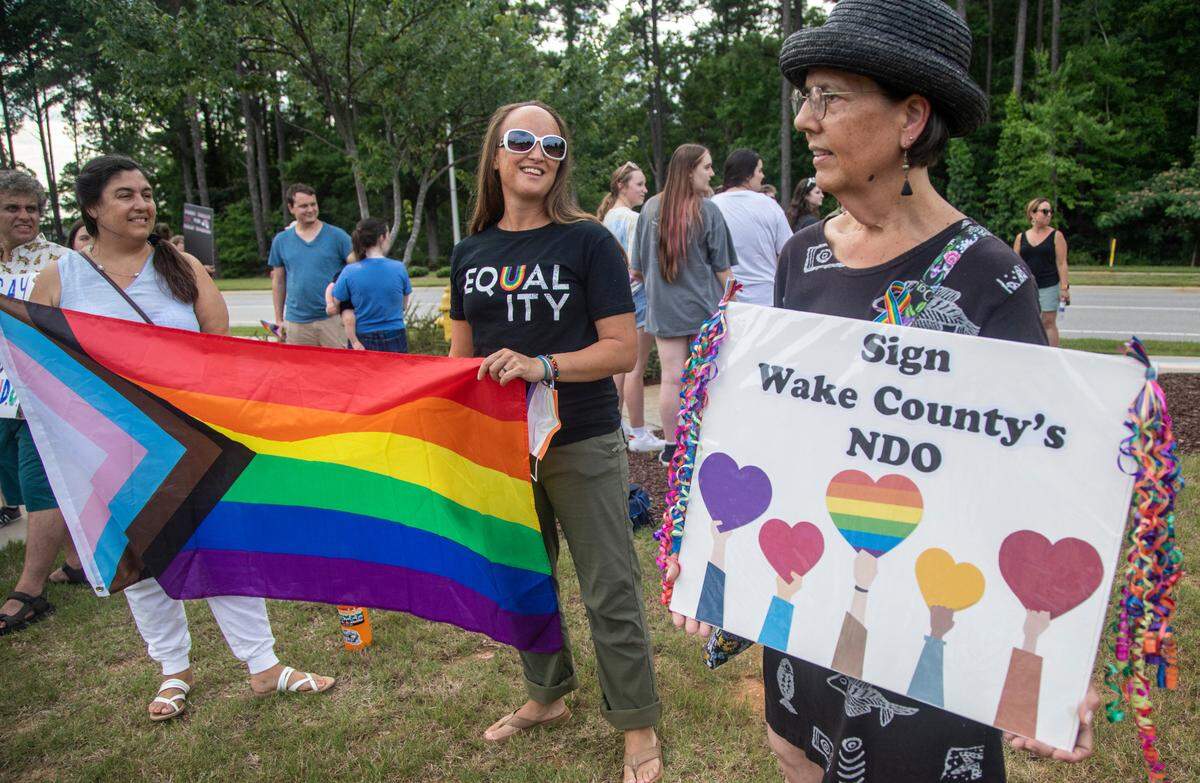
About 20 people gathered outside of the Holly Springs Law Enforcement Center, where the meeting was held, to show their support for the non-discrimination ordinance and a Pride Month declaration.
Chuck Tryon, a Holly Springs resident, said rally participants wanted council members can see them and hear their concerns since the work session didn’t have a public comment period. Tryon said he hoped council members would recognize the importance of the proclamation and the non-discrimination ordinance, not just for LGBTQ people but for other marginalized groups.
“This is an all-encompassing policy so it’s extremely disappointing for us that (Town Council) didn’t see fit to pass that,” Tryon said.
After nearly two hours of discussion, the Town Council did not make any further plans to keep discussions about joining the county’s non-discrimination ordinance or adopting one of their own.
Wake County, Raleigh, Apex, Knightdale, Morrisville and Wendell have adopted the non-discrimination ordinance. Other municipalities in the Triangle that have adopted LGBTQ protections include Chatham and Durham counties, Durham, Chapel Hill, Carrboro and Hillsborough, according to a list on the Equality North Carolina website.
Council members talk logistics of the NDO
Under the county ordinance, if an individual felt discriminated against by a business or organization, they are able to file a complaint to the Wake County manager, who would refer it to the county attorney’s office. This would led to mediation out of court to find a solution, Town Attorney John Schifano said.
Wake County has a contract with Campbell University Law School through their Restorative Justice Clinic, which assists people in discrimination claims for free.
Schifano said if mediation doesn’t work, the next step individuals could take would be a civil lawsuit with the county obtaining an injunction against a business or organization with discriminatory misconduct.
“The mechanics of everything works without cost to the town through the end of the next fiscal year,” Schifano said.
He compiled a list of gaps between the state and federal protections and protections in the county ordinance against different forms of discrimination, including race, gender, color, hair, ethnicity, pregnancy, marital status, age, disability, sex, veteran status and creed.
There is no state law that provides protections for people in places of public accommodations, such as restaurants, hotels, theaters, doctor’s offices, museums, retail stores, private schools, libraries and amusement parks.
Schifano said the non-discrimination ordinance would provide this protection. He suggested that the Town Council consider this aspect of the NDO, despite his own hesitation for them to adopt the full order.
Holly Springs council member Aaron Wolff disagreed last week with the mayor’s refusal to sign the Pride proclamation and join the county’s ordinance. Tuesday, he was the only Town Council member to suggest the town continue looking at ways to adopt the ordinance, including considering Schifano’s information about the public accommodation protections.
Wolff reminded the group that businesses in Holly Springs with fewer than 15 employees have no federal protections against discrimination for employees. The town is covered by federal protections but also has internal protections for hiring and promotion practices, according to Town Manager Randy Harrington.
In October, Wolff was joined by Mayefskie, mayor pro tem Daniel Berry and council member Shaun McGrath to pass a resolution for the council to adopt the non-discrimination ordinance.
McGrath, who joined Tuesday’s meeting virtually, said the council would need to consult with the town staff on whether the town can join a portion of the county’s ordinance or if the council should draft its own ordinance. He said the town is not an “outlier” in that it is already inclusive and attracts large businesses.
Fujifilm Diosynth is building a $1.5 billion plant in Holly Springs that could employ more than 700 people, The N&O previously reported. Biotech company Amgen is building a manufacturing facility nearby for over 350 people.
Berry, who also joined virtually, said there is a gap at the state level to cover some discrimination issues and said he took seriously the possible legal risks of adopting the ordinance.
Timothy Forrest, who was elected to the council last fall, said the county’s non-discrimination ordinance is “not right” for Holly Springs, even though he acknowledged there needed to be room for “tough” conversations.
Harrington said since Wake County adopted the ordinance in October, 10 cases have been filed. Forrest said since the public does not know the status of the cases, it is hard to tell if the non-discrimination ordinance is the right move for the town.
Kristi Bennett, who was elected in the fall, said her hesitation for joining the county’s ordinance is due to her lack understanding of it and wanting to do the right thing for the residents of Holly Springs.
“It’s not an issue for me of wanting to be inclusive, it’s just an issue for me of making sure that we are saying the right thing,” Bennett said. “And having it be exactly what we need for the 40,000 people who live here.”
Wolff, visibly frustrated, asked for the council members to provide specific issues they had with the non-discrimination ordinance, even though they say they recognize gaps.
“I’ve heard it’s not right for Holly Springs, but why?” said Wolff. “How can we make one better?”
Schifano confirmed that the council could withdraw from the ordinance after joining if they decided it was not working for residents.
‘We have to do more’
At the June 8 council meeting, Mayefskie told residents that “actions as a town speak louder than the words” as he explained why he denied the Pride Month proclamation.
Even though the mayor emphasized actions, Tryon said Mayefskie was still “unable” to put forth the action to support Pride Month.
Donna Friend, who has been with her partner for 41 years, said they are worried that the tide of public opinion is changing about LGBTQ people and that their marriage would no longer be valid.
“There’s no business benefit to not sign on to the nondiscrimination ordinance,” Friend told The N&O. “You’ve got all these high-tech companies coming into this area that value diversity and inclusivity and now you’re slapping them in the face.”
Zara Collier, 16, was at the rally with her friends and as a member of the Holly Springs High School Gay-Straight Alliance. She said she didn’t believe the mayor when he said the town’s action’s speak louder than words.
“I haven’t seen much action from the mayor doing anything different — not just for the queer community,” Collier said.
Christine Kelly, a former Holly Springs Town Council member, said there was no reason for the council to not accept the ordinance. She was one of the other members to support the council adopting the resolution in October.
“We tried hard when I was on council to do something,” Kelly said. “Love is love is not enough anymore. We have to do more.”
After the meeting, Chanel Wilkins, an organizer of Impact Holly Springs, said she could not understand why the council would not come to an agreement. In her opinion, she said they seemed to be more more concerned about the politics than they were about residents.
“This is about people’s lives,” Wilkins said. “It may be political to them but this is, for the rest of us, how we’re going to be treated at work, how we’re going to provide for our children. For us it’s day to day living. That’s what’s so frustrating.”
This story was originally published June 14, 2022 at 5:12 PM.