
NC high court candidates say they’re committed to Constitution, disavow party politics
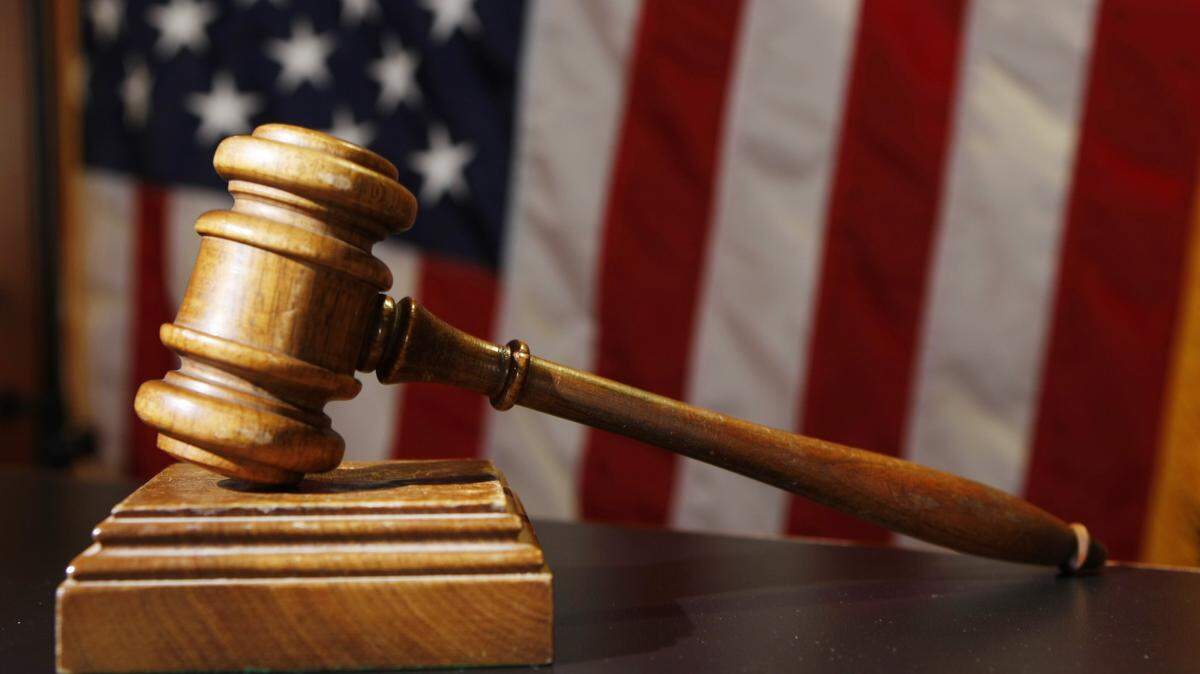
Candidates for the North Carolina Supreme Court met in Wilmington last week to make their case for election to the state’s highest court.
The election could flip the partisan majority of the court, which currently has 4 Democrats and 3 Republicans. Party leaders on both sides of the aisle are heavily invested in the outcome, especially considering the court’s recent rulings on redistricting.
In February, the N.C. Supreme Court ruled that Republicans had unconstitutionally gerrymandered the state’s U.S. House districts and forced them to be redrawn. The decision was split along party lines, with all 3 Republican justices dissenting from the majority.
At the judicial candidate forum, every candidate for the state Supreme Court affirmed their belief in an apolitical court system, where partisan identification does not factor into judicial decisions. The event, which was put on by the N.C. Association of Defense Attorneys, also featured candidates for the four open seats on the North Carolina Court of Appeals.
Two associate justices seats on the state Supreme Court are up for grabs, with Justice Robin Hudson announcing her retirement and Justice Sam J. Ervin IV’s term ending.
Ervin seeks reelection, Allen challenges him
Ervin is running for reelection against Republican Trey Allen, an attorney and professor at the UNC School of Government who currently serves as the general counsel for the state court system. Allen has no judicial experience, but works closely with Republican Supreme Court Chief Justice Paul Newby, who won his seat in 2020.
As a sitting justice not currently running for reelection, Newby is not allowed to endorse candidates in the election, but he has indicated his support for Allen, tweeting out a photo of himself and Allen early in the primary with a message saying “I would be honored to serve with him.”
Allen is the only candidate for the state’s high court that faced a primary this year, winning 55.4% of the vote against challengers April Wood and Victoria Prince.
During the forum, Allen presented himself as an accomplished legal scholar whose body of work demonstrated a nonpartisan, objective thinker.
“So many people think that judges’ political persuasions control the outcome in key cases — we really have to work to reverse that perception,” Allen said. “We will do that through opinions in constitutional cases that are based on the text and the history of the Constitution — something as objective as you can get in the law.”
Though Allen joined the rest of the candidates in saying the courts system should be free of partisan politics, he did tell the Smoky Mountain News in April that Republicans should vote for him in the primary — rather than Court of Appeals Judge April Wood — because if she won, then Democratic Gov. Roy Cooper would be able to choose her replacement.
Dietz versus Inman for Hudson’s seat
Republican Richard Dietz and Democrat Lucy Inman, both current members of the state Court of Appeals, are running to fill Hudson’s seat.
Both have a long career in the justice system, with Dietz having argued a case before the U.S. Supreme Court and Inman spending 12 years as a trial and appellate judge in North Carolina.
The case Dietz argued, Abramski v. United States, dealt with a Virginia man who purchased a handgun and then later sold it to his uncle. Abramski had indicated during the purchase that he was not buying the firearm on behalf of another person, and was later arrested after police found the receipt of his sale to his uncle during an unrelated search. Dietz argued on the side of Abramski and lost the case in a 5-4 decision.
Both candidates were asked by the forum moderator to share their personal philosophies on judicial activism versus judicial restraint, as well as any cases they judged that demonstrated this philosophy.
Dietz began by explaining that the two terms were often misinterpreted, and that the Supreme Court creating new laws was not necessarily “judicial activism.” The difference, he posited, was that judicial activists get pulled into partisan political discourse, while judges with restraint apply the law as it is written.
“I think that’s what feeds this idea that judges are what are often called activists — the idea that we’re just sort of politicians in robes,” he said. “I think we push back on that by showing that we’re leaders, and that we spend our time as public servants educating the public about the work that we do.”
Inman agreed with Dietz’s comments about judicial activism, and pointed to her ruling in a controversial Court of Appeals case in 2019 dealing with the state legislature’s constitutional authority as an example.
The General Assembly had decided to allocate federal funds in a different manner than prescribed in Governor Roy Cooper’s budget — a power that the General Assembly had never before exercised. Cooper argued that it was not within the legislature’s authority to allocate these funds and took them to court.
Inman, joining a unanimous decision, ruled that, despite the fact that there was no precedent for the legislature’s action, it was still within their constitutional authority. Inman said that her ruling in this case is evidence of her strict commitment to the constitution, regardless of her party identification.
“Although I think many partisans would have predicted that I would have written a decision handing a win to our governor, I wrote a decision — a unanimous decision — which upheld the legislature’s authority to do that,” she said. “That is the kind of discipline that it requires for a judge and a justice to preside over some of the hardest fought cases in our state.”
The case later went to the state Supreme Court, where Ervin also ruled in favor of the legislature. Ervin cited his ruling in this case, as well as his ruling upholding the authority of the General Assembly to confirm the governor’s cabinet appointments, as evidence of his nonpartisan judicial philosophy.
“I’m very concerned that the public loses confidence in the judicial system because members of the courts are perceived — rightly or wrongly — to have a partisan or ideological agenda,” he said. “I have no such agenda.”
The election for the N.C. Supreme Court will take place on Nov. 8 along with all other midterm elections.
This story was originally published June 22, 2022 at 8:00 AM.