
As NC Republicans negotiate budget, state workers push for better pay
As North Carolina’s Republican legislative leaders negotiate a state budget deal Wednesday in the General Assembly, Democrats and labor groups talked about a big budget priority: raises.
State employees already will get a 2.5% raise this upcoming fiscal year that starts July 1 because of the budget Democratic Gov. Roy Cooper signed into law in November. The budget bill this legislative short session is a smaller bill that can make adjustments, such as more raises for state employees and teachers, tax cuts and other spending.
Both Republicans and Democrats want to increase raises this year.
Senate leader Phil Berger and House Speaker Tim Moore, who lead the Republican-majority legislature, are meeting Wednesday to negotiate the amount of additional raises for state employees and teachers this year along with potential tax cuts and spending of an expected surplus of more than $6 billion. They plan to pass a budget bill to send to Cooper by the end of next week.
What Democrats, labor groups want
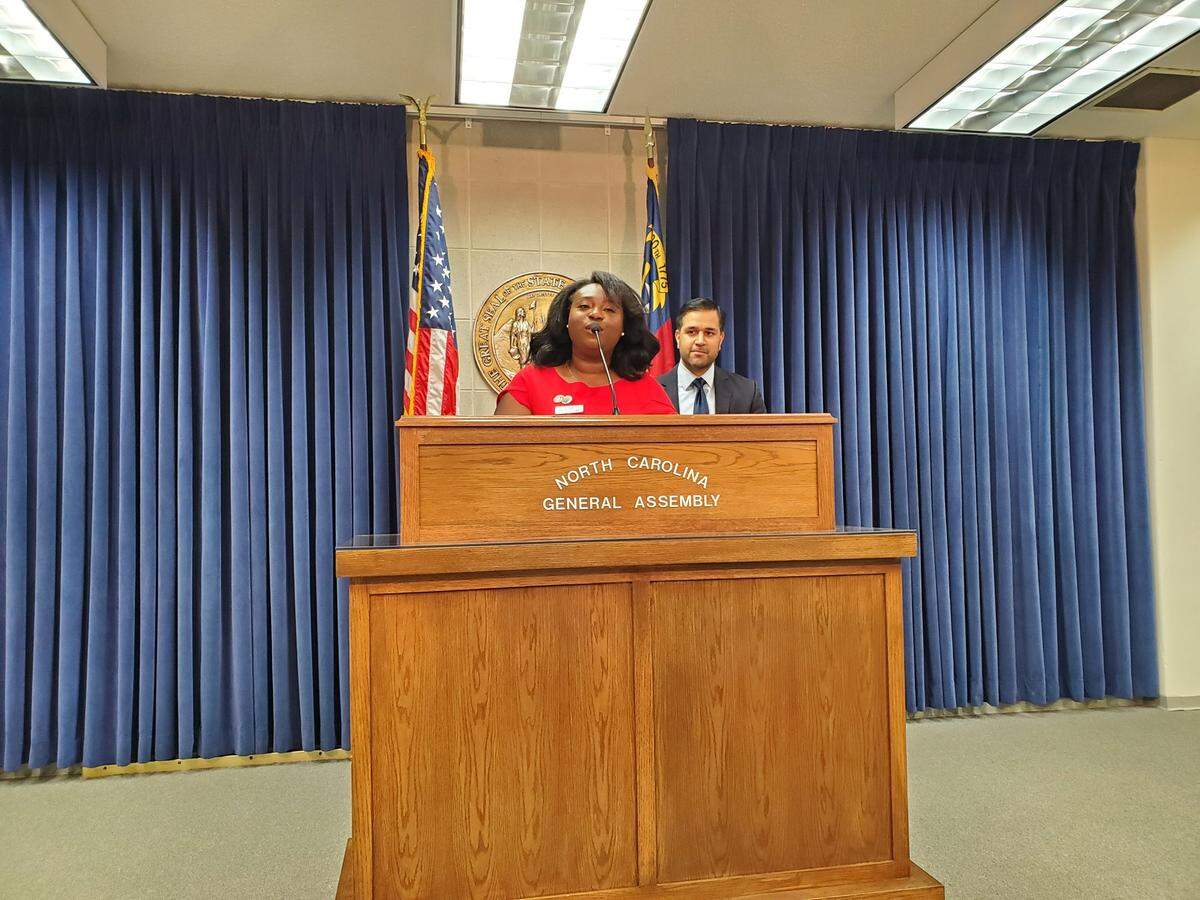
Senate Democrats told reporters Wednesday at a news conference that they want the budget to include an extension of the COVID-era free breakfast and lunch program for all students. That program, which was funded by the federal government, is set to end June 30.
Berger said Tuesday evening that Democrats making a budget request this week “probably is too late.”
“I would say that the Democrats control the federal levers at this time, they ought to be talking to the folks in Washington if that’s what they want,” Berger said, referring to President Joe Biden and Congress.
State Superintendent Catherine Truitt, a Republican, and State Board of Education Chair Eric Davis sent a letter to North Carolina’s U.S. senators asking for support of federal legislation extending the free lunch program beyond its expiration date, The N&O previously reported.
Moore questioned the potential cost to the state for a program not using federal funds. Senate Bill 856, sponsored by Sen. Mujtaba Mohammed, would allocate $78.7 million for free lunch for public school students in K-12.
Beyond lunch funding, Tamika Walker Kelly, president of the North Carolina Association of Educators, said educator pay continues to be an issue.
“The prior budget didn’t go far enough to address educator raises,” she said, which includes teachers, assistant principals and noncertified school personnel. She said NCAE, the statewide teacher advocacy organization, also wants additional funding for school nurses, social workers, guidance counselors and school psychologists.
The 2021 state budget raises of an average 5% over two years for teachers does not keep up with inflation, she said. She said recent raises that are front-loaded, meaning focused on recruiting new teachers, leave out educators who have 15 years or more experience.
“What we would like to see is some parity, some wage parity,” Kelly said. She wants consistent raises across the board, not just on average. Because of inflation, raising the minimum wage to $15 an hour for noncertified school personnel, like bus drivers and cafeteria workers, isn’t enough.
“$17 [an hour] and above is getting us to where we need to be,” she said.
Employee requests
In a separate news conference Wednesday, UE Local 150, the North Carolina Public Service Workers Union, called for flat raises for all state employees.
UE Local wants $3,000 for state workers across the board; salary range adjustments; and $2,000 bonuses for all state employees. There has been a 20% state employee shortage statewide this year, and salaries are a key issue in recruitment and retention, The N&O previously reported.
Patrice Jacobs is a union member and cook at Longleaf Neuro-medical Treatment Center in Wilson, which is part of the N.C. Department of Health and Human Services. She said the state can “do a lot better” with pay for workers with longevity, especially those who worked throughout the pandemic.
“Gas prices have risen, all kinds of things — your food bill, rent, mortgages, car payments, etc.,” Jacobs said.
She said she hopes as workers keep pushing, they’ll get some of the things they’ve been seeking.
They want Medicaid expansion, too, which is another issue that has been part of past budget negotiations.
Medicaid expansion
The Republican-majority Senate passed a bill that expands Medicaid earlier this session. Medicaid expansion has long been a sticking point in state politics. But this year, the tension is between chambers, not the governor and the legislature.
House Republicans do not want to expand Medicaid this session, and Moore told reporters on Tuesday that the chambers agreed not to make it part of budget negotiations.
“As far as what the Senate passed, that bill’s a nonstarter. We’re not going to take that up. We’ve been very clear from day one. Are there other things to look at? Maybe so,” Moore said.
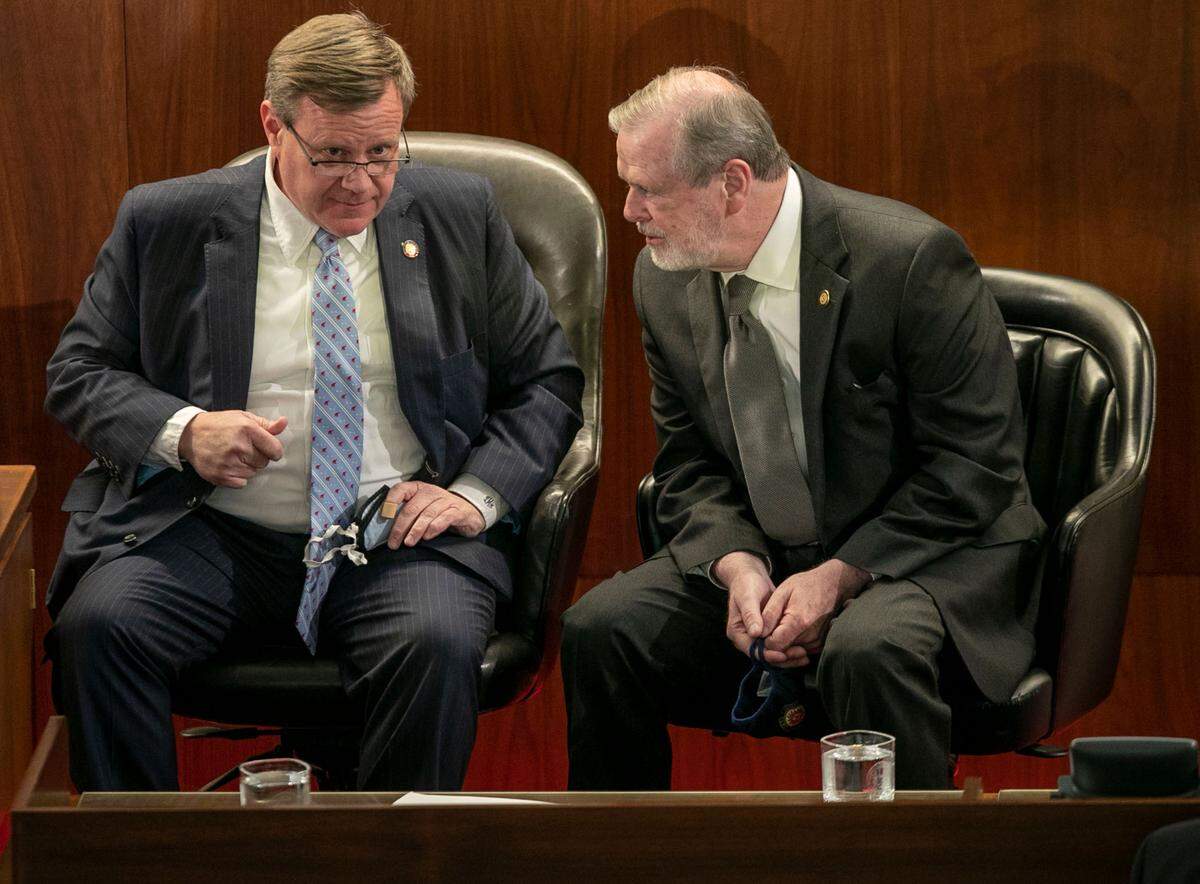
“We’ve agreed to keep that separate and apart from the budget discussion. We’ve agreed to do a budget and if we discuss anything on Medicaid, that’s a separate conversation,” he said.
But Berger thinks otherwise.
“We’ve not really agreed to anything as of yet,” Berger told reporters Tuesday, “other than our starting point is what our appropriations chairs have laid before us, and there’s a list of things that they could not reach agreement on, and that there would be other things that either he or I would bring up in conversations.”
Berger and Moore met Wednesday morning and planned to meet again that evening, Berger told reporters after the late afternoon Senate session. He didn’t share details of their conversation, aside from saying that he and Moore exchanged tax cut proposals and did not talk about raises.
“We agreed on some things. Didn’t agree on other things, and we agreed to come back to things,” Berger said.
He said Wednesday that he brought up the expansion in his morning discussion.
“I intend to suggest as I have for awhile now that it would be a good thing as part of the budget, yes. We’ll see what happens,” Berger said.
For more North Carolina government and politics news, listen to the Under the Dome politics podcast from The News & Observer and the NC Insider. You can find it at https://campsite.bio/underthedome or wherever you get your podcasts.
This story was originally published June 22, 2022 at 4:07 PM.
.jpg)