Tracking the many ways Duke Energy pays to influence politics, in NC and nationwide

READ MORE
Power Play
Money can influence politics. That’s why people and corporations like Duke Energy shell out so much of it. Is Duke’s position as one of North Carolina’s largest political donors in conflict with the utility company’s role as the state’s power provider? Follow the money to see where it goes.
Expand All

It’s against the law in North Carolina for lobbyists, or the people and companies who hire them, to use promises of campaign donations to try to influence legislation or other political actions.
Some might even call it buying votes. And protections against it do exist.
For example, state legislators are banned from accepting campaign contributions from groups that employ lobbyists while the legislature is in session and debating bills. If anyone runs afoul of that rule, the politicians have to hand over the money to the state and the donor must also pay a fine — as happened a few years ago when the political arm of the drug giant Pfizer improperly handed out tens of thousands of dollars during a legislative session.
Money talks, however, and the legislature isn’t in session all the time.
Plenty of political groups exist to help companies or industry groups get money to politicians in hopes of electing new candidates who share their views, or might be persuaded to.
Like a few other big political players in North Carolina, Duke Energy and its employees spend millions of dollars every year on lobbying, campaign contributions and other forms of political activity.
Exactly how they do so can be a complicated web to untangle, but the money flows in four main ways:
▪ Duke spends millions on lobbying, in Washington, D.C. as well as various state capitals. In Raleigh alone, the company has nine lobbyists. For comparison, the state’s biggest solar company, Strata, has three. The NRA has two.
▪ The company itself can give money directly to political parties or to other political groups. They might then use Duke’s money to pay for ads, or pass it on to yet different groups or politicians.
▪ The company’s employees can also give money to politicians and causes, just like anyone else.
▪ The company also has a political action committee, or PAC, which officially represents its interests. It’s funded by Duke employees, not corporate coffers, although the biggest donors are all highly paid executives.
Direct corporate support
The company itself gives money directly to many political groups on both sides of the aisle but tends to favor Republicans.
Duke spent at least $4.2 million on various political causes last year, and at least $3.2 million in the 2020 election. Those groups range from the Florida Republican Party ($1.3 million in 2021) to the Democratic Governors Association ($225,000 in 2021) which is currently led by North Carolina Gov. Roy Cooper.
It also funds groups like Citizens For A Responsible Energy Future. The group’s $500,000 bank account for the 2020 election was funded entirely by Duke, and it was run by a former Duke executive — who has continued to be described as a Duke employee in his campaign finance disclosures, although Duke says he no longer works there.
Duke says the group’s ads and actions are independent of the company.
Duke’s PAC and other employee spending
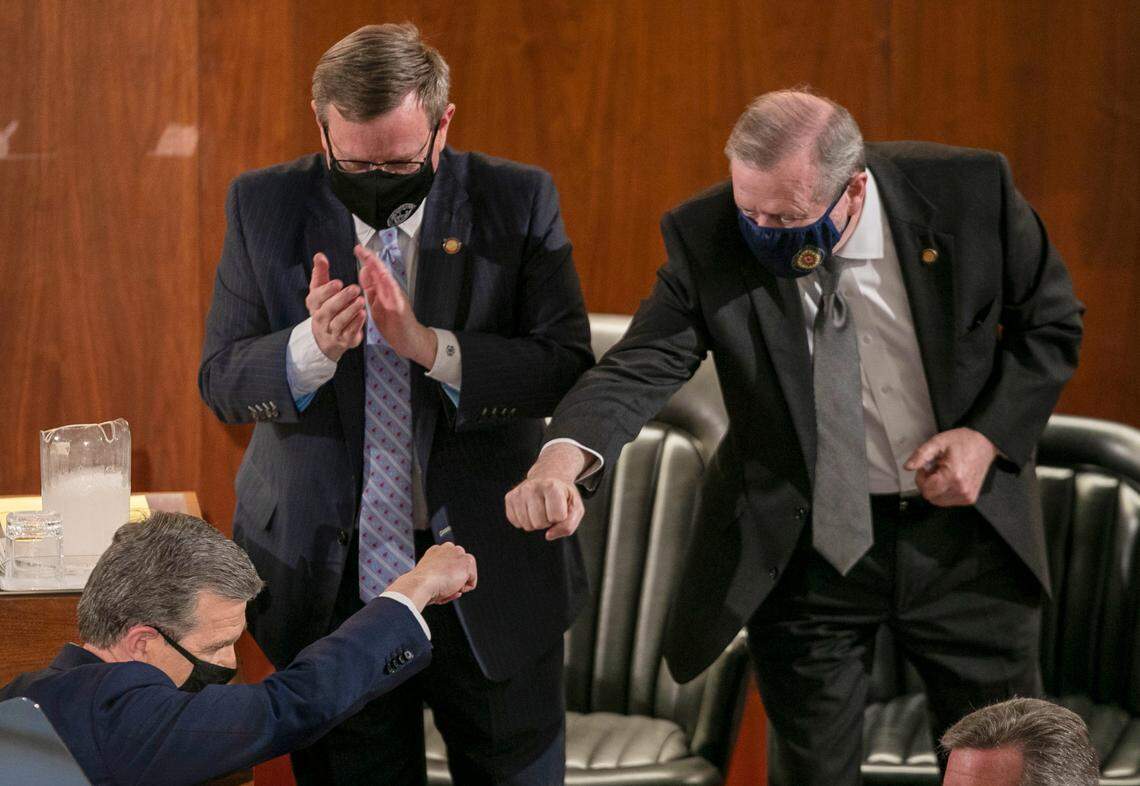
Many companies have political action committees that tend to be largely funded by C-suite and other high-ranking employees. In Duke’s case, the lobbyists don’t pick and choose who the company’s PAC gives money to — there’s a board of directors who make the final call — but the lobbyists can advise the PAC where its money might be best spent.
Duke also has an employee-funded political action committee, or PAC, which records show counts the company’s Charlotte-based executives as most of its major donors.
In addition to the PAC, employees can and do also donate to political causes on their own. But the PAC is where most of the employees’ political giving goes, according to state campaign finance data.
A News & Observer analysis of records from the state as well as from the nonprofit group OpenSecrets — which aggregates years’ worth of campaign finance reports — shows the employee PAC has given over $2 million directly to North Carolina state lawmakers since the 2010 Tea Party wave in which Republicans took power in North Carolina.
The biggest recipients are almost all still in office and in high-ranking leadership positions.
The PAC also tends to give tens of thousands of dollars every year to other political groups involved in legislative races, such as the state parties or political caucuses at the General Assembly.
Political money that’s kept secret?
Finally, it’s likely known only to a small group of insiders how much additional money Duke or its top leaders have spent on influencing state and national politics through “dark money” groups over the years. Such groups are allowed to keep their donors secret, but can raise and spend unlimited amounts of money on campaign ads, mailers and other influence operations.
The corporation does say that in the interest of transparency it publicly posts its corporate political spending online. Itemized reports cover 2018 through 2022, and less complete data is shown dating back to 2015.
But dark money groups aren’t the only avenue around disclosure rules. Any person or company can circumvent campaigns and PACs entirely, and get money directly into a politician’s pocket, by hiring him or her as a lawyer.
Politicians in North Carolina have to disclose stock holdings and other business investments, but due to lawyer-client confidentiality rules, politicians who are lawyers are not required to disclose their clients, let alone how much those clients pay them.
However, some do publicly represent companies — like Raleigh Sen. Dan Blue, the former NC Speaker of the House who is now the top-ranking Democrat in the Senate. In 2019, Blue faced an ethics complaint that his law firm had been hired for work on a pipeline project largely owned by Duke. He denied any wrongdoing, and the ethics complaint went nowhere.
“I haven’t been influenced by anything that Duke has done, directly or indirectly,” he said at the time, The News & Observer reported. The complaint was filed by NC WARN, an environmental group that frequently opposes Duke.
It’s unknown how many other such legal arrangements between state lawmakers and Duke, or any other company or individual trying to influence legislation, might exist.
Campaign contributions a problem, or necessary?
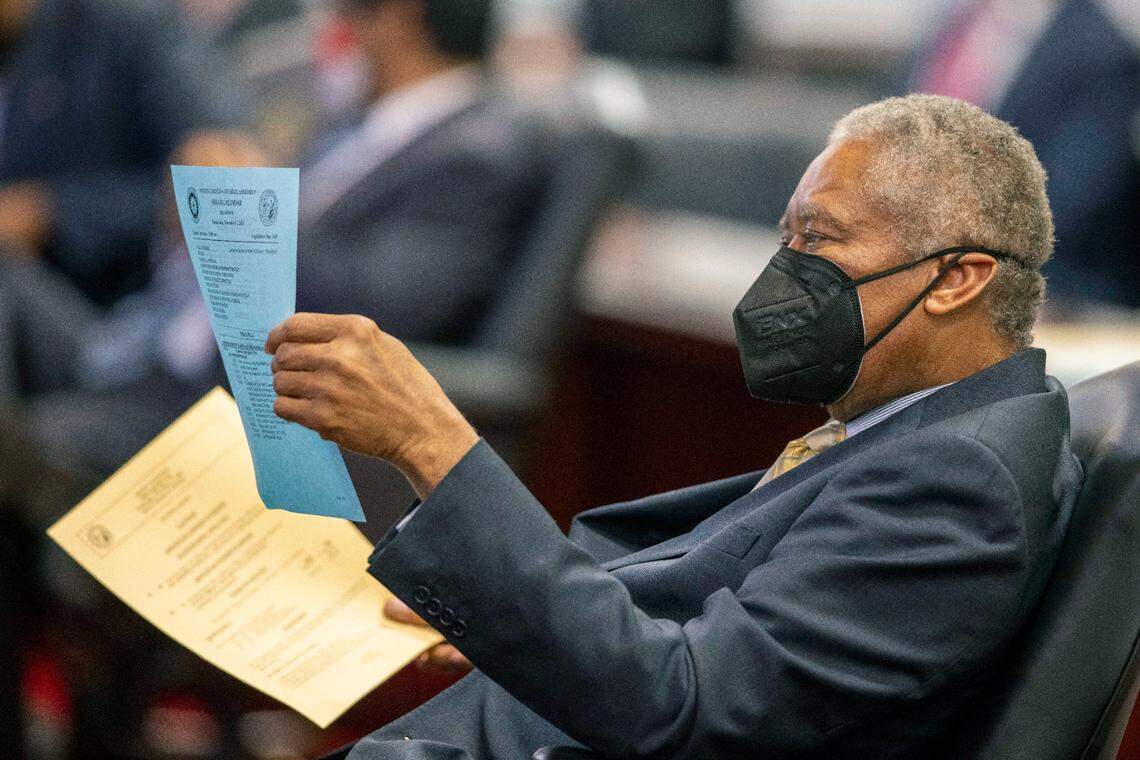
Susan Vick, a longtime fixture at the N.C. General Assembly who worked as a Duke Energy lobbyist until 2020, said the purpose of campaign donations is to earn a lawmaker’s attention and time, to try to educate them on your point of view. That’s particularly true for companies like Duke, Vick said, as it as it faces more political competition from special interest groups that oppose it, as well as from potential competitors like the solar industry.
“All those folks are down at the legislature, competing for attention,” Vick said.
Campaign finance records show, for example, that the top executives and other workers at Strata Solar, a major player in that industry that’s based in Durham, have spent over $300,000 in the last decade on political contributions — some of it directly to politicians, and other spending directed at a solar industry PAC that several companies’ leaders contribute to.
But while the solar industry is competing for attention in the political sphere, it can be hard to keep up with a multibillion-dollar company like Duke.
“I think it’s one of the biggest problems we have at the legislature, is campaign finance,” said Rep. Pricey Harrison, a Greensboro Democrat and leading liberal voice on climate and environmental issues. “But definitely, Duke Energy has benefited by being generous.”
For more North Carolina government and politics news, listen to the Under the Dome politics podcast from The News & Observer and the NC Insider. You can find it at https://campsite.bio/underthedome or wherever you get your podcasts.
This story was originally published August 19, 2022 at 6:00 AM.