
Under the Dome podcast: Republican Senate whip on Medicaid expansion, budget, abortion

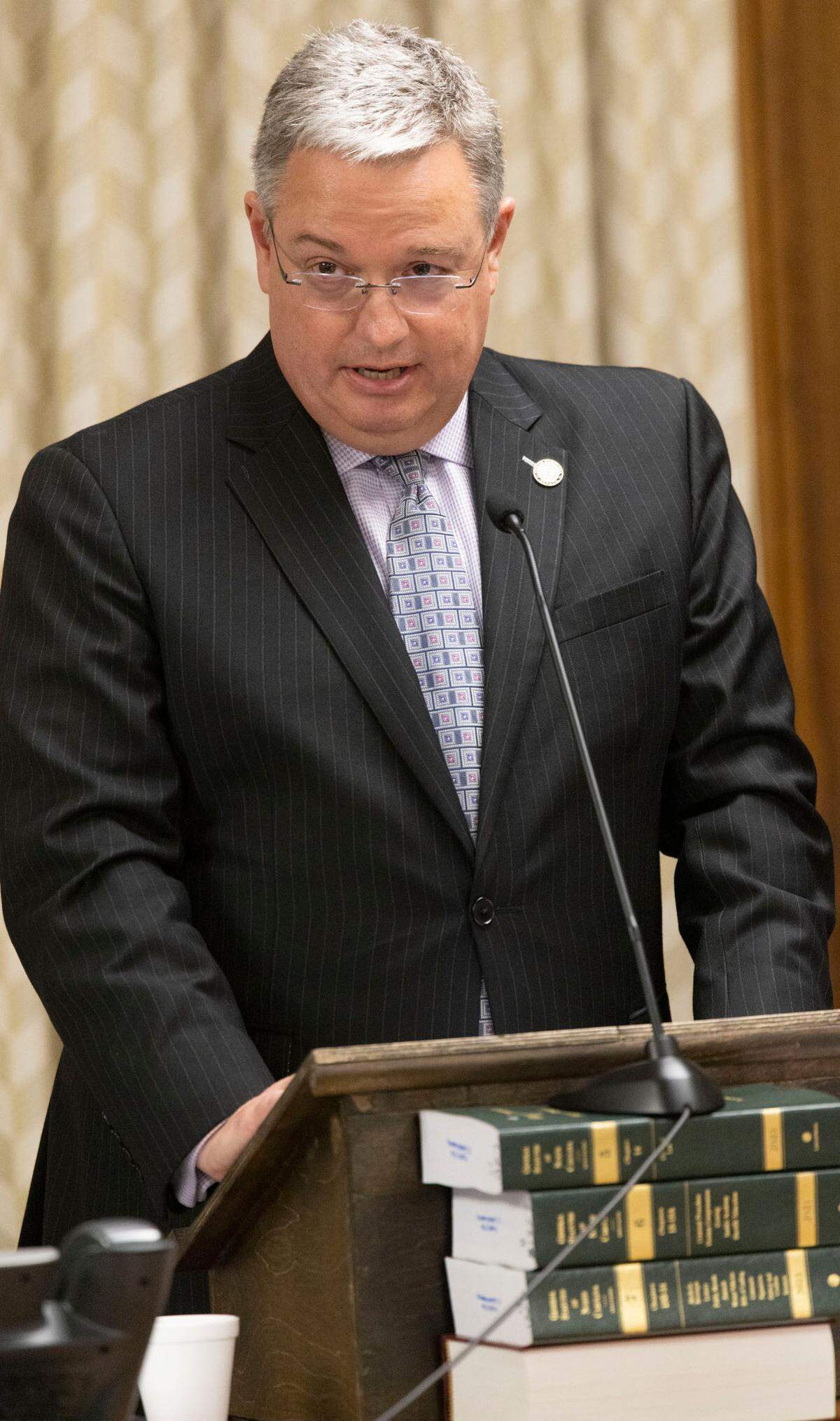
On a new episode of The News & Observer politics podcast, Under the Dome, reporter Dawn Vaughan interviews Sen. Jim Perry, a Kinston Republican who serves as the majority party whip in his Senate GOP caucus. They talked about both policy and politics, and how Perry got to the Senate.
Perry shared how and why he became a lawmaker, which started with an appointment in 2019 to fill a vacant seat. Here’s some of what he said about his approach:
“I can disagree with you on an issue, and talk about the issue. And it doesn’t mean that I hate you. I’m not overly animated. I’m not that easily excitable on issues. And I just think that resonated with people,” Perry said.
Perry chairs the Senate Health Care Committee and Appropriations on Health and Human Services. A major health care issue in the legislature is Medicaid expansion, which is stalled out in a disagreement between the House and the Senate over what the bill will include beyond expansion itself. Republican leaders have said they plan to take it up again in 2023, just not exactly when.
Perry on Medicaid expansion
Perry said he supports expansion on “a financial front.” He said it impacts everyone.
“Everyone has health care today, everyone,” Perry said. “It’s just that for some people, it’s just catastrophic care, right? So instead of paying for them to go visit a primary care provider twice a year, we wait for them to go into heart failure, or, you know, some type of big issue that costs $650,000 instead of $200.
“So understanding the math behind it. I still have concerns, policy concerns that most would have on the idea of making someone a health care ward of the state. ... I understand the financial impact on everyone out there who’s on commercial insurance. And when I think about the $1.5 billion that we can have as a state — that helps keep our tax reductions in place that we already have, maybe provides a bridge to some additional ones, maybe provides some money for additional expenses that we see coming. Or don’t see coming.
“From a fiscal standpoint, I can make it make sense at the state level. I can’t tell you it’s great fiscal policy at the federal level, but I don’t control that. And I feel like as a fiscal conservative, I need to control what expenses I’m able to control in the best interest of our citizens,” Perry said.
Listen to the full podcast to hear more of what Perry said about his position on Medicaid expansion.
Budget and recurring spending
Here’s some of what Perry said about the upcoming state budget process:
“I think you will see continued discipline on the growth of recurring expenses. And so many people don’t understand: They see a pot of money as a surplus. And they say, Hey, you should put that in X, or, you know, they talk about salaries a lot,” Perry said.
Raises for state employees are a common sticking point in the budget process. The General Assembly sets those, as well as base salaries for educators. The state has recently had billions of dollars in revenue surpluses.
“You can’t use nonrecurring funds for recurring expense; all you’re doing is digging a hole for yourself. ... You have to match up those funds with the expenses. So it’s, it’s not as simple as some things,” he said.
This year, the state budget process starts in the House.
Abortion legislation in the Senate
Perry also shared his own views on abortion law, including what he thinks about exemptions for rape, and the chances of legislation this session. Republicans have a veto-proof supermajority in the Senate, and are one vote away from a supermajority in the House.
“I think if we look at polling data, and based on conversations I’ve had with members, there’s a lot of different opinions. But it’d be difficult for me to see anything extreme passing the General Assembly,” he said.
Perry also said that he won’t “get out in front of the caucus on that and prognosticate about” what the legislation might be.
“I do know any bill that gets filed by any Republican automatically is owned by all Republicans,” he said. Perry said that Republicans may be labeled as extremists even for having the conversation about abortion restrictions beyond the current state law of 20 weeks.
Headliners of the Week
Besides the issues, listen for what Perry said about House Majority Leader John Bell and a bear hunt. Yes, you read that right.
Stay tuned to the end of the podcast for Perry and Vaughan’s picks for Headliner of the Week, and see if a streak of sports-related and holiday-related Headliners continues.
Listen to our latest episode below and catch up on previous episodes. You can also listen on Apple Podcasts, Spotify, Google Podcasts, Audible, iHeart, Pandora, Amazon Music and Stitcher.
This story was originally published December 19, 2022 at 5:00 AM.
.jpg)