
Seeking more offshore wind knowledge, NC signs agreement with Denmark
North Carolina’s Department of Commerce will work with a global leader in offshore wind energy as the state moves toward carbon-free emissions.
Wednesday, Commerce Secretary Machelle Baker Sanders signed a memorandum of understanding with the Danish Energy Agency. In 1991, Denmark built the world’s first offshore wind farm, and the industry has grown there ever since.
“North Carolina is fortunate to be entering the offshore wind market at this time, when we can benefit from all the knowledge and experience of global wind leaders like Denmark,” Sanders said during a virtual signing ceremony.
By signing the agreement, Denmark and North Carolina officials agreed to share information about developing and regulating offshore wind energy. Additionally, the parties will study power purchase agreements and share knowledge about how to integrate energy from offshore wind farms into the electric grid.
Three sites off the North Carolina coast have been leased for offshore wind development, with Avangrid leasing a site off of Kitty Hawk that is closest to the construction phase. Duke Energy Renewables Wind and Total Energy Renewables USA each leased sites off the Brunswick County coast during a 2022 auction.
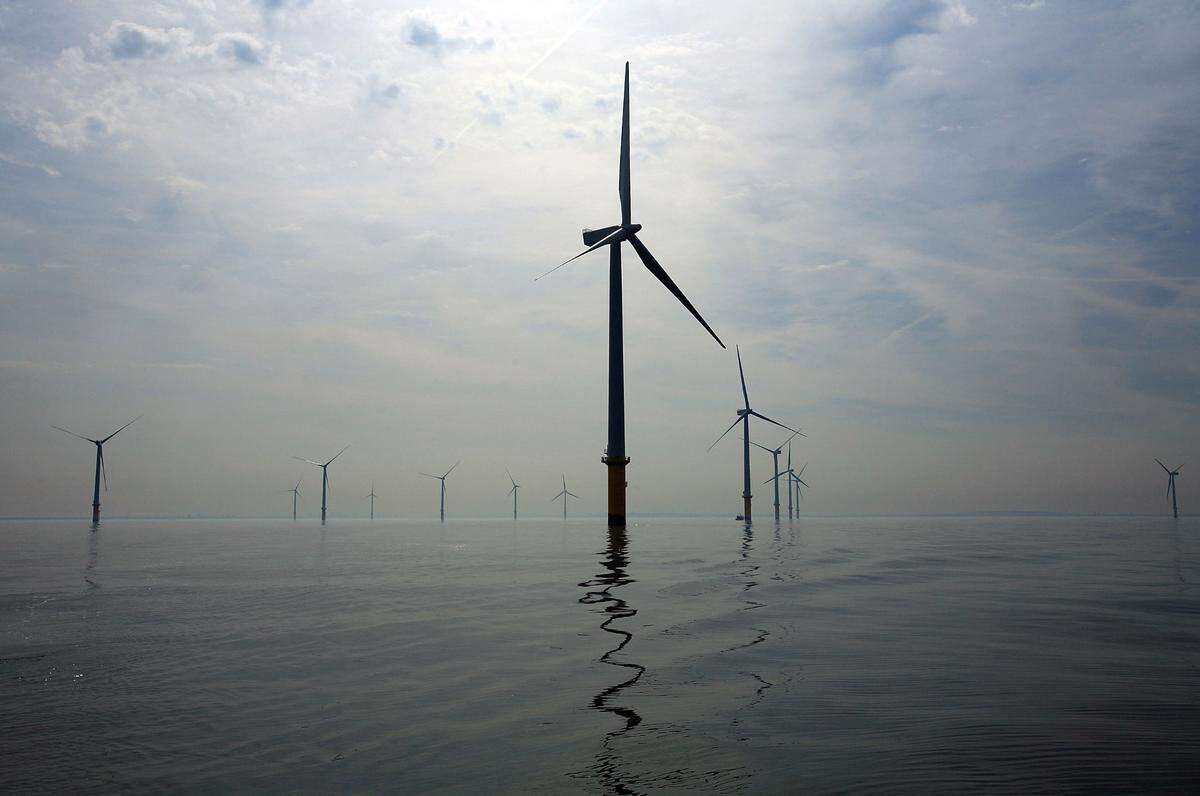
Vindeby, an 11-turbine facility that started operating off the Danish coast in 1991, was the world’s first offshore wind farm.
“The experience that Denmark has with offshore wind is unparalleled,” said Katharine Kollins, president of the Southeastern Wind Coalition, a trade group that represents the wind energy industry.
Denmark, Kollins noted, can share information about not only the technology, but also the social and political ramifications of offshore wind development.
Kristoffer Böttzauw, the director general of the Danish Energy Agency, touted the climate goals the European nation and North Carolina both have.
Gov. Roy Cooper has set targets via executive order of a 50% reduction in total greenhouse gas emissions by 2030 and net zero by no later than 2050. Denmark has goals of a 70% reduction in total emissions by 2030, net zero by 2045 and a 110% emission reduction — or negative emissions — by 2050.
Additionally, Cooper used an executive order to set targets of 2.8 gigawatts of wind energy generated off the North Carolina coast by 2030 and 8 gigawatss by 2040.
“We are facing some of the same challenges in integrating renewables such as large-scale offshore wind, supporting electrification and decarbonization of our energy systems,” Böttzauw said.
In addition to offshore wind, Wednesday’s agreement mentioned potential collaboration on other technologies that could help mitigate climate change such as the development of green hydrogen, co-locating offshore wind with structures that generate energy from waves or energy storage.
Those technologies could prove important to carbon neutral power generation, said the Danish energy minister.
“This is uncharted territory for us all,” Böttzauw said.
North Carolina entered a similar agreement with the United Kingdom in July 2022. A delegation from the UK’s wind industry visited Raleigh and the North Carolina coast last November to see first-hand the places that could power the industry’s future here.
That group was particularly impressed, Kollins said, with Radio Island. Economic development officials have long eyed a 154-acre site the N.C. State Ports Authority owns on the Morehead City island as a potential site for a large-scale wind energy construction facility.
“There was so much excitement that they brought to North Carolina around the potential for offshore wind,” Kollins said.
As part of the new agreement, Böttzauw said, a North Carolina delegation will visit Denmark in April.
This story was produced with financial support from 1Earth Fund, in partnership with Journalism Funding Partners, as part of an independent journalism fellowship program. The N&O maintains full editorial control of the work.
This story was originally published March 1, 2023 at 4:43 PM.