Can you build a cottage in your backyard? NC considering statewide law
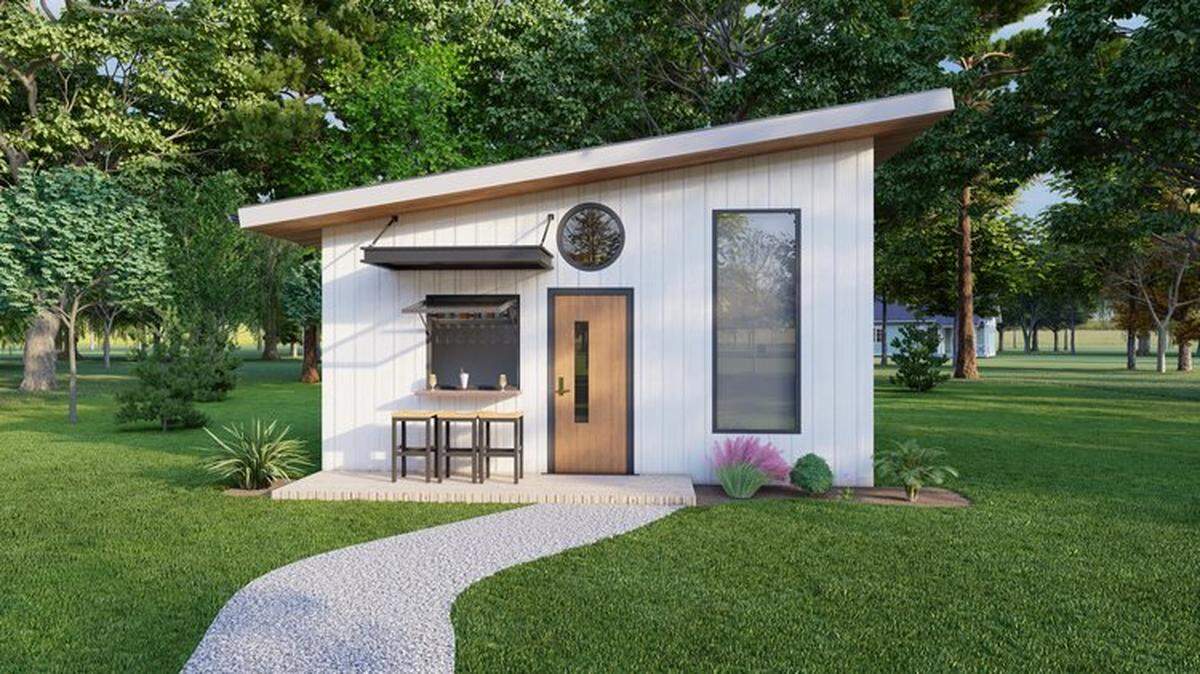
State lawmakers weighed in on the debate over so-called granny flats this week, approving legislation that would allow the smaller housing units to be built across the state in areas zoned for single-family homes.
Granny flats, also referred to as backyard cottages or accessory dwelling units (ADUs), are smaller, standalone houses people build on their properties that can be used as extra space where family members or guests can stay, or can be rented out for additional income.
“It’s a great option for family members, college-aged kids, a lot of visiting professionals,” said Rep. Vernetta Alston, a Durham Democrat. “It’s a good option that can often be naturally more affordable than a lot of other options in the market.”
The smaller houses have become more popular In North Carolina as cities grapple with the need for more affordable housing, but some local governments have blocked ADUs from being built.
Local governments have been on the forefront of the issue and faced the political backlash when there has been widespread changes, said Scott Mooneyham, director of political communication and coordination for the North Carolina League of Municipalities, which opposes the legislation.
“If the legislature does not believe that they can suffer the political consequences of this as well, they are not paying attention,” he said. “This is the thing that gets people more riled up than anything. It’s their homes. It’s the most significant investment that most people will ever make. And when you go mess around with the rules that affect that, they get mad. And they get politically active.”
House Bill 409 won overwhelming approval Tuesday from the House with a vote of 106 to 7. It is sponsored by a bipartisan group of lawmakers including Republican Rep. Matthew Winslow, a home builder from Franklin County, and Alston, a developer and attorney.
Alston said the bill would make it a bit easier and more viable for people across the state to build accessory dwelling units on their property.
“Fortunately, cities and counties still have the ability to, I think, manage a lot of how ADUs are constructed, what they look like, where they’re sited, to mitigate any of their concerns,” she said.
The league, along with the North Carolina Association of County Commissioners, issued a report on the housing crisis in the state. The report surveyed 43 local governments on various housing topics and found that 26, or 65%, allow ADUs on single-family lots.
What restrictions are in the bill?
The bill prohibits local governments from requiring the owner of the ADU to live in the unit — opening it up to be rented out either long term or through short-term rental sites like Airbnb and VRBO.
The bill also prevents local governments from requiring a conditional zoning district or establishing parking minimums.
“It’s highly likely that a huge number of those that would be built under this would be used as a part of the short-term rental market,” Mooneyham said. “And then that will create more conflict within these neighborhoods between people who don’t want more density, don’t want more people, don’t want more traffic, and those that are that are then doing this to create an income stream.”
It doesn’t affect properties within historic preservation districts or properties that are national historic landmarks. Nor does it apply to homes with restrictive covenants or homeowner associations that prohibit backyard cottages.
ADUs vs. tiny homes
While state and federal laws do not consider tiny homes built on a trailer or chassis to be permanent housing, small homes that meet the state’s building code for one- and two-family homes are allowed in most jurisdictions.
How does this affect affordable housing?
Alston said ADUs are one tool that could help address affordable housing.
“I think we’re in a place in North Carolina where we need to utilize as many tools as we can to address our needs for housing stock across the state,” she said.
The League of Municipalities is skeptical of how much effect the legislation would have on the affordable housing crisis.
“We think there should be a large conversation about housing affordability in North Carolina where all the different viewpoints and perspectives are pulled in and we have a discussion,” Mooneyham said. “Let’s figure out what really works as opposed to this just piecemeal, here comes another legislative idea thrown at the wall.”
Local governments in North Carolina can’t require that private landowners include affordable units in developments, regulation that is key to addressing the housing crisis, Durham Planning Commission Chair Austin Amandolia said.
”It’s one of those things where it’s like, what is your argument for pushing for tiny homes? Is your argument that it’s going to create affordable housing? If so, I think there’s a lot of debate,” he said. “If your argument is that it gives households a way to generate income and build wealth, like OK.”
He said the flexibility to incorporate affordability requirements in land-use decisions will be key to ensuring ADUs help craft the cities lawmakers say they want.
”They’re not going to inherently create affordable housing. They may make housing cheaper to build, which is beneficial, but it’s not going to give affordable housing in the traditional sense,” Amandolia said.