Limits on transgender kids’ medical care pass NC House
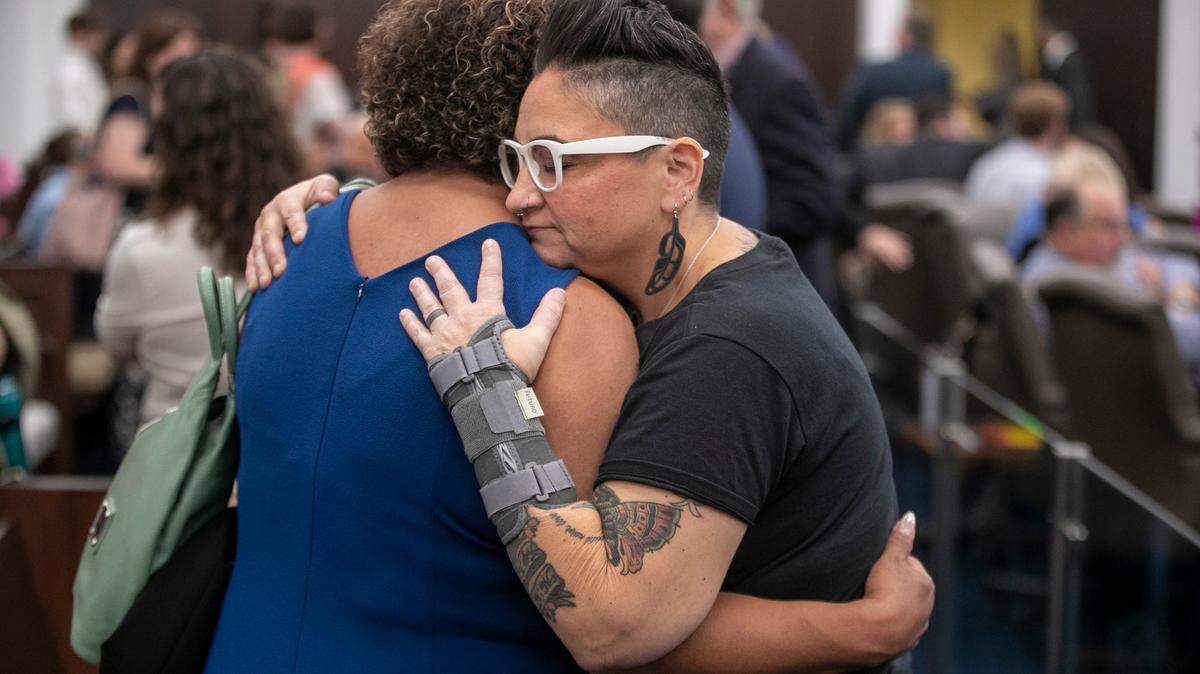
The North Carolina House passed a bill Wednesday that prohibits medical professionals from providing surgical gender-affirming procedures to minors.
Heated debate led up to the vote, with Democrats saying the bill caused harm to an already vulnerable population, transgender youth, and did not take into consideration those young people’s voices. Republican lawmakers said they were adding necessary protections and that people who undergo these irreversible surgeries may change their minds.
The bill passed 74 to 44, largely along party lines, with supporters including Democratic Reps. Garland Pierce and Michael Wray, as well as Democrat-turned-Republican Rep. Tricia Cotham. It now goes to the Senate.
Republican Rep. Hugh Blackwell said Wednesday that his bill “attempts to recognize that surgeries on children under the age of 18, that can have lasting, lifelong implications and that are essentially permanent, should be delayed.”
“The bill doesn’t stop anybody 18 or older from choosing to have a surgical procedure to undergo gender transitioning. It would simply say children would wait,” he said.
A Duke pediatric endocrinologist previously told The News & Observer that transgender children do not typically undergo gender-affirming surgical procedures. Patients who have facial reconstructive surgery, surgery to remove breast tissue, surgery to transform genitalia or other procedures are typically adults, Dr. Deanna Adkins said.
House Bill 808 makes exceptions for diagnosed sexual development disorder, the treatment of infections and more. It does not allow the use of state funds, directly or indirectly, for these procedures for minors.
On Wednesday lawmakers approved an amendment that would also not allow state funds be used to support any governmental health plan or government-offered insurance policy offering gender transition procedures to anyone under 18. Previously, the insurance limitation in the bill had applied only to surgical procedures.
Rep. Vernetta Alston, a Durham Democrat, said the change “is relatively simple but the impact is significant, ”with federal courts having ruled it unconstitutional to refuse insurance coverage for gender-affirmation care.
“Despite what this bill says, it’s really just about bigotry and a national trend frankly to stigmatize the transgender community,” she said, “and no one can credibly argue here or anywhere else that this bill responds to the will of the majority of North Carolinians because it just simply doesn’t.”
Republican legislators nationwide this year have filed bills that would limit access to medical care for transgender people. In North Carolina, lawmakers approved a bill that would ban transgender girls from joining female sports teams. Another bill was heard last week that would allow medical professionals to decline to provide care based on beliefs, which drew concerns from some people that it would limit transgender health care.
People in the gallery cheered after Alston’s comments, leading to House Speaker Tim Moore calling for order and saying that if the audience has “any more outbursts” they would “be directed to leave the gallery, and I don’t care which side of the issue anyone’s on.”
Expedited process
In a hearing earlier Wednesday, Kent Butterfield, a pastor at First Reformed Presbyterian Church of Durham, said many “casually advocate for gender reassignment surgery” and leave out of that discussion “the adverse effects of a surgery that cures no disease, removes no tumors or restores the health.”
Rae Bandy, who is transgender and lesbian, said opponents of the bill “are just asking for you to step back from our health care” because lawmakers “are not doctors, you are not medical practitioners, and you need to listen to medical practitioners who are saying that this is medicine and that this is life-saving, and that we as patients, as parents and as medical professionals need to be making these decisions.”
The bill passed the House health committee Tuesday in under 10 minutes, with all the time being allotted to bill sponsors and none for lawmakers’ debate or public comment.
After that hearing, parents, doctors, and trans youth rallied together to speak on their experiences, with many denouncing the expedited hearing as undemocratic and harmful for transgender youth.
Sean Radek, who said he got top surgery, a procedure to remove breast or chest tissue, when he was 16, said Tuesday, “I wish I could have said something,” at the hearing and “If I did not get the care that I received when I did, I would be dead.”
“So many transgender children take their lives at such a young age,” he said, and with transgender children being almost eight times more likely to commit suicide than cisgender people, “it’s terrible that they’re attacking us and that they are not holding back.”
Chelsea Johnson, a licensed marriage and family therapist from Cary who works with transgender youth and their families, said Tuesday that not allowing the public to speak “basically eradicates those voices.”
“I think the more people that (lawmakers) had to hear from, it would be on their conscience when they voted in favor of this bill,” Johnson said, “and they think not allowing people to tell their story is a way to present the bill as positive because no objection can be heard.”
This story was originally published May 3, 2023 at 6:55 PM.