How would NC’s transgender athlete ban work? Your questions answered
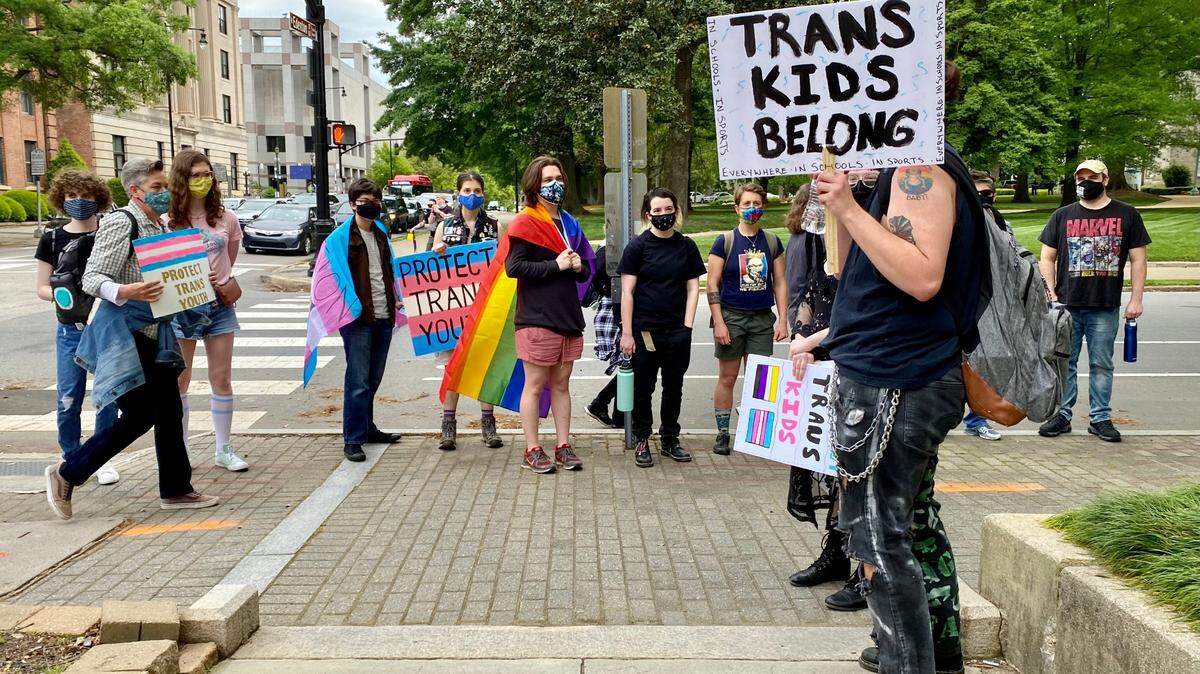
North Carolina’s bill restricting transgender athletes in women’s sports is only roughly three pages long.
Yet the bill’s implementation may lead to many questions if enacted into law, given its wide-ranging impact across the state. The bill has not yet become law, but has good prospects of passing given its strong Republican support.
A vote in the legislature on Thursday sent a final version of the bill to Democratic Gov. Roy Cooper, who is likely to veto it. The Republican-dominated legislature would then try to override Cooper’s veto.
Here are answers to some common questions that may arise from the bill.
What would the bill do?
House Bill 574, dubbed the “Fairness in Women’s Sports Act,” would generally prohibit transgender women and girls from participating in women’s sports in middle and high school, as well as in colleges and universities.
What schools would be included in the ban?
All North Carolina public middle and high schools, including charter schools, regional schools and laboratory schools, would be included in the ban. Public universities, community colleges, and private colleges and universities would also be included.
Nonpublic middle and high schools, private church schools and schools of religious charter are, by default, not covered by the bill. However, the ban would apply to them if they are a “member of an organization that administers interscholastic athletic activities” or are playing a team from any school that is covered by the bill. The most common scenario would likely happen when a team from a private school plays one from a public school — the ban would then apply to the private school.
How is the bill going to be enforced?
The main teeth of the bill, which would push schools to adhere to its provisions, come from a short provision that gives people affected by the bill the authority to seek remedies, something known as a “cause of action.” This includes students who are “deprived of an athletic opportunity or suffers or is likely to suffer from any direct or indirect harm as a result of a violation” of the bill, students who are “subjected to retaliation ... as a result of reporting a violation” of the bill, and “any institution of higher education or its representatives or employees who suffer any direct or indirect harm for complying with the requirements” of the bill.
Anyone who falls into these categories may ask a court to enforce the law. They can also seek “actual damages, including for psychological, emotional, or physical harm, reasonable attorney fees, and costs.”
Who is tasked with overseeing the schools and enforcing the bill?
The UNC Board of Governors (BOG), the State Board of Community Colleges (SBCC) and the State Board of Education are tasked with overseeing public universities, community colleges, and middle and high schools, respectively. If the boards determine that a school is in violation of the bill, they would have to report the school to the Joint Legislative Education Oversight Committee, which is currently chaired by Republicans. The bill does not elaborate on what actions the committee must, should or can take. The BOG is currently dominated by Republicans, while the SBCC is evenly split between registered Democrats and Republicans.
There is no provision of the bill that assigns anybody to oversee private colleges and universities, despite them being implicated in the bill.
How would the state verify if an athlete is transgender?
The bill doesn’t specifically outline how investigations would be conducted to see if there was a violation of the bill. However, it indicates that a student’s sex is based solely on the student’s “reproductive biology and genetics at birth.” Although North Carolina law allows people to change the sex on their birth certificates, an investigation could potentially look at someone’s original birth certificate. Similar laws in Florida and Texas determine someone’s sex by looking at a birth certificate filed “at or near the time of the student’s birth.”
Would out-of-state athletic teams that play in North Carolina be subject to the bill?
No. The bill only applies to schools located in North Carolina, even if the out-of-state school is playing a North Carolina-based school that is subject to the bill’s restrictions. Hypothetically, an out-of-state women’s athletic team could include transgender athletes without violating the bill while playing a North Carolina team that is restricted by the bill.
Could NC teams include transgender athletes when playing out-of-state?
Most likely not. If a school reserves a team spot for transgender athletes solely for out-of-state games, that would still be in violation of the bill and any student “deprived of an athletic opportunity” would have sufficient cause of action to seek relief.
Does the bill make any exceptions for women’s sports?
Any collegiate women’s sports teams that are not part of an “intercollegiate athletic program,” including intramural sports, would not be covered by the bill. However, both interscholastic and intramural athletic activities in qualifying middle and high schools are covered by the bill.
Is this bill constitutional?
Whether or not the bill is constitutional is still being debated.
In 2021, West Virginia passed a similar law that banned transgender girls and women from participating in women’s sports teams. That law is currently on hold because of an order by a federal appeals court in February. In April, the U.S. Supreme Court refused to intervene in the case, West Virginia v. B.P.J., meaning the law is still temporarily blocked. This, however, only applies to West Virginia’s law. Similar laws in other states have not been blocked.
The West Virginia law is being challenged on Fourteenth Amendment and Title IX grounds. Three years ago, the Supreme Court ruled that sex-based discrimination in employment applied to transgender employees. After the appellate court makes a decision, the case could then make its way to the Supreme Court.
How would the state’s law interact with policy for national athletic groups, like the NCAA?
The NCAA currently allows transgender student-athletes if they meet a certain sport-specific standard for documented testosterone levels at three points in time throughout the year.
The bill would trump NCAA or any conference’s policy, as a transgender athlete would not be permitted to join a women’s sports team at any North Carolina college or university.
Could transgender men play on male sports teams?
Yes. The bill only prevents “students of the male sex” from joining “athletic teams designated for females, women or girls.” A previous version of the bill did prevent “students of the female sex” from playing on male sports teams, but that clause was taken out due to its potential unintended consequences, like preventing female kickers on football teams.
How would the bill affect athletic teams not affiliated with any school?
It wouldn’t. Professional sports teams and amateur sports leagues are not covered by this bill. Transgender athletes would still be subject to any existing non-state policies.