No time for public comment as ‘Parents’ Bill of Rights’ advances, Rep. Cotham says
North Carolina House and Senate Republicans are closing in on a final version of legislation that would limit instruction of LGBTQ+ issues in elementary schools and could potentially “out” LGBTQ+ students to their parents.
The N.C. House K-12 Education Committee backed Wednesday the “Parents’ Bill of Rights” that would bar curriculum on gender identity, sexual activity or sexuality in kindergarten through fourth grades in public schools.
Senate Bill 49 also would require teachers and other school employees to notify parents if their children change their names or pronouns.
The committee vote comes months after the Senate had passed the legislation. Some House Republicans had sought to expand the limits on discussion of gender identity in schools but agreed to the Senate wording.
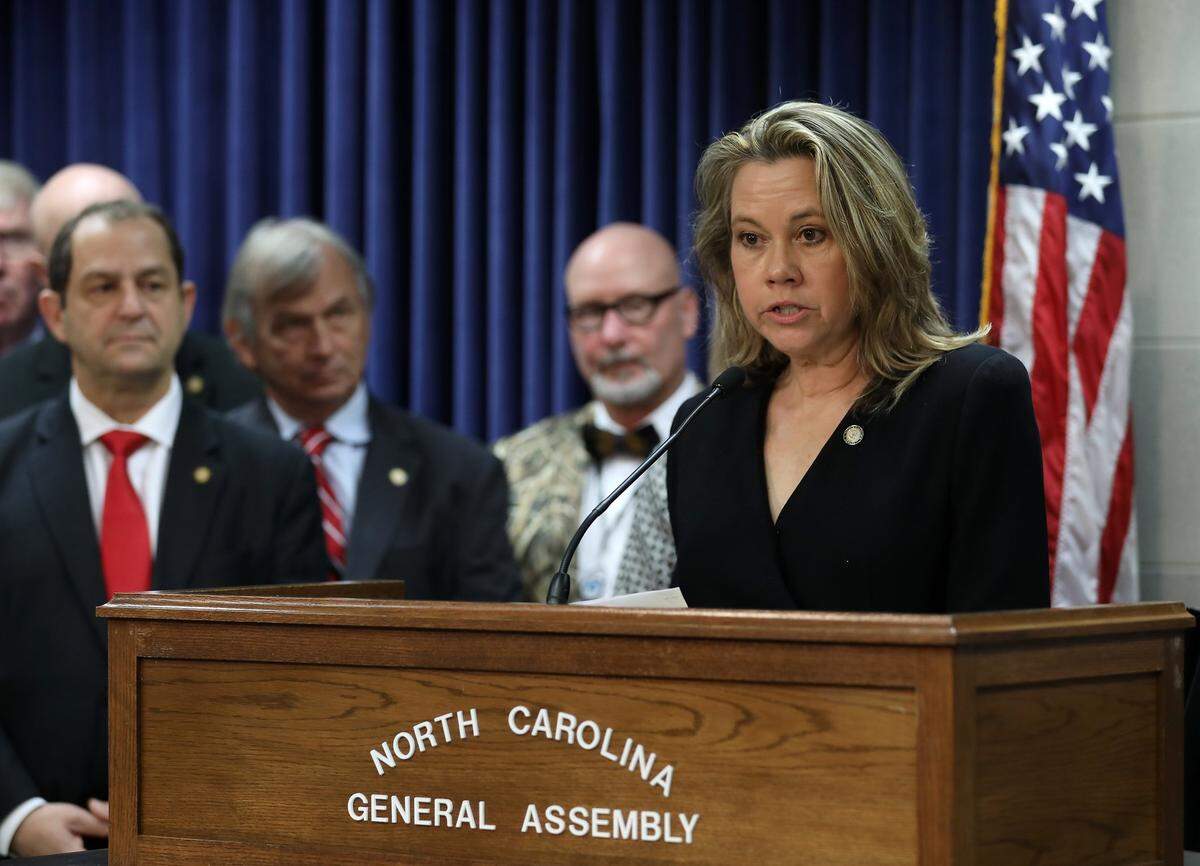
“Parents have rights over their children,” said Sen. Amy Galey, an Alamance County Republican and the bill’s primary sponsor. “Or I would say they have the responsibility and the duty to bring up the children within the context of their culture and their religion and their faith.”
The bill is expected to become law since Republicans hold enough votes to override an expected veto from Democratic Gov. Roy Cooper.
No public comment
Democratic lawmakers said the bill’s requirements are burdensome and would have a “chilling effect” on students.
“This bill really ignores the reality of what goes on in schools when it comes to how children go to their teachers, how they go to their counselors and express that they’re having issues,” said Rep. Julie von Haefen, a Wake County Democrat.
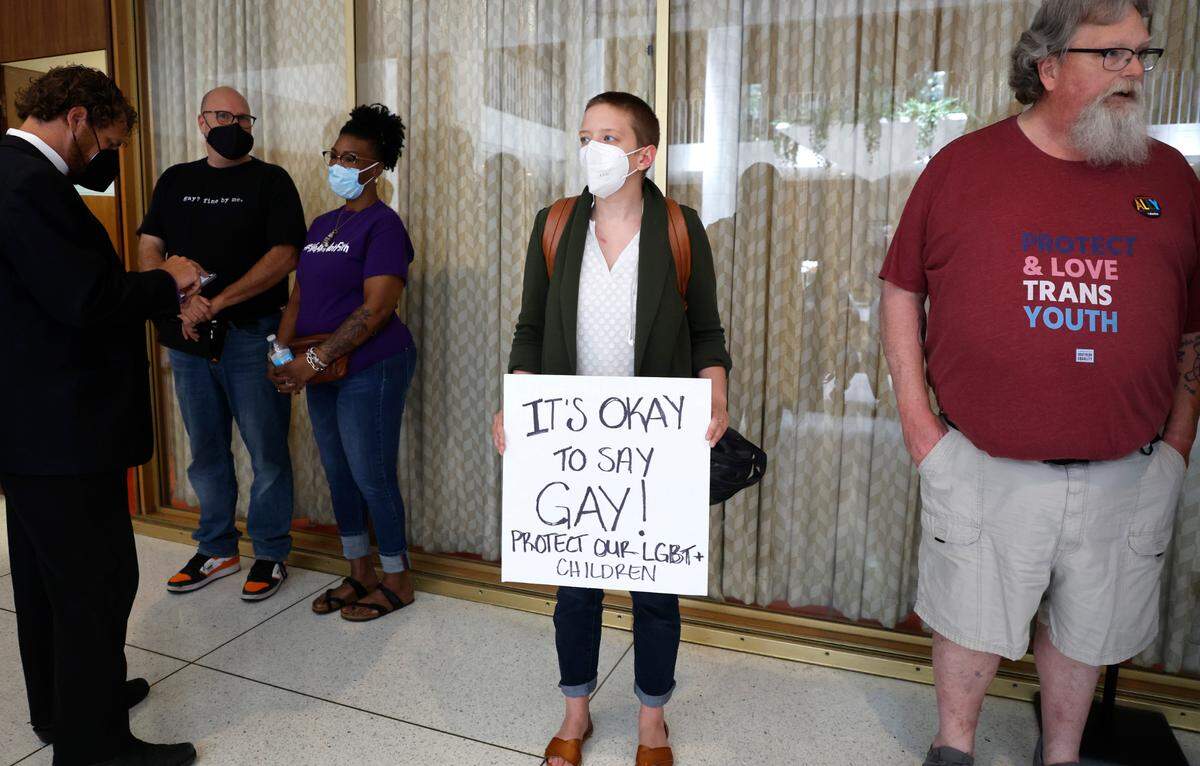
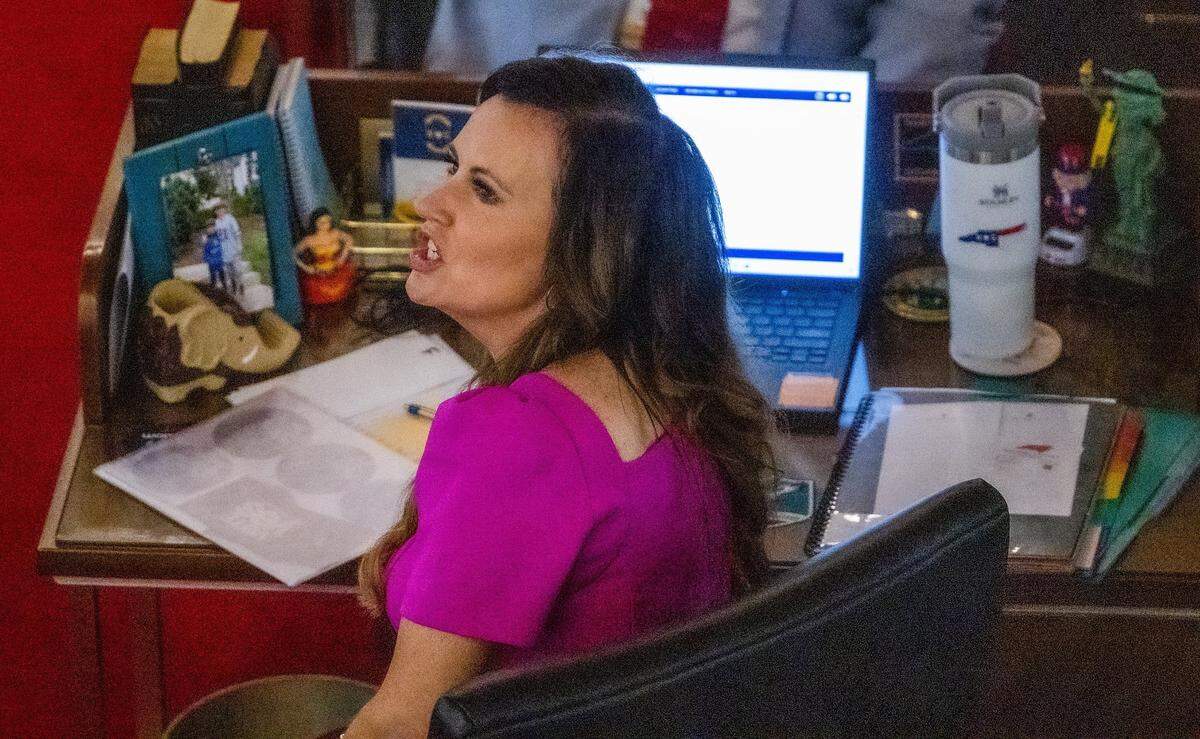
Citing lack of time, Rep. Tricia Cotham, the committee’s co-chair, held the vote without allowing public comment. That prompted multiple people who were waiting to address the committee to stand up and yell “let us speak” and “what you are doing is wrong.”
“Ladies and gentlemen, there are rules of this body that apply to everyone in here, including you,” Cotham, a Mecklenburg County Republican, responded. “This committee is over and adjourned. You are dismissed.”
Some protesters who spoke up against the bill were escorted out, including Renee Sekel, a mother of three from Cary.
Talking to reporters after the meeting, Sekel said she was concerned what the bill would mean for children growing up in tough homes, and said she was herself abused when she was young.
She said she was in the fourth grade when she told a teacher that her parents had been fighting at home. The teacher “well meaningly and unknowingly” called Sekel’s mother and said she was concerned about her.
“I have flashbacks to what happened to me that night when I got home,” Sekel said. “I never want another kid put in that situation, but this bill will force children into homes that are harmful. It will force teachers to out kids — personal, sensitive information — to parents who may not have their best interests at heart.”
LGBTQ+ bills moving in legislature
It’s one of several bills impacting LGBTQ+ issues that GOP lawmakers are acting on near the end of this year’s legislative session.
▪ On Wednesday, the House approved legislation banning the use of public health care facilities or state money for various forms of gender-affirming care for transgender minors. That includes puberty-blocking drugs, hormone-replacement therapy or gender transition surgery. The bill will return to the Senate for final approval.
▪ On Wednesday, the Senate Health Care Committee backed legislation that would prohibit medical professionals from providing surgical gender-affirming procedures to minors. House Bill 808 has already been approved by the House.
▪ On Thursday, the state House took a vote of 62-43 to send House Bill 574, dubbed the “Fairness in Women’s Sports Act,” to the governor. The bill bars transgender women and girls from playing for women’s sports teams in middle and high school, as well as in colleges and universities. It applies to public schools, as well as private schools in some cases.
Negotiations over bill wording
In addition to the wording on pronouns and gender identity, other parts of the “Parents’ Bill of Rights:”
▪ Require schools to make textbooks and other materials available for parental review at the schools and online.
▪ Allow parents to withhold consent for participation in surveys discussing topics such as political beliefs and sexual behavior;
▪ Allow parents to see what books their child has borrowed from the school’s library.
A similar bill passed the Senate in 2022 but wasn’t voted on in the House. But this year, Republicans hold a veto-proof majority in both chambers after Cotham left the Democratic Party.
The Senate adopted the bill in February, leading to months of negotiations with House GOP lawmakers.
Some Republicans wanted to expand the ban on instruction on gender identity into middle school grades. But Galey said that wasn’t done due to how puberty is discussed as part of fifth-grade health standards.
“We didn’t want to get into a constitutional debate about who gets to decide what the standards are,” Galey told the committee.
Can teachers be punished for not following requirements?
One of the questions repeatedly raised during the committee meeting was what consequences would exist for schools and teachers who don’t follow the legislation’s requirements.
Galey said the main purpose of the bill is to inform parents of their rights as opposed to punishing people. But she said options would exist.
“The employee may be subject to disciplinary action,” Galey said.
Galey said that parents can also file a complaint with the State Board of Education.
But some Republican lawmakers said they wanted stiffer consequences for failing to follow the legislation.
“There should be something in there for those that are not willing to follow their oath of office or do what they do,” said Rep. David Willis, a Union County Republican. “There should be recourse for those parents.”
Private schools not covered by bill
Rep. Marcia Morey, a Durham Democrat, questioned why the bill’s requirements don’t cover private schools when many receive taxpayer funding through the Opportunity Scholarship program. GOP lawmakers are expected to significantly expand the voucher program this year.
“We give all this taxpayer money we’re offering to private schools when they have little if any educational mandates,” Morey said. “But we’re burdening the public schools, taking away principals and teachers from the job of teaching to make sure they’re following all these administrative responsibilities.”
Galey answered that parents can leave the private schools if they’re not satisfied.
“We really don’t have jurisdiction over private schools setting up policies and procedures,” Galey said. “I don’t think we want the state to get into the business of dictating to private schools … what they have to do.”
Makiya Seminera contributed to this report.
This story was originally published June 21, 2023 at 2:02 PM.